












































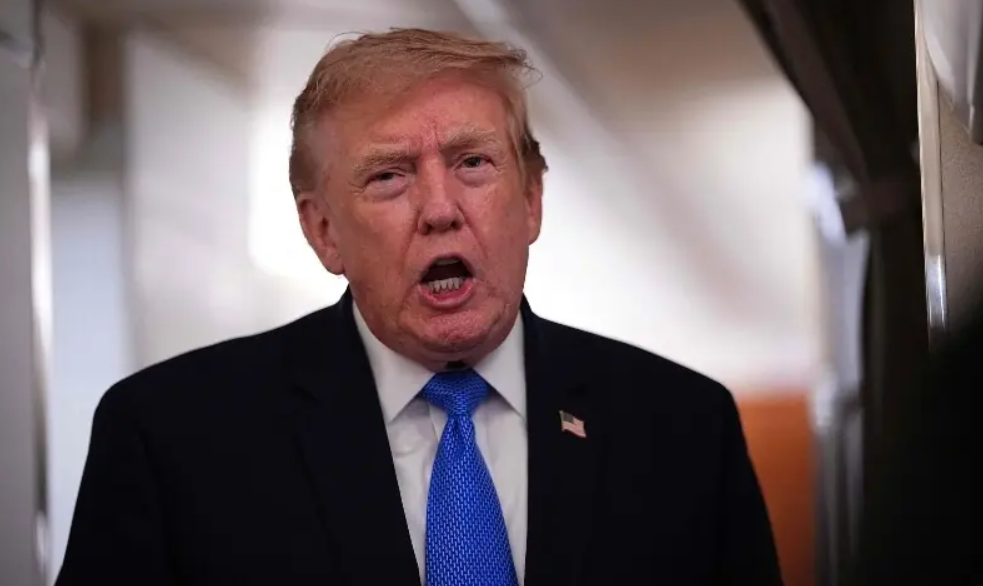
US President Donald Trump announced that fresh negotiations with Iran are set to begin on Monday after deciding against launching a large-scale military strike, opting instead to pursue a diplomatic agreement aimed at ending the conflict that has now entered its sixth month.

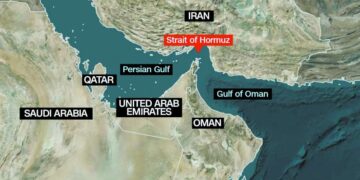
Speaking to reporters aboard Air Force One on Sunday, Trump said the discussions would focus on the Strait of Hormuz, a crucial route for global energy shipments, as well as the broader goal of Iran’s denuclearisation.
Meanwhile, Iran said it is close to reaching an agreement with Oman on a new maritime route through the strategic waterway. The announcement came as a tanker reported an explosion near Oman’s coast on Sunday, highlighting the continued instability in the region.
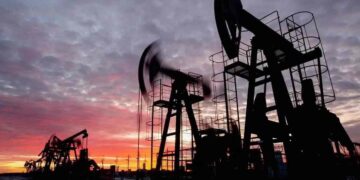
Oil prices declined at the start of Asian trading on Monday following Trump’s announcement, with West Texas Intermediate crude falling 4.7 per cent to $80.72 per barrel.
The United States and Iran have remained at war since February 28, when US and Israeli forces carried out surprise strikes on Iran. Although intermittent diplomatic efforts have occasionally reduced tensions, fighting resumed last month, raising fears of further escalation.
Trump had recently warned that the US could strike Iran “very hard” and was reportedly considering attacks targeting the country’s energy infrastructure, while American embassies across the region remained on high alert. However, he reversed course on Saturday, saying the “parameters” for a deal had emerged.
“Now what we’re doing is we’re talking to them in the form of a negotiation. It begins tomorrow afternoon,” Trump told reporters aboard Air Force One on Sunday, without providing details of where the talks would take place or who would participate.
The US president also claimed that Iran, along with Saudi Arabia, the United Arab Emirates and Qatar, had urged him to postpone military action, which he said would have been “the biggest attack since World War II”.
Iranian media rejected Trump’s assertion that Tehran had requested him not to carry out the strike.
An earlier ceasefire arrangement that included reopening the Strait of Hormuz ultimately collapsed, after which Iran tightened its control over the waterway.
Washington has maintained that the conflict is aimed at preventing Iran from developing nuclear weapons. While Western countries accuse Tehran of pursuing a nuclear bomb, Iran continues to insist its nuclear programme is solely for peaceful civilian purposes.
‘Exchange of views’
Iranian lawmaker Hassan Ghashghavi, spokesperson for the parliament’s national security commission, said mediators were working to revive the US-Iran memorandum of understanding agreed upon in June.
Although the memorandum was not intended to serve as a final peace agreement, it was designed to pave the way for broader negotiations and included provisions concerning the Strait of Hormuz.
“They know that the main issue and, in fact, the key to the matter right now is the issue of the Strait of Hormuz, so yes, there is an exchange of views,” Ghashghavi said.
In a post on X, Iranian President Masoud Pezeshkian wrote, “We must strive to compel the enemy to remain committed to what it has signed.”
Iran-Oman route under discussion
Before the war, vessels enjoyed unrestricted passage through the Strait of Hormuz. However, Iran closed the waterway during the conflict and has since insisted on maintaining control while imposing transit tolls, a demand rejected by Washington.
The dispute over navigation through the strait contributed to renewed hostilities last month after Tehran refused to permit ships to use any route other than one close to its coastline.
On Sunday, Iranian Foreign Ministry spokesperson Esmaeil Baqaei told state television that Tehran was nearing an agreement with Oman on a new shipping route through the strait.
“We are now going to reach an understanding on a route acceptable to both sides—neither the northern route nor the southern route — but one that respects the sovereign rights of both sides and safeguards our national interests and security,” he said.
Baqaei stressed that any agreement with Oman would not amount to reopening the Strait of Hormuz.
Maritime analytics firm Kpler reported on Friday that shipping traffic through the strait had fallen significantly.
Separately, the United Kingdom Maritime Trade Operations (UKMTO) said a tanker sailing off Oman’s coast reported hearing an explosion nearby on Sunday. It added that the vessel and its crew were safe.