


















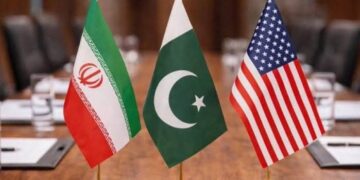























WASHINGTON/TEHRAN: The ceasefire between the United States and Iran remained in place on Tuesday despite renewed tensions, as Iran denied involvement in drone and missile strikes targeting the United Arab Emirates for a second consecutive day.

Tehran stated that its “defensive actions” were directed solely at US forces, dismissing allegations from the UAE that it had launched attacks on its territory.
US President Donald Trump described Monday’s confrontation with Iran as “a little skirmish” and said it did not amount to a breach of the ceasefire, even as European allies condemned Tehran over the alleged strikes.
“You’ll find out, because I’ll let you know. They (Iran) know what to do … and they know what not to do,” he said, adding that Iran had not violated the truce. He also reiterated warnings of possible military action if a deal is not reached, stating that if Iran fails to agree, “they won’t be successful. It’ll go very quickly and methodically”.
Trump downplayed Iranian actions against US vessels in the Strait of Hormuz, again calling the situation “a little skirmish”. “We’re in a little skirmish militarily. I call it a skirmish because Iran has no chance. They never did. They know it,” he said, also urging Iran to surrender and claiming its military capabilities had been significantly weakened.
Iran, however, said five civilians were killed in US strikes on vessels, asserting that the boats targeted were civilian in nature.
Truce Remains in Place
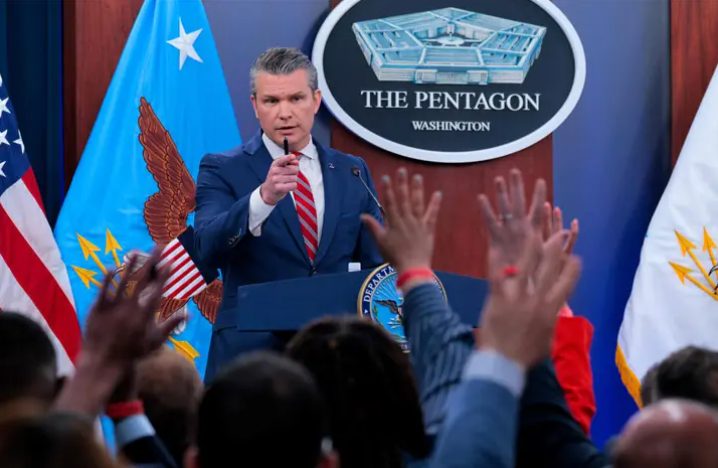
The Pentagon confirmed that the ceasefire is still intact. US Defence Secretary Pete Hegseth said the naval initiative “Project Freedom” — launched to ensure safe passage for commercial ships — was a temporary measure.
“We’re not looking for a fight,” he said. “Right now the ceasefire certainly holds, but we’re going to be watching very, very closely.”
Chairman of the Joint Chiefs of Staff Dan Caine noted that recent Iranian actions remain “below the threshold of restarting major combat operations at this point,” though he emphasized that US forces are prepared to escalate if required.
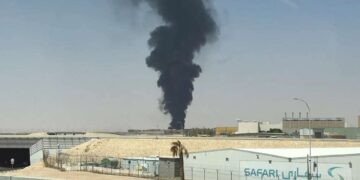
He added that Iran had carried out multiple attacks in the past 24 hours, including one in Oman and three in the UAE, notably near the Fujairah oil terminal.
Hegseth also said Washington is communicating with Iran both publicly and privately to facilitate maritime operations in the strait. He suggested that some actions by the Islamic Revolutionary Guard Corps (IRGC) may not align with Iran’s diplomatic stance.
“There are some actions that the IRGC takes sometimes that are outside the bounds of what maybe Iranian negotiators would like; that’s their job to rein that in, and ultimately create a condition for a deal,” he said.
He added that the US aims to ensure the safety of commercial shipping with what he described as a “red, white and blue dome” over the Strait of Hormuz.
UAE Intercepts Aerial Threats
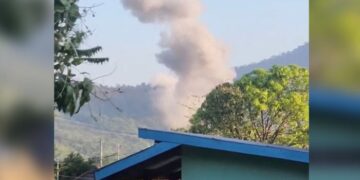
The UAE said its air defence systems were actively responding to incoming missile and drone threats, with sounds heard across the country linked to ongoing interception operations.
Iranian military officials denied launching any such attacks. The Khatam al-Anbiya central command stated that its forces “did not launch any missile or drone operation against the United Arab Emirates these past days,” while warning that any aggression originating from Emirati territory would prompt a “firm response”.
Iran’s foreign ministry spokesman Esmaeil Baghaei criticised Gulf states for relying on external powers for security, saying the US military presence in the region “serves only as a source of instability and endangers the very countries hosting those bases”. “The US military presence in the region is a liability and brings nothing but insecurity,” he added.
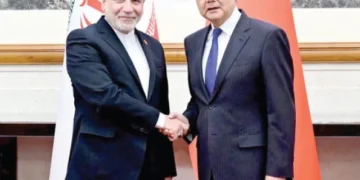
Meanwhile, Iran’s Foreign Minister Abbas Araghchi is set to visit Beijing for talks with Chinese counterpart Wang Yi on bilateral ties and regional developments.
President Masoud Pezeshkian also commented on the situation, describing Iran as an “ethical, responsible power” while accusing its adversaries of representing “reckless and unchecked force”. He wrote: “If politics is reduced to power, the result is today’s world: chaos, oppression, injustice, and piracy.” He added that “power without ethics is hollow”.
Hormuz Navigation Dispute Intensifies
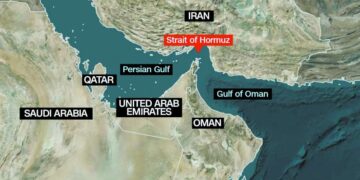
Tensions continue to centre on the strategic Strait of Hormuz. Hegseth said the US maintains control over the waterway and that Iran “has a choice to make”.
Iran’s navy, however, warned vessels against using unauthorised routes, stating they would face a “decisive response”.
“We warn all vessels that intend to transit the strait, the only safe route… is the corridor previously announced by Iran,” the statement said. “The diversion of vessels to other routes is unsafe and will face a decisive response from the IRGC Navy.”
Iran has also introduced a new system to regulate maritime traffic through the strait, requiring ships to obtain permits and follow designated routes.
Iranian parliament speaker and chief negotiator Bagher Ghalibaf warned the US against further escalation, saying: “We know full well that the continuation of the status quo is intolerable for America; whilst we have not even started yet.”