


































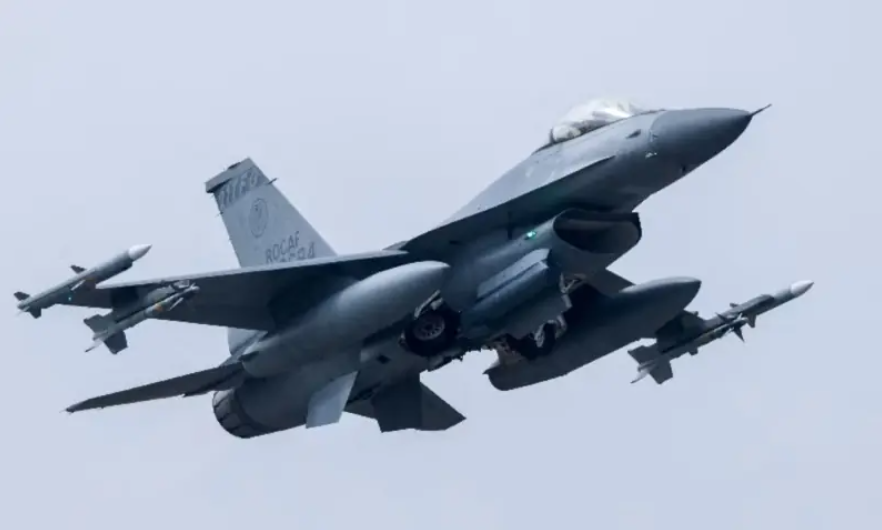
Taiwan on Saturday defended continued US weapons sales, saying they are grounded in American law and help deter regional threats, after US President Donald Trump said he had not yet decided on approving future military packages for the island.

Although Washington has no formal diplomatic relations with Taiwan, it remains Taipei’s most significant international supporter and is legally required under the Taiwan Relations Act to provide defensive weapons.
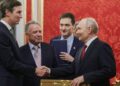
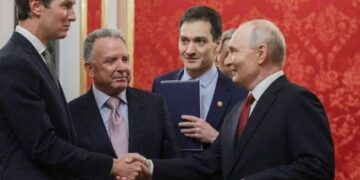
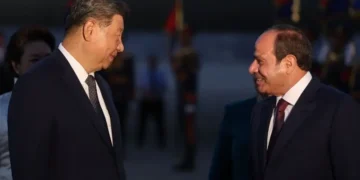
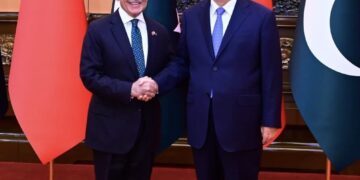
Trump’s remarks came a day after his summit with Chinese President Xi Jinping in Beijing, where he said he was undecided about moving forward with a major arms deal for Taiwan, raising fresh concerns over Washington’s commitment.
Responding to the comments, Taiwan President Lai Ching-te’s spokesperson Karen Kuo said China’s growing military activities remain the primary source of instability in the Indo-Pacific and the Taiwan Strait.
“Furthermore, military sales between Taiwan and the US are not only a reflection of the US security commitment to Taiwan as stipulated in the Taiwan Relations Act, but also serve as a mutual deterrence against regional threats,” she said.
Kuo also thanked Trump for his continued support for peace and security in the Taiwan Strait, adding that Taipei would continue strengthening ties with Washington.
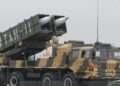
The Trump administration had earlier approved an $11 billion arms package for Taiwan in December, while another deal reportedly worth around $14bn is still awaiting approval.
Speaking in Taipei, Taiwan Deputy Foreign Minister Chen Ming-chi declined to comment directly on the pending package, saying discussions with Washington were ongoing to better understand the US position.
Taiwan has meanwhile faced challenges in increasing defence spending, as the opposition-led parliament has blocked parts of the government’s proposed $40bn military budget. However, lawmakers recently approved about two-thirds of the requested amount, specifically earmarked for US weapons purchases.
US lawmakers from both major parties have publicly encouraged the Trump administration to proceed with arms sales to Taiwan.
Analysts in Taiwan suggested Trump may postpone any decision until after a possible visit by Xi to the United States later this year.
Following his meeting with Xi, Trump also hinted he may speak directly with President Lai regarding the proposed arms deal, saying, “I have to speak to the person … that’s running Taiwan.”
Asked about the possibility of talks between Trump and Lai, Chen said Taiwan was still trying to understand the “true intent” behind Trump’s statement.
A senior Taiwanese security official, speaking anonymously, said Trump’s comments made Taipei’s role in the matter clear.
“The party with whom arms sales are to be discussed is Taiwan, not Beijing,” the official said.
China, which claims Taiwan as part of its territory, has repeatedly refused talks with Lai, calling him a “separatist”, and has not ruled out the use of force to bring the island under its control.
Reaffirming Taipei’s stance, Kuo said the Republic of China — Taiwan’s official name — is already an independent and sovereign democracy.
“This is self-evident, and Beijing’s claims are therefore without merit,” Kuo said.
China also maintained military pressure around Taiwan during Trump’s Beijing visit, with its forces continuing operations near the island.
Shen Yu-chung, deputy minister at Taiwan’s Mainland Affairs Council, said Beijing has consistently used military pressure and political coercion in pursuit of “unification”.