

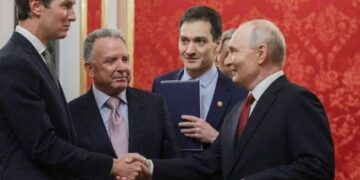







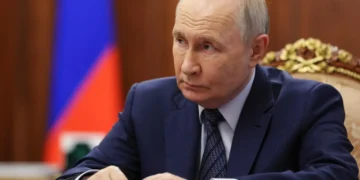













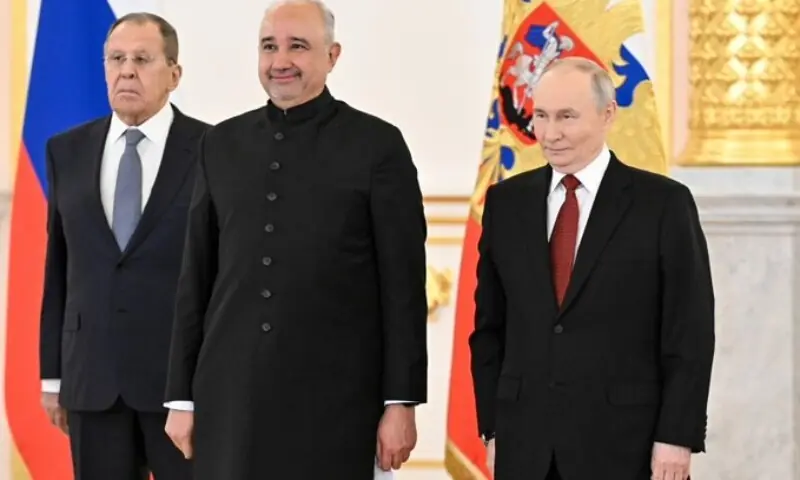
MOSCOW (MNN); Russian President Vladimir Putin has described relations between Russia and Pakistan as genuinely mutually beneficial, saying Moscow continues to maintain close and constructive cooperation with Islamabad.

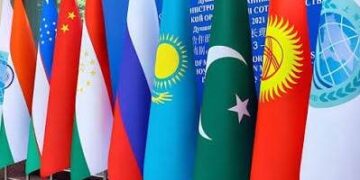
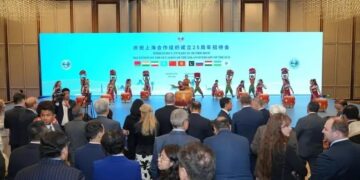
According to a statement shared by the Russian Embassy in Pakistan on X, President Putin highlighted Pakistan’s role as a full member of the Shanghai Cooperation Organisation, calling it the world’s largest regional body in terms of economic, technological and human potential. He said Russia-Pakistan relations are based on shared interests and mutual advantage.
The remarks were made as Pakistan’s Ambassador to Russia, Faisal Niaz Tirmizi, formally presented his credentials to President Putin during a ceremony at the Grand Kremlin Palace on Thursday, the Pakistani Embassy in Moscow said.
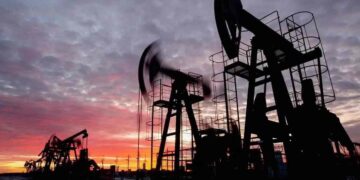
In recent years, economic cooperation between Pakistan and Russia has expanded significantly, driven by evolving global conditions. Following Western sanctions linked to the Ukraine conflict, Russia sought new energy markets, while Pakistan looked for cost-effective fuel options to ease its import burden.
This growing partnership led to Pakistan’s inclusion of Russian crude oil in its energy mix in 2023. Last month, Finance Minister Muhammad Aurangzeb confirmed that Islamabad and Moscow are holding discussions on a potential new agreement in the oil sector.
Pakistan currently imports around 70 percent of its crude oil, with Russian supplies playing an increasingly important role. Despite closer energy cooperation with Moscow, Islamabad continues to enjoy relatively lower tariffs from Washington and maintains working relations with the current US administration, even as India recently faced a 25 percent punitive tariff on its exports.
In November last year, during the visit of Russian Energy Minister Sergei Tsivilev to Islamabad for the 10th session of the Russia-Pakistan Intergovernmental Commission, both countries reiterated their commitment to strengthening cooperation in trade diversification, energy, business-to-business ties, and social sectors including health and education.