










































































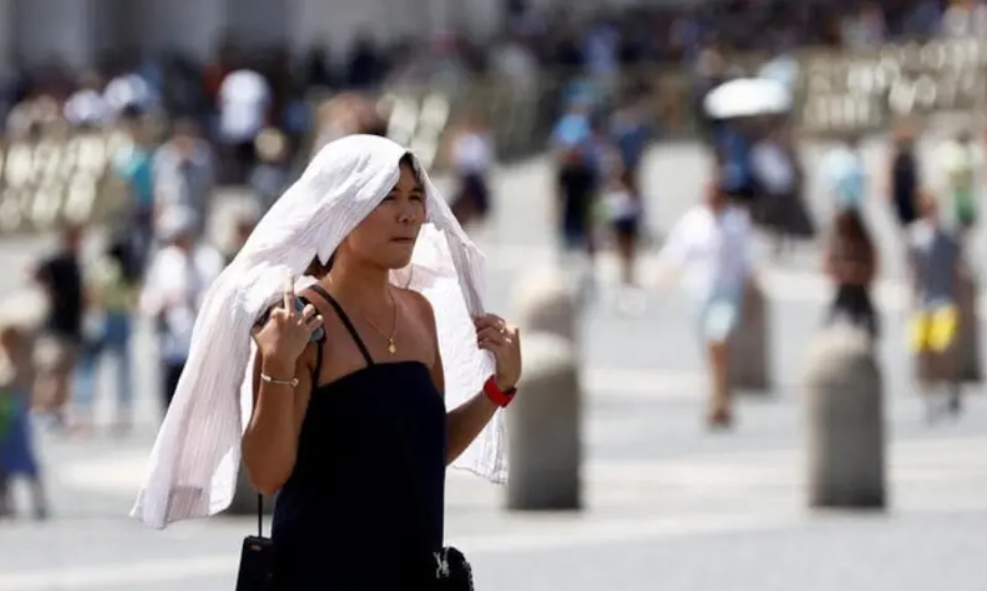
FRANKFURT: Germany recorded around 14,000 heat-related deaths this summer, marking a new record as Europe endured a series of severe heatwaves, according to official figures released on Thursday.

The Robert Koch Institute said approximately 9,600 deaths were recorded during a single week in late June, when temperatures in parts of Germany climbed above 40 degrees Celsius.
Europe has experienced an exceptionally hot summer, with prolonged heatwaves and drought contributing to a sharp rise in heat-related deaths across several countries.
Spain’s public health institute reported nearly 4,500 heat-related deaths since June 1, while French health authorities recorded more than 7,300 excess deaths during the same period.
In Germany, people aged over 75 accounted for the largest proportion of heat-related deaths, the Robert Koch Institute said.
“In some cases — such as heatstroke — exposure to heat leads directly to death, whereas in most instances, death results from a combination of heat exposure and pre-existing medical conditions,” the report said.
“Consequently, heat is not usually listed as the underlying cause of death on the death certificate; instead, statistical methods must be employed to estimate the extent of heat-related deaths.”
The institute said it had been monitoring heat-related mortality for the past decade. The previous highest figure was around 8,900 deaths in 2018, while a separate medical report estimated that approximately 10,000 people died from heat-related causes in 1994.
In some years, the number of heat-related deaths had fallen below 2,000, with the report noting that “these differences can be attributed to the varying severity of the heatwaves”.
This summer’s extreme heat and drought have also taken a toll on Germany’s economy and environment, contributing to wildfires, lower crop production and reduced water levels in major rivers used for cargo transport.
Meanwhile, ministers from the centre-left Social Democrats, the junior partners in Chancellor Friedrich Merz’s coalition government, called this week for “climate adaptation and nature conservation” to be incorporated into Germany’s constitution, known as the Basic Law.