








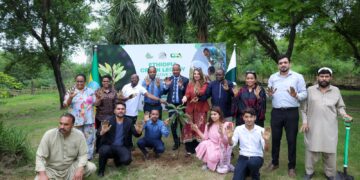























































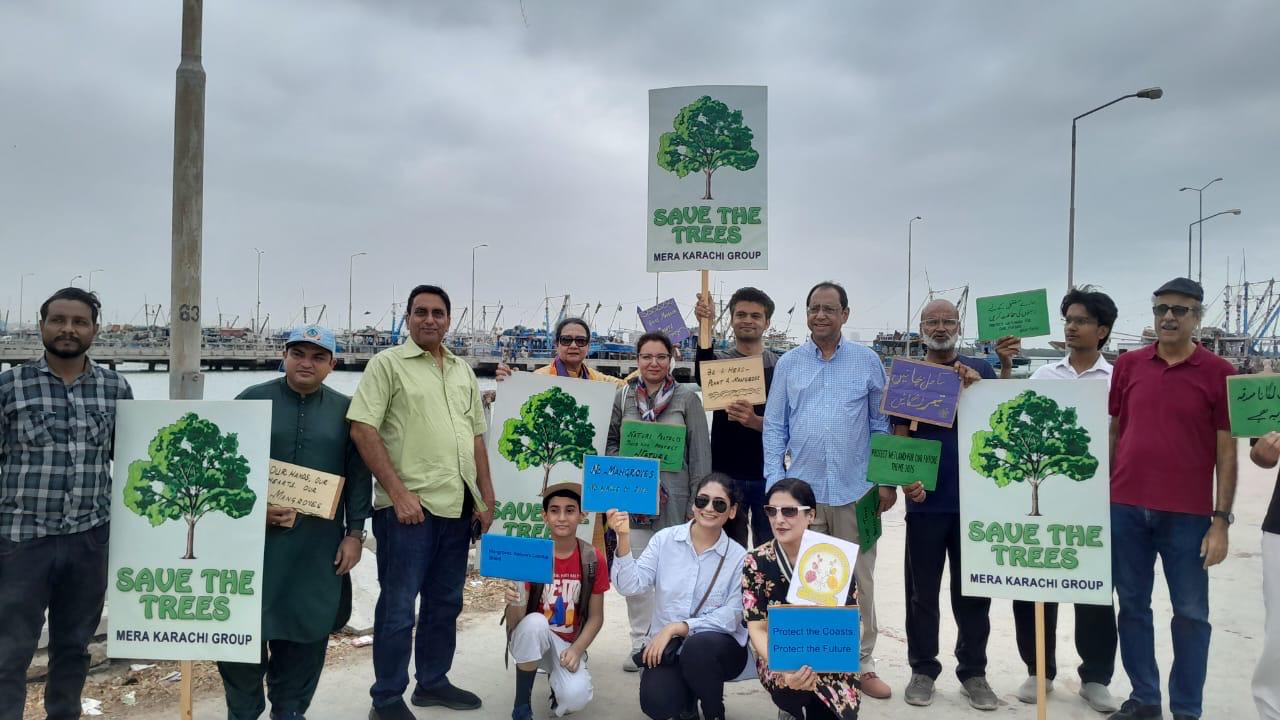
KARACHI, August 8, 2026: Mera Karachi Group (MKG), a civil society initiative committed to promoting a cleaner, greener and more sustainable Karachi, organized a mangrove plantation drive at Toor Creek in the Indus Delta, with the support of the Sindh Forest Department, Caritas Pakistan and Ecolife.

More than 60 participants took part in the initiative, including volunteers, environmental advocates and students from Rehri Goth, a small fishing village located along Karachi’s coastal belt. The plantation drive was aimed not only at increasing mangrove cover but also at creating greater awareness among local communities, particularly young people, about the importance of protecting Karachi’s fragile coastal ecosystem.
The initiative reflects MKG’s belief that environmental protection cannot be left solely to government institutions. It requires the active participation of civil society, local communities, educational institutions and, importantly, the corporate sector.
Mangroves: Karachi’s Natural Coastal Defence
Karachi is a major coastal city whose economy, communities and way of life are closely connected to the sea. However, its coastline and surrounding ecosystems face increasing pressure from urbanization, pollution, untreated wastewater, climate change and the degradation of natural habitats.
Mangrove forests provide one of the most important natural forms of protection for Karachi’s coastline. Their dense root systems help stabilize coastal soil, reduce erosion and trap sediments, thereby helping to protect vulnerable coastal areas.
Mangroves also act as a natural buffer against storm surges, strong winds and coastal flooding. As climate change contributes to rising sea levels and increasingly unpredictable weather patterns, maintaining and expanding healthy mangrove forests is becoming even more important for the long-term resilience of Karachi and its coastal communities.
Beyond coastal protection, mangroves are highly productive ecosystems that provide breeding and nursery grounds for fish, crabs, shrimp and other marine life. Their health is therefore directly linked to the livelihoods of fishing communities such as those living in and around Rehri Goth and other coastal settlements.
Mangroves also support biodiversity and play an important role in addressing climate change by absorbing and storing carbon in their biomass and the sediments beneath them. Protecting and restoring these ecosystems can therefore contribute simultaneously to coastal protection, biodiversity conservation, food security and climate resilience.
Local Communities Must Be Part of the Solution
MKG particularly welcomed the participation of students from Rehri Goth in the plantation campaign.
The involvement of young people from a fishing community is significant because they live close to the ecosystem that the campaign seeks to protect. Environmental conservation becomes far more meaningful when communities are not merely recipients of awareness campaigns but are actively involved in protecting and restoring their own natural environment.
The participation of the students also provided an opportunity to develop environmental awareness among the next generation and to demonstrate that even relatively small community-led initiatives can contribute to addressing major environmental challenges.
MKG believes that environmental education and practical action must go hand in hand. Planting a mangrove is only the first step; ensuring its survival, nurturing the plantation and developing a long-term culture of environmental stewardship are equally important.
A Call for Greater Corporate Participation
Mera Karachi Group also called upon Pakistan’s corporate sector to play a more active and sustained role in supporting environmental initiatives in Karachi.
Syed Imran Ahmad, the founder of MKG emphasized that Corporate Social Responsibility (CSR) should extend beyond one-time donations or isolated activities. Businesses operating in Karachi benefit directly and indirectly from the city’s infrastructure, workforce, markets and natural resources, and can make a meaningful contribution towards protecting its environment.
The corporate sector can support long-term mangrove restoration programmes, sponsor plantations, provide resources for maintenance and monitoring, engage employees as volunteers, and partner with schools and coastal communities to create continuing environmental programmes.
MKG believes that a coordinated partnership between the government, private sector, civil society and local communities could transform mangrove plantation from occasional campaigns into a large-scale, sustained coastal restoration programme for Karachi.
More Plantation Drives Planned
The mangrove plantation at Toor Creek is part of MKG’s broader commitment to raising awareness about Karachi’s environmental challenges and encouraging citizens to become actively involved in protecting the city.
MKG plans to organize its second mangrove plantation drive in October, providing another opportunity for individuals, students, organizations and companies to participate in this important environmental initiative.
The Group hopes that future campaigns will attract greater participation from Karachi’s corporate community, educational institutions and residents.
“Karachi’s coastline is an invaluable natural asset, and protecting it is a shared responsibility. Mangroves are not simply trees that we plant; they are a natural defence system for our coastline, a habitat for marine life, a source of livelihood for coastal communities and an important part of our response to climate change,” said a representative of Mera Karachi Group.
“We hope that this initiative will encourage more citizens and, particularly, the corporate sector to recognize that environmental responsibility must be a continuous commitment rather than a one-day activity. By working together, we can help build a greener, healthier and more resilient Karachi for future generations.”
Mera Karachi Group expressed its appreciation to the Sindh Forest Department, Caritas Pakistan and Ecolife for supporting the initiative and to all volunteers and students who participated in the plantation drive.
The Group urged other organizations, businesses and citizens to join future initiatives and make the protection and restoration of Karachi’s coastal environment a collective priority.