



































































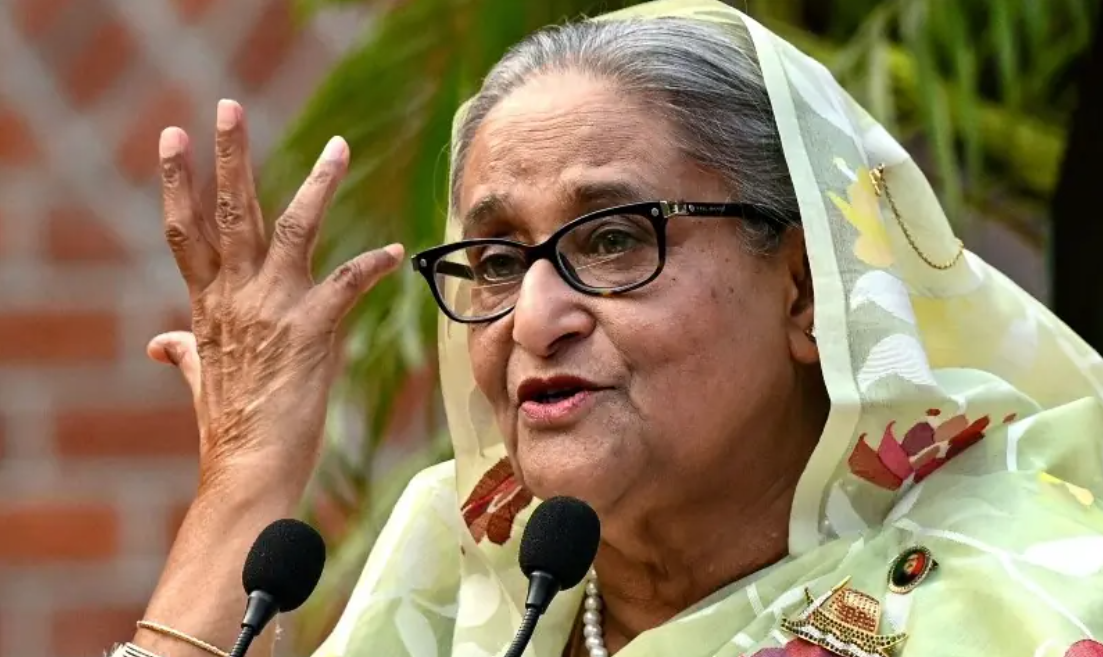
Bangladesh’s former prime minister, Sheikh Hasina, has said she intends to return to the country by December despite fears that she could be killed, arrested, or imprisoned upon her arrival.

In emailed responses to AFP, the 78-year-old former leader acknowledged the risks but said she remained determined to return.
“I may be killed. I may be arrested. I may be sent to prison,” Hasina said.
“I am fully aware of my fate. Still, I want to go back because my people are calling me.”
Hasina was removed from power in August 2024 following a student-led uprising that ended her 15-year rule. She fled to India by helicopter as protesters stormed her official residence.
According to the United Nations, as many as 1,400 people were killed during the government crackdown on demonstrators as Hasina’s administration sought to remain in power.
In November, a court in Dhaka convicted Hasina of crimes against humanity and sentenced her to death by hanging. She dismissed the ruling as “political vengeance dressed up as law”.
Hasina, who has been living at a secret location in India since leaving Bangladesh, said her decision to return was made independently and was not influenced by external pressure.
Relations between India and Bangladesh, which deteriorated following her removal from office, have improved since Bangladeshi Prime Minister Tarique Rahman assumed office in February.
Although Bangladesh has formally requested Hasina’s extradition, New Delhi has said the request remains “under examination.”
Hasina maintained that the extradition issue had “no connection” with her decision to return.
“I can say that I am staying in India with due respect and dignity,” she said. “Indian authorities have not discussed extradition with me. I myself have decided to return to my country.”
The Bangladeshi government has stated that if Hasina returns, she will be provided due legal process in all cases filed against her.
Rights organizations have previously accused Hasina’s former administration of human rights violations, including the killing of political opponents, suppression of opposition parties, manipulation of the judiciary, and conducting unfair elections.