









































The Middle East conflict widened on Wednesday as explosions struck a natural gas loading port in Egypt and a US-owned floating storage tanker was reportedly hit by a drone, while the United States and Saudi Arabia launched joint strikes against Iran-backed paramilitary groups in Iraq.

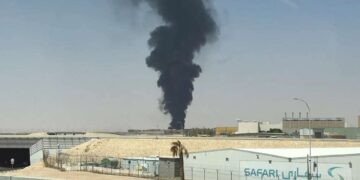
The drone attack targeted a vessel at Egypt’s Damietta port, triggering a fire that spread to another ship, according to three trading sources familiar with the incident.
British maritime security company Ambrey said all crew members were safely evacuated and the fire was brought under control. No group immediately claimed responsibility for the attack.
Earlier in the day, US and Saudi forces carried out coordinated strikes on Iran-backed armed groups in Iraq in response to attacks on American troops and Saudi oil infrastructure.
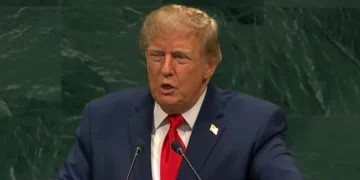
US President Donald Trump also warned of further military action against Iran after Tehran fired missiles at US troops in Jordan.
“We’ll be hitting them hard,” Fox News quoted Trump as saying.
Iran confirmed it had launched attacks on US bases in Jordan and targeted ships in the Strait of Hormuz. Tehran also rejected an Omani proposal for joint management of the strategic waterway.
Iranian President Masoud Pezeshkian urged the country to remain steadfast amid mounting pressure.
“Fight the enemy and stand firm against them so that we do not submit to injustice and oppression,” he said, according to Al Jazeera.
“In the same way, we cannot oppress our citizens or commit injustice against them,” IRNA quoted him as saying, adding that Iran had demonstrated it was a “unique model of resistance.”
Meanwhile, regional sources told Reuters that Yemen’s Houthi movement is considering imposing transit fees on commercial vessels sailing through the southern Red Sea, a week after announcing a naval blockade on Saudi Arabia. No timeline for the measure has been announced.
The growing tensions pushed global oil prices sharply higher, with Brent crude rising more than seven percent to exceed $90 per barrel.
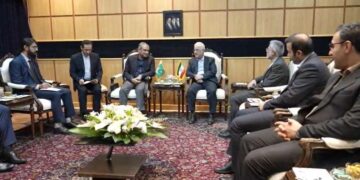
Separately, Deputy Prime Minister and Foreign Minister Ishaq Dar held a telephone conversation with Egyptian Foreign Minister Badr Abdelatty, emphasizing the importance of “restraint, dialogue, and diplomacy” to prevent further escalation.
According to Pakistan’s Foreign Office, both ministers expressed deep concern over the worsening situation in Palestine, condemning Israel’s continued military operations in Gaza and the occupied West Bank, increasing settler violence, and repeated violations at the Al-Aqsa Mosque compound in occupied East Jerusalem.
They also stressed the need for an immediate end to hostilities, unhindered humanitarian access, and full respect for international law.
US-Saudi strikes in Iraq
The joint operation marked the first publicly acknowledged military action conducted together by Saudi Arabia and the United States against Iran-backed groups in Iraq, raising concerns that Riyadh is becoming directly involved in the conflict.
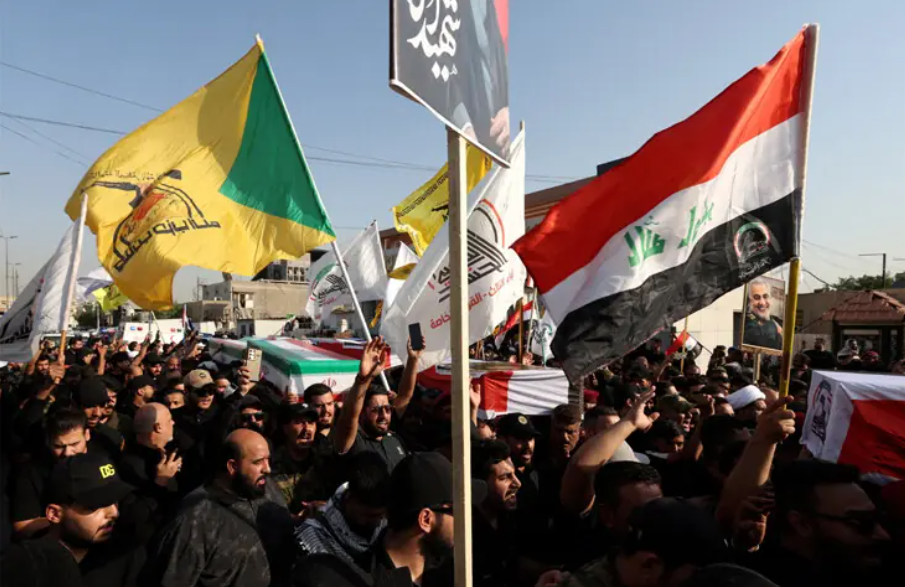
Iraq’s Popular Mobilisation Forces (PMF) said the strikes targeted several of its bases, killing at least 20 members and injuring 32 others.
Television footage from Iraq showed mourners carrying the bodies of slain fighters while chanting “Death to America!”
Washington and Riyadh said the strikes were carried out in retaliation for drone attacks launched from Iraqi territory against Saudi oil facilities.
The operation was the first major US military action in the region since President Trump suspended an intensive bombing campaign last week after military commanders concluded it had achieved its objectives.
Although Iran denied directing attacks from Iraqi territory, Iranian newspaper Hamshahri reported that four advisers from the Islamic Revolutionary Guard Corps (IRGC) were among those killed.
Iraq caught between allies
The strikes highlighted Iraq’s increasingly difficult position as it seeks to maintain close ties with both the United States and Iran.
Prime Minister Ali al-Zaidi’s office urged all parties to avoid further escalation, stressing the government’s desire to keep Iraq out of regional conflicts.
The Iraqi presidency condemned the attacks on the PMF as “an unacceptable attack and a flagrant violation of Iraq’s sovereignty,” while also calling for an end to attacks by armed groups against neighboring countries.
President Trump told Fox News that the United States had coordinated the operation with the Iraqi government, although Iraqi officials did not immediately comment on the claim.
Washington has repeatedly urged Baghdad to curb the influence of Iran-backed militias, though previous attempts have triggered political unrest.
In a warning to the Iraqi government, the Iran-backed Kataib Hezbollah group said Baghdad had until next Thursday to demonstrate it could defend the country’s sovereignty.
Rising regional confrontation
Hours before the Iraq strikes, the US military said its air defense systems had intercepted what it described as a surprise Iranian attack on American forces in the region.
Jordan’s military announced it had intercepted five Iranian missiles, while Iran’s Revolutionary Guards said they had launched ballistic missiles at US military installations in Jordan and struck three tankers attempting to transit the Strait of Hormuz through what it described as an unauthorized route.
The latest escalation follows the collapse of a US-Iran interim agreement reached in June over the future of the Strait of Hormuz, a vital global energy shipping route that Iran says it controls and intends to regulate through transit fees.