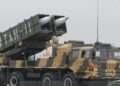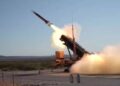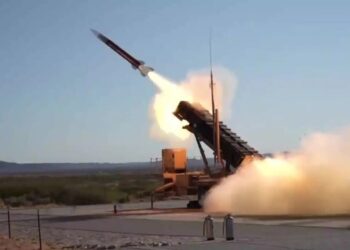






































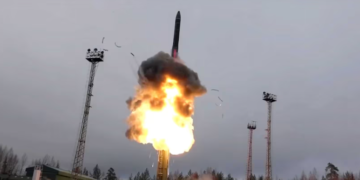
































BEIJING: China said on Monday that one of its strategic nuclear submarines successfully launched a missile into the Pacific Ocean during a routine military exercise, following warnings from several regional countries that Beijing was preparing to test an intercontinental ballistic missile.

The launch marked a rare display of China’s military capabilities in the strategically significant South Pacific, where the United States, Australia and New Zealand have traditionally been key security partners.
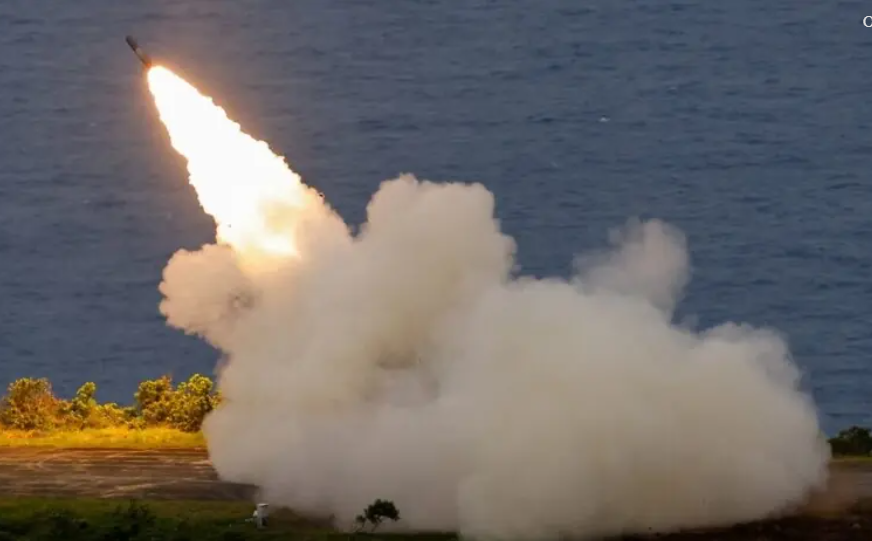
According to a statement posted on the Chinese navy’s WeChat account by spokesperson Wang Xuemeng, “At 12:01 pm on July 6, a strategic nuclear submarine of China’s People’s Liberation Army Navy successfully launched a … strategic missile carrying a training simulation warhead into the relevant high seas of the Pacific Ocean, accurately landing in the designated sea area.”
Wang added, “This missile test launch is a routine arrangement of China’s annual military training, and relevant countries were informed in advance.”
The missile test coincided with the start of annual joint naval exercises between China and Russia off the eastern Chinese port city of Qingdao, although it was not immediately clear whether the launch formed part of those drills.
China has significantly expanded its nuclear arsenal and increased defence spending in recent years. According to the Pentagon, Beijing possessed more than 500 operational nuclear warheads as of May 2023 and is expected to have over 1,000 by 2030.
Regional governments informed
Earlier on Monday, officials from Papua New Guinea and New Zealand confirmed that China had informed them in advance of the planned missile launch.
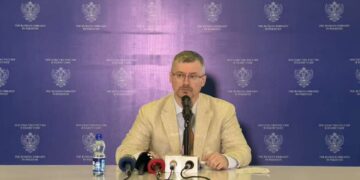
Papua New Guinea Foreign Minister Justin Tkatchenko said, “Yes, China has briefed me. I was personally called by the Chinese ambassador.”
A New Zealand government source also confirmed that Beijing had notified Wellington of an upcoming intercontinental ballistic missile test but did not specify the missile’s intended impact area.
In September 2024, China’s Rocket Force launched a dummy warhead into waters near French Polynesia, marking its first long-range missile test over international waters in more than four decades. Analysts at the time said the missile appeared to be a Dong Feng-31, capable of carrying a thermonuclear warhead.
The missile landed in waters covered by an international treaty designating the region as a nuclear-free zone.
AFP also reported last month that an internal New Zealand Defence Force document warned China’s naval deployments and ballistic missile tests were likely to become a “persistent” feature of the Pacific region.
Japan and Australia voice concern
Japan said it had urged China to reconsider proceeding with the missile launch after Chinese authorities informed the Japanese embassy in Beijing before the test.
A joint Japanese government statement said, “We strongly called for a rethink of the ballistic missile test-firing, so that it won’t pose a threat to Japan’s security such as by passing through Japan’s airspace.”
It added, “Through close coordination among relevant ministries, we will strive to ensure the safety of our airspace and maritime territory, with the ministry of defence fully prepared for surveillance and monitoring.”
The statement also noted, “We expressed serious concerns over China’s increasing military activity.”
Meanwhile, Australian Foreign Minister Penny Wong said the missile test risked increasing regional tensions.
“Australia has been clear with China that we regard this as destabilising to the region,” Wong told reporters.