



















































TEHRAN: The body of former Iranian Supreme Leader Ayatollah Ali Khamenei was placed in state in Tehran on Friday, marking the beginning of a week-long series of funeral ceremonies expected to draw millions of mourners from across the country.

Khamenei, who led Iran for 37 years, was assassinated at the age of 86 in US-Israeli air strikes that marked the opening phase of the Middle East conflict in February.
Iranian authorities expect the funeral to become one of the largest public mourning events in modern history, with participation anticipated to exceed the estimated 10 million people who attended the funeral of Ayatollah Ruhollah Khomeini in 1989.
According to Iranian officials, current Supreme Leader Ayatollah Mojtaba Khamenei will not attend the funeral because of security concerns following reported Israeli threats against him.
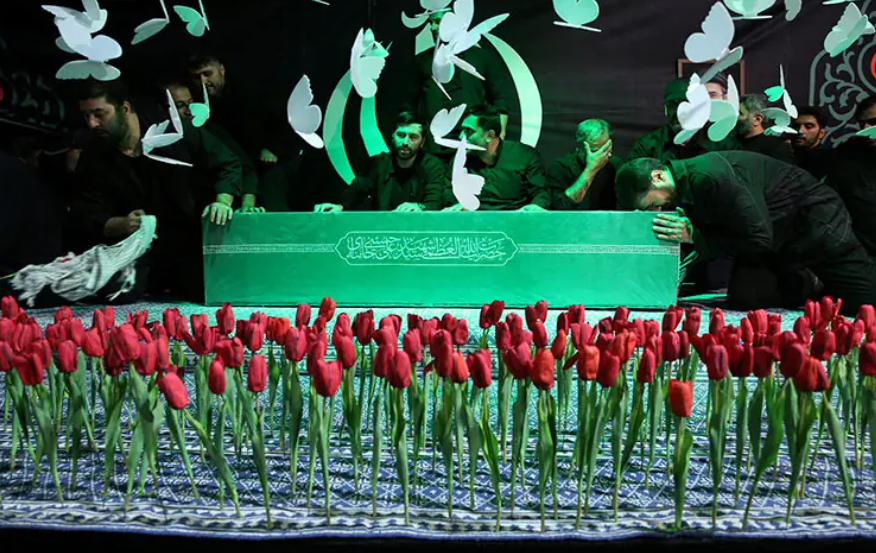
Images released from Tehran showed mourners carrying Khamenei’s coffin, draped in the Iranian national flag, into the Grand Mosalla, one of the country’s most significant religious and ceremonial venues. Crowds dressed in black gathered as the coffin was placed before a backdrop decorated with red flowers and suspended white butterflies.
Ahmad Vahidi, commander of the Revolutionary Guards, made his first public appearance since the conflict began, joining senior officials in paying tribute to the late leader.
Khamenei’s body will remain in state at the Grand Mosalla for three days. The complex has been adorned with banners displaying his photographs and quotations.
Funeral route to pass through holy cities
The funeral procession will travel through several religious and political centres, beginning in Tehran before continuing to the holy city of Qom, followed by Iraq’s Shia pilgrimage cities of Najaf and Karbala. The final burial will take place on July 9 at the shrine of Imam Reza in Mashhad, Khamenei’s birthplace.
The funeral, which was postponed during the height of the Middle East conflict, comes as Iran and the United States observe a fragile ceasefire following the signing of the Islamabad Memorandum of Understanding aimed at ending hostilities.
Iran has accused the United States and Israel of launching the strikes that killed Khamenei along with several members of his family, including his daughter, grandchild, son-in-law and daughter-in-law. Senior military officials, including Ali Shamkhani, an adviser to the supreme leader, were also killed during the attacks.
Public funeral ceremonies officially begin on Saturday, with the Grand Mosalla hosting the first major gathering before the procession continues to other cities.
Late on Thursday, Khamenei’s coffin was unveiled before large crowds of grieving supporters, many of whom wept, chanted and beat their chests in mourning while flowers were thrown onto the bier.
On Friday, the coffins of Khamenei and his family members were placed on a raised white platform inside the prayer hall built in honour of Ayatollah Ruhollah Khomeini. The hall was decorated with national flags and black mourning banners as mourners paid their respects.
President Masoud Pezeshkian said a large public turnout would serve as “a decisive” response to terrorism, violence and bullying while demonstrating Iran’s unity in the face of external pressure.