


























































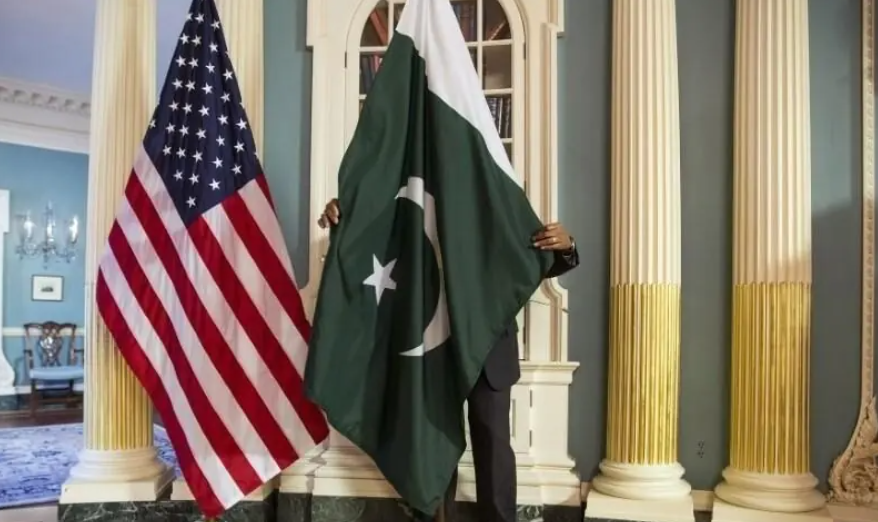
WASHINGTON/UNITED NATIONS: The United States has reaffirmed its support for Pakistan’s right to defend itself against terrorist attacks, while the United Nations General Assembly adopted the ninth review of the Global Counterterrorism Strategy (GCTS) through a recorded vote after member states failed to reach consensus.

“The Pakistani people have suffered greatly at the hands of terrorists,” the US State Department said in a statement reported by Reuters.
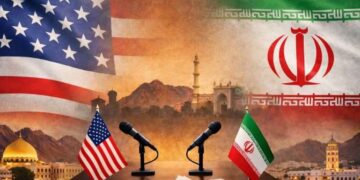
Washington “supports Pakistan’s right to defend itself against terrorist attacks” amid continuing security tensions between Pakistan and Afghanistan, the statement added.
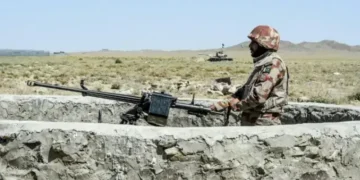
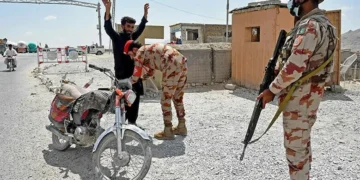
The remarks came after Pakistan carried out operations against terrorist infrastructure along the Afghan border on Sunday night following an attack on the Pakistan Rangers Sindh headquarters in Karachi’s Gulistan-i-Jauhar.
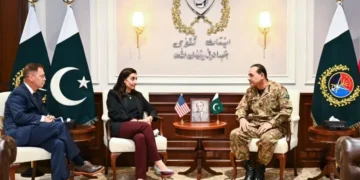
Earlier this year, US Under Secretary of State for Political Affairs Allison Hooker also expressed support for Pakistan, stating that Washington “continues to monitor the situation closely” and backs Islamabad’s right to defend itself against Taliban attacks.
The statement coincided with the UN’s ninth review of the GCTS, the international framework adopted in 2006 to strengthen global cooperation against terrorism.
Although the United States requested a recorded vote and opposed the resolution, the General Assembly adopted the strategy on July 1 with 140 countries, including Pakistan, voting in favour.
The United States, Israel, and Argentina voted against the resolution, while Japan initially abstained before clarifying that the abstention resulted from a technical error and that it had intended to support the resolution.
Washington criticised the draft, calling it “bloated, outdated, and lacking focus,” and argued that its more than 170 paragraphs weakened core counterterrorism priorities with unnecessary and non-operational language. The US also said the draft “ignores numerous US redlines and policy concerns”.
Israel similarly described the document as “outdated, long and repetitive, and does not embrace institutional modernisation”, while Argentina said its vote against the resolution was intended to highlight the need for a broader review of the strategy.
Meanwhile, Pakistan, Egypt and Iran expressed disappointment that proposals put forward by members of the Organisation of Islamic Cooperation (OIC) were not reflected in the final text. Türkiye also regretted the absence of stronger language condemning attacks targeting Muslims, including the desecration of mosques and the burning of the Holy Quran.
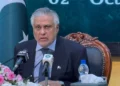
Addressing the General Assembly, Pakistan’s Permanent Representative to the UN, Asim Iftikhar Ahmad, said terrorism had become an increasingly interconnected and decentralised global threat and stressed that the strategy should continue evolving to address emerging challenges.
He said Pakistan had remained at the forefront of international counterterrorism efforts, including operations against Al Qaeda and other militant groups, while paying a heavy human cost. According to the envoy, more than 1,200 Pakistanis lost their lives in terrorist attacks over the past year.
The ambassador expressed regret that the three-year review process failed to address longstanding shortcomings in the strategy or incorporate concerns raised by OIC member states, many of which have been significantly affected by terrorism.
He emphasised that eliminating terrorism requires a comprehensive multilateral approach that addresses both traditional and emerging threats, upholds human rights and the rule of law, and recognises the right to self-determination under international law.
He also rejected attempts to equate the “legitimate struggle for self-determination” with terrorism and called for stronger international condemnation of state actions against populations living under foreign occupation.
The envoy further urged coordinated efforts to combat xenophobia, racism, violent extremism and hate-driven ideologies, while calling for reforms to the UN counterterrorism architecture and sanctions regime to ensure greater transparency and impartiality.
He also advocated stricter regulation of social media platforms to curb online radicalisation, extremist propaganda, recruitment and misinformation, as well as stronger oversight of digital financial systems, virtual assets and cryptocurrencies to prevent their exploitation by terrorist organisations.
Ambassador Asim described the lack of consensus during the review process as a “wake-up call,” urging renewed international cooperation to strengthen the global fight against terrorism.