




























































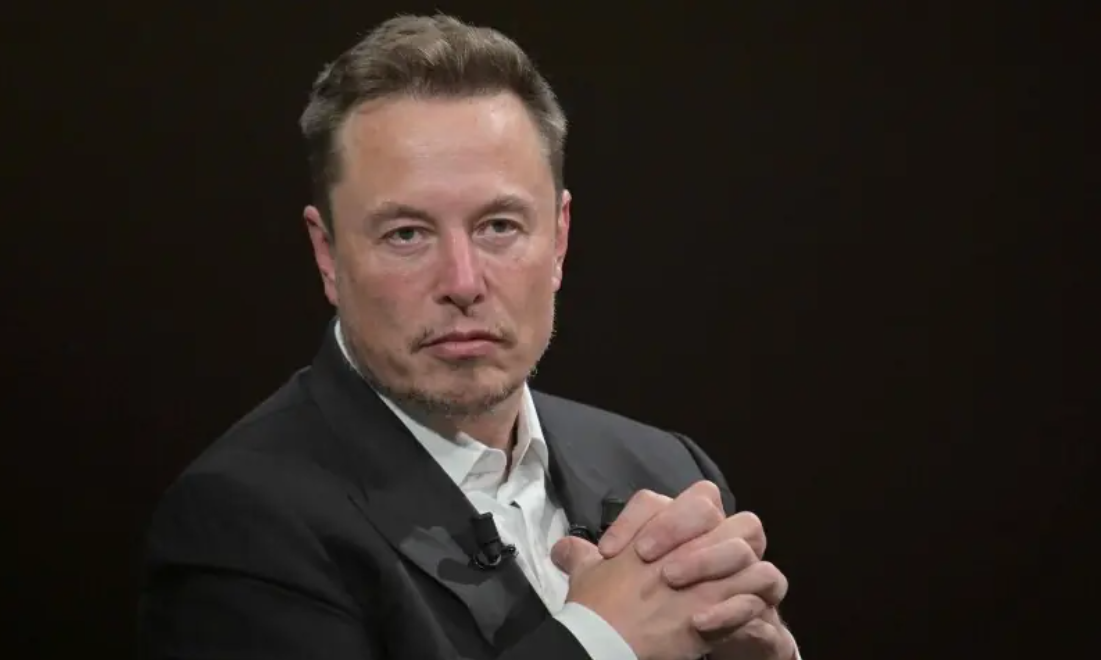
NEW YORK: Elon Musk has become the world’s first trillionaire after SpaceX completed a record-breaking initial public offering (IPO), further cementing his position as one of the most influential and controversial figures in global business.

The historic IPO raised $75 billion through the sale of 555.56 million shares priced at $135 each, valuing SpaceX at $1.77 trillion and making it one of the most valuable companies in the world.
The offering marks the largest IPO in US history and reflects strong investor confidence in Musk’s business ventures despite ongoing debates about the company’s valuation and future profitability.
SpaceX, which operates in the fields of space exploration, satellite communications and artificial intelligence, will become the seventh-largest US-listed company when its shares begin trading on the Nasdaq.
Although the company reported losses last year and generates less revenue than many of the market’s largest corporations, investors continue to back Musk’s long-term vision and ambitious technological goals.
Before the IPO, Forbes estimated Musk’s wealth at approximately $780 billion. According to Reuters calculations based on company filings, his net worth will exceed $1.1 trillion once SpaceX shares begin trading.
Much of Musk’s fortune is tied to SpaceX, where his stake is valued at roughly $866 billion. Additional wealth comes from his holdings in Tesla and other ventures.
“The second richest person has been hovering around $300bn, so about less than one-third of what Musk can potentially be worth tomorrow,” said Matt Durot, deputy editor at Forbes Wealth.
“And only one other person (Oracle founder) Larry Ellison has ever been worth $400bn.”
Musk first gained worldwide recognition through Tesla and SpaceX before expanding his influence with the $44 billion acquisition of Twitter, now known as X, in 2022.
The purchase transformed him into a major voice on issues ranging from politics and immigration to government spending and free speech.
His political involvement, particularly through US President Donald Trump’s Department of Government Efficiency (DOGE), generated significant controversy and coincided with consumer boycotts and declining Tesla sales in several international markets during 2025.
Born in Pretoria, South Africa, in 1971, Musk studied at the University of Pennsylvania before embarking on a business career that would eventually span electric vehicles, space technology, artificial intelligence, brain implants and infrastructure projects.
As Tesla’s chief executive, he helped establish the company as the world’s most valuable automaker and accelerated the global shift toward electric vehicles.
Industry observers credit Tesla’s success with forcing traditional automakers to take electric mobility seriously and invest heavily in the sector.
Beyond Tesla and SpaceX, Musk has co-founded several companies, including Neuralink, which develops brain-implant technology, and The Boring Company, which focuses on tunnelling and transportation projects.
Investors increasingly refer to the ecosystem of companies linked to Musk as the “Muskonomy,” reflecting the extent of his influence across multiple industries.
Analysts also describe the valuation boost attached to Musk-led ventures as the “Elon premium,” driven by investor confidence in his ability to transform ambitious ideas into commercially successful businesses.
“Much like Tesla, SpaceX is a bet on Elon Musk,” said Matt Kennedy, senior strategist at Renaissance Capital.
“A market cap of $1.5tr-$2tr would certainly throw all traditional valuation methodologies out the window, and is instead best characterised as the ‘Elon Musk premium’.”
Despite his success, Musk remains a polarising figure. Critics have questioned governance standards at his companies, raised concerns about his growing political influence and accused him of concentrating too much power across business, technology and media.
Over the years, Musk has frequently clashed with regulators, journalists, investors and public officials, often using social media as a platform to engage directly with critics.
His relationship with President Trump followed a similar trajectory. After supporting Trump’s return to the White House and serving as a senior adviser, the two later fell out over policy disagreements before adopting a more conciliatory tone.
For many investors, however, concerns about Musk’s unconventional approach are outweighed by his track record of building highly valuable companies and pursuing groundbreaking technological projects.
“Elon is the Edison of our time,” JPMorgan Chase CEO Jamie Dimon said during a recent conversation with Musk.
The banker, who was once involved in a lengthy legal dispute with Musk, later praised the entrepreneur, saying the pair had “hugged it out” and describing him as “our Einstein.”