











































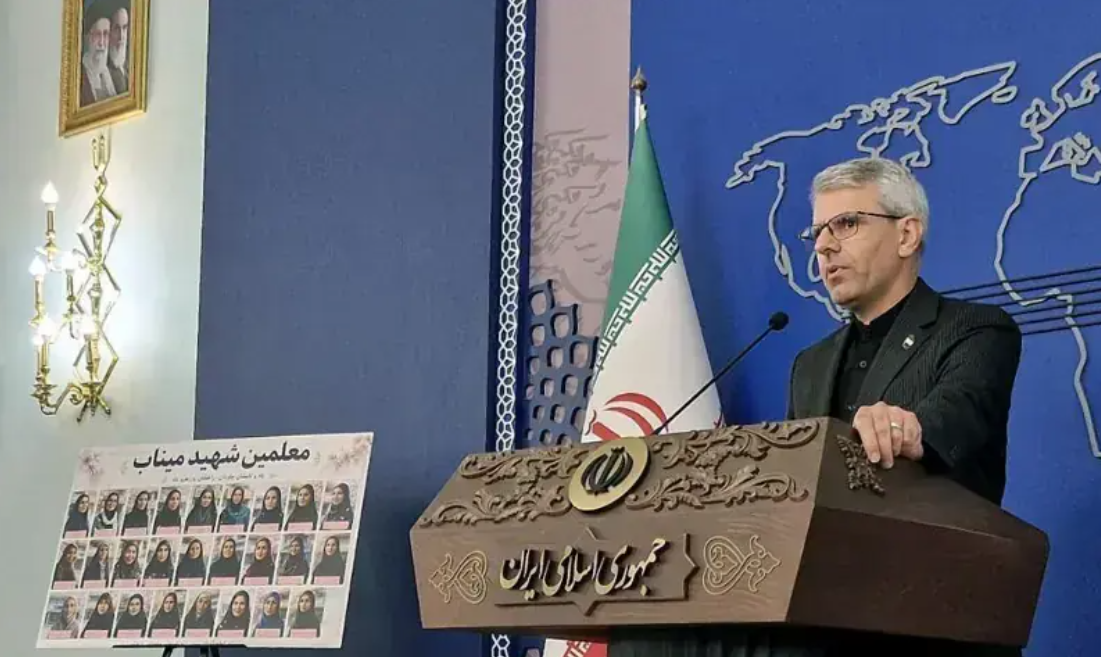
Iran on Monday said that Tehran and Washington had made progress on several key issues during negotiations aimed at ending the ongoing war, though officials stressed that a final agreement was still not close.

“It is correct to say that we have reached a conclusion on a large portion of the issues under discussion,” Foreign Ministry spokesman Esmaeil Baqaei said during a weekly press briefing.
“But to say that this means the signing of an agreement is imminent — no one can make such a claim,” he added, accusing the United States of inconsistency and changing its stance throughout the talks.
The comments came after Iran announced it was preparing a 14-point framework for a potential agreement to end the conflict. Meanwhile, US Secretary of State Marco Rubio said a deal could emerge as early as Monday, while US President Donald Trump reportedly instructed negotiators not to “rush”.
Speaking at the briefing, Baqaei said the proposed framework focused on ending the broader regional conflict, including the situation in Lebanon.
He also reiterated that Iran’s nuclear programme — one of Washington’s primary concerns — was not part of the current discussions and would only be addressed once both sides agreed on the broader framework.
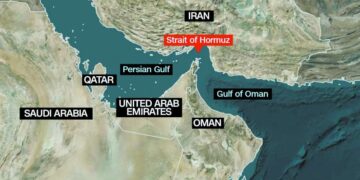
According to Baqaei, the draft includes provisions related to ending the US naval blockade imposed on Iranian ports since April 13, as well as arrangements concerning the strategically important Strait of Hormuz.
“US actions under the title of a naval blockade must be stopped, and at the same time, the Islamic Republic of Iran will take the necessary measures for safe transit in the Strait of Hormuz,” he said.
The vital shipping route has effectively remained under Iranian control since the conflict began, with Tehran allowing only limited maritime traffic through the strait.
Iran has required vessels passing through Hormuz to seek approval from its armed forces before transit.
Baqaei denied that Iran was charging tolls for passage, saying the fees being collected were for maritime support and environmental protection services.
“The services that are provided — navigational services in addition to the measures necessary to protect the environment of the Strait of Hormuz, the Persian Gulf and the Sea of Oman — require the collection of certain fees,” he said, adding that Iran was “not seeking to collect tolls”.