
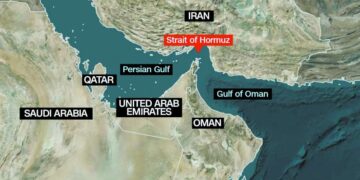
























































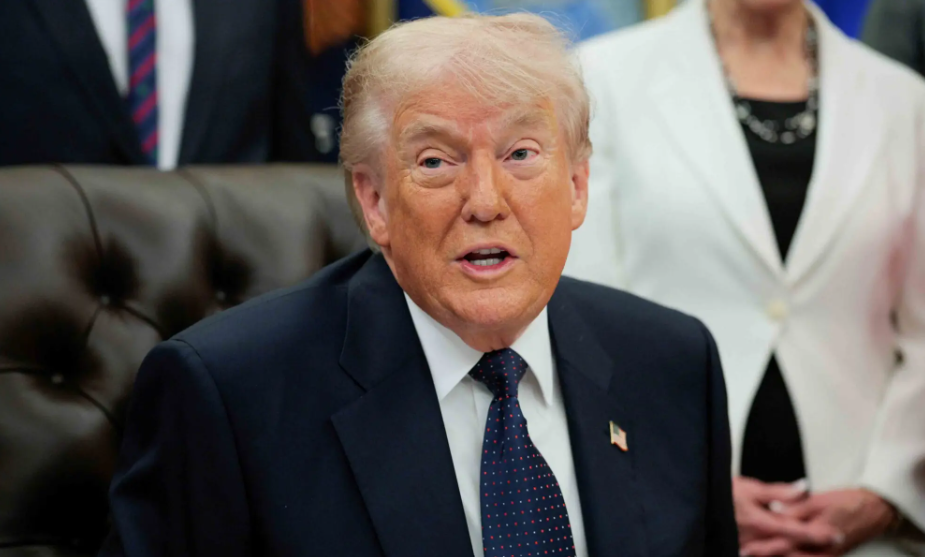
US President Donald Trump announced on Tuesday that he would temporarily pause a naval operation aimed at escorting ships through the Strait of Hormuz, citing “great progress” toward a broader agreement with Iran.

Earlier in the day, US Secretary of State Marco Rubio had detailed the initiative, which began on Monday to guide stranded oil tankers out of the Gulf. The strait has largely remained closed since the conflict erupted, disrupting about 20 per cent of global oil supply and triggering a worldwide energy crisis.
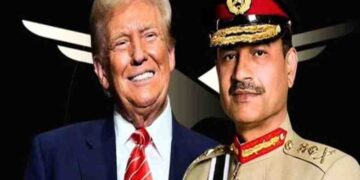
“Based on the request of Pakistan and other Countries, the tremendous Military Success that we have had during the Campaign against the Country of Iran and, additionally, the fact that Great Progress has been made toward a Complete and Final Agreement with Representatives of Iran, we have mutually agreed that, while the Blockade will remain in full force and effect, Project Freedom (The Movement of Ships through the Strait of Hormuz) will be paused for a short period of time to see whether or not the Agreement can be finalized and signed,” Trump wrote on his Truth Social platform.
There was no immediate response from Tehran, where it was early Wednesday morning.
Following Trump’s announcement, US crude oil futures dropped by $2.30, falling below the $100-per-barrel mark — a key level since prices surged after the conflict began two months ago.
The White House did not immediately comment on the nature of the progress or the expected duration of the pause.
Earlier, Rubio and other senior officials stressed that Iran must not be allowed to control maritime traffic through the strait.
Iran has effectively blocked the passage since the US-Israeli campaign began in late February. In response, the US imposed a blockade on Iranian ports and initiated escorted transit operations for commercial vessels.
The escort missions — referred to by Trump as “Project Freedom” — prompted Iranian attacks, raising concerns about the stability of an already fragile ceasefire.
Iran’s Revolutionary Guards navy warned of a “firm response” if ships strayed from designated routes, while the country’s lead negotiator said Tehran “had not even started yet,” amid escalating tensions in the critical shipping lane.
Rubio: Main Military Operation Concluded
Rubio told reporters at the White House that the US had completed its objectives in the military campaign launched on February 28 in coordination with Israel.
“Operation Epic Fury is concluded,” Rubio said. “We’re not cheering for an additional situation to occur.”
“This is not an offensive operation; this is a defensive operation,” he added. “And what that means is very simple — there’s no shooting unless we’re shot at first.”
He stated that the United States has “achieved the objectives” of the war, while noting that Iran is facing severe economic consequences.
Despite this, Rubio emphasized that Trump continues to favor a diplomatic resolution.
A key US objective in the conflict has been to prevent Iran from developing nuclear weapons — an accusation Tehran denies. However, Iran has yet to relinquish more than 900 pounds of highly enriched uranium.
US Defence Secretary Pete Hegseth said earlier that a secure passage through the waterway had been established, with hundreds of commercial ships waiting to transit. He added that the four-week-old ceasefire remains in place.
“Right now the ceasefire certainly holds, but we’re going to be watching very, very closely,” he said.
General Dan Caine noted that Iranian attacks on US forces have remained “below the threshold of restarting major combat operations at this point.”
When asked what actions might break the ceasefire, Trump responded: “They know what not to do.”