











































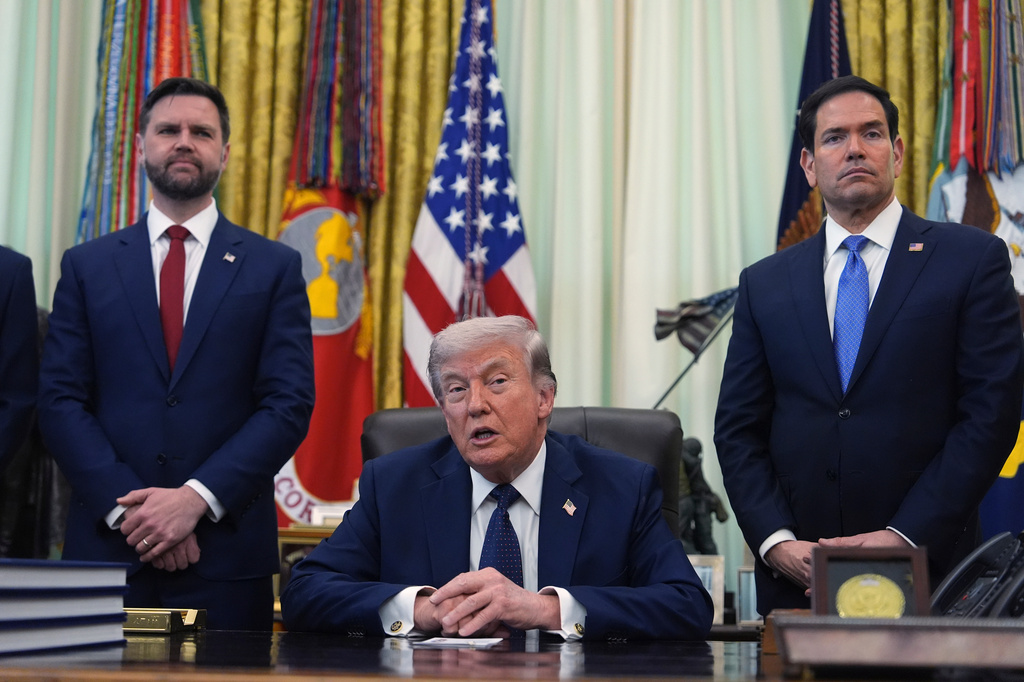
REUTERS: Israel and Lebanon extended their ceasefire for three weeks at a meeting at the White House brokered by Donald Trump, who said he was prepared to wait for “the best deal” to end his conflict with Iran. Fighting between Israel and Iranian-backed Hezbollah militants has been one of several obstacles to resolving the wider regional conflict, alongside Iran’s nuclear ambitions and control of the Strait of Hormuz.

Trump said he was in no rush to reach a peace agreement and wanted it to be “everlasting,” while maintaining that the U.S. had the upper hand in the naval standoff in the strait. He dismissed Iran’s small fast-boat tactics and said Tehran’s leadership was constrained. Navigation through the strait remained effectively blocked, however, with Iran’s seizure of two cargo ships underscoring ongoing tensions and pressure on global energy markets.
Iran’s Supreme Leader Mojtaba Khamenei rejected claims of internal disarray, saying national unity remained strong following the death of Ali Khamenei earlier in the conflict. The conflict has also strained relations between the U.S. and NATO, with Washington considering measures against allies seen as uncooperative.
Trump said he would extend a separate ceasefire with Iran to allow more time for negotiations and ruled out the use of nuclear weapons, saying conventional military force had already significantly weakened Iran. Despite the ceasefire extension, fighting continued in southern Lebanon. Israeli forces said Hezbollah launched rockets and a drone attack, prompting retaliatory strikes that killed three militants and targeted infrastructure.
Israel has sought cooperation with Lebanon’s government to disarm Hezbollah, though the group was not part of the ceasefire talks. Israeli officials have also indicated readiness to escalate operations against Iran if given U.S. approval.