











































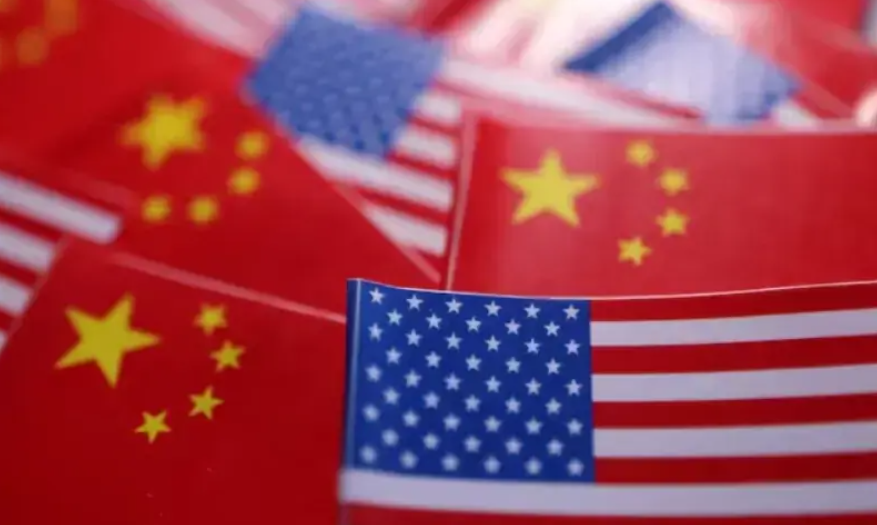
WASHINGTON: Western analysts have expressed low expectations for the summit between US President Donald Trump and Chinese President Xi Jinping in Beijing, warning that deep geopolitical tensions are likely to overshadow prospects for major breakthroughs.

Speaking at a briefing hosted by the Washington-based Centre for European Policy Analysis (CEPA), experts said the US-China relationship had become increasingly transactional, with both sides focused on securing narrow strategic advantages rather than pursuing broader compromise.
Analysts noted that the ongoing Iran crisis was emerging as a key test of US-China strategic competition, even if it was not officially central to the summit agenda.
James Lewis, a distinguished fellow at CEPA’s tech policy programme, said both Washington and Beijing entered the talks convinced they held the stronger position, leaving little room for concessions.
“Neither side will make much progress on the two most contentious geopolitical issues — Iran and Taiwan,” he said.
According to Lewis, Washington was expected to urge Beijing to use its influence over Tehran to help stabilise tensions in the Middle East, particularly around the Strait of Hormuz, a vital global energy route.
However, he said China was unlikely to make meaningful concessions without seeking reciprocal benefits, especially regarding Taiwan and US restrictions on advanced technology exports.
Christopher Walker, vice president of CEPA, argued that China’s growing alignment with Russia and Iran reflected a broader strategic shift aimed at countering US influence.
“They would see this as leverage to use against the US and to see the US be more distracted,” Walker said, referring to instability in the Middle East.
Analysts also warned against expecting Beijing to distance itself from Tehran in exchange for US concessions.
China analyst Sarah Cook noted that Beijing had continued economic engagement with Iran despite Western sanctions and had helped Tehran rebuild following last year’s bombing campaign.
Former European Parliament member Reinhard Butikofer questioned China’s intentions, alleging that Beijing continued sharing intelligence and drone components with Iran while simultaneously benefiting from US efforts to secure maritime trade routes.
Despite the high-profile nature of the summit, experts agreed that the talks were unlikely to produce major agreements on trade, technology, Iran, or Taiwan, with only limited and narrowly focused understandings expected.