






















































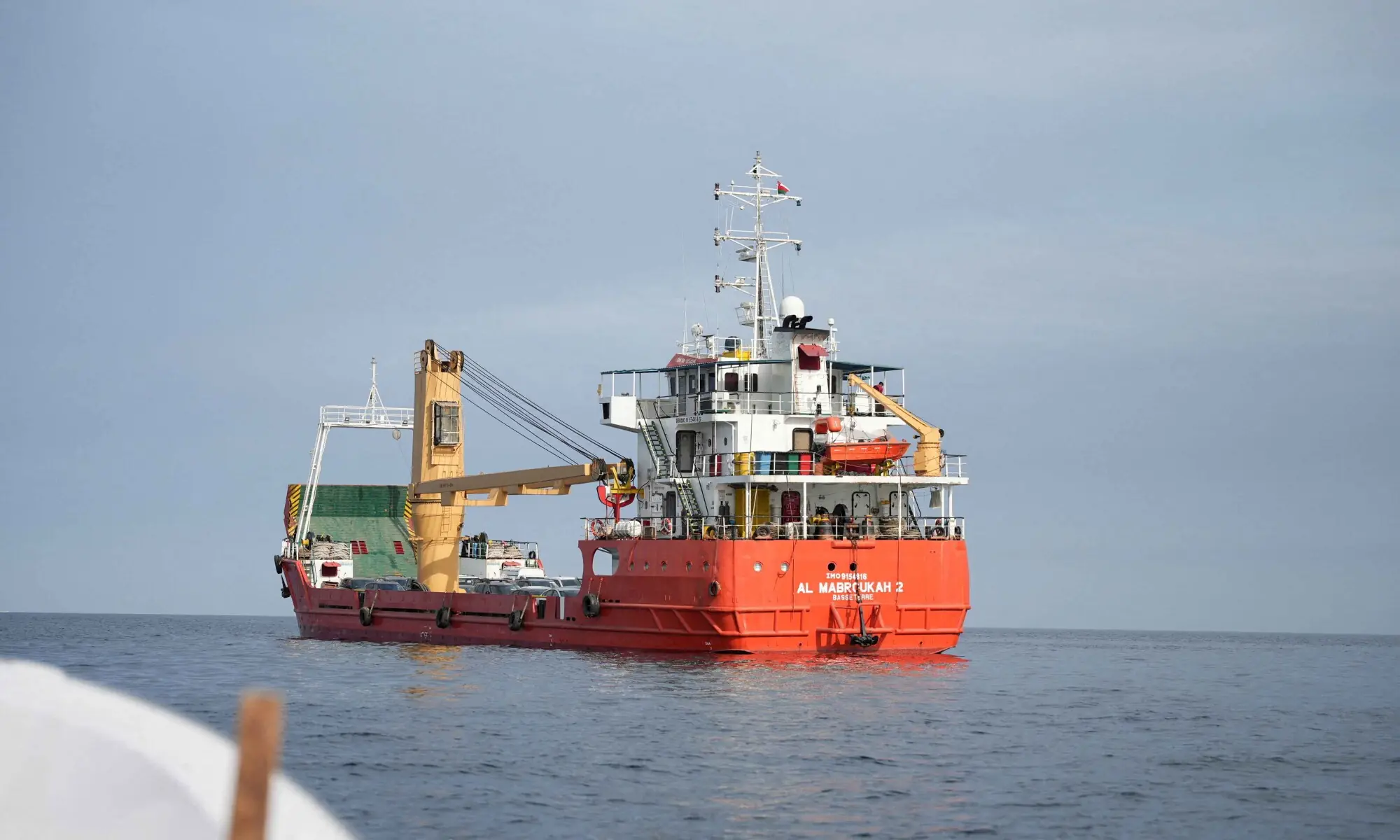
AFP: A brief reopening of the Strait of Hormuz on Saturday allowed a handful of oil and gas tankers to pass through, but several others turned back and two vessels were reportedly attacked as Iran moved to close the route again. The situation has raised uncertainty over US President Donald Trump’s earlier claim that a peace deal to end the US-Israel war with Iran was close.

Iran had initially agreed to reopen the strait during a ceasefire, but reversed its decision in response to an ongoing US naval blockade targeting Iranian ports. The strait remains a critical global route for oil and gas shipments. Tracking data showed at least eight tankers successfully crossed during the temporary reopening. However, other vessels approaching the strait near Larak Island reversed course amid heightened tensions and Iranian control measures.
According to the UK Maritime Trade Operations Centre, Iranian Revolutionary Guards fired on a tanker in the region, though the crew was reported safe. A separate incident involved a container ship struck by an unidentified projectile, causing damage but no fire. Iranian officials stated that control of the strait had returned to “previous status” under strict military oversight.
Authorities also indicated that any passage through the waterway would now require Iranian approval. Tehran warned that the continued US blockade violates the ceasefire agreement and would be met with a response. The US, however, has maintained that its blockade will remain in place until a broader agreement is reached.
With only days left in the two-week ceasefire, uncertainty remains over whether hostilities will resume. Trump has suggested the ceasefire may not be extended if a deal is not finalized soon, warning that military action could restart. Despite ongoing talks, major disagreements persist between the United States and Iran, including disputes over uranium stockpiles and control of maritime routes.
Meanwhile, some ships passing through the strait reportedly signaled neutrality by identifying as Indian or Chinese, navigating close to Iranian waters as instructed. The situation continues to evolve, with global energy markets closely watching developments in one of the world’s most critical shipping chokepoints.