




























































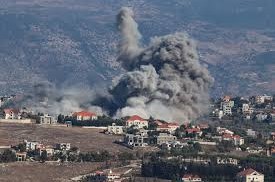
Washington (MNN): US President Donald Trump announced on Thursday that Israel and Lebanon have agreed to a 10-day ceasefire, marking a potential breakthrough after weeks of escalating violence in the region.

The conflict intensified after cross-border hostilities on March 2, when Hezbollah launched attacks against Israel, triggering a broader military response. The violence unfolded alongside a now-paused US-Israeli confrontation with Iran, which further destabilized the region.
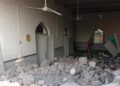
According to Lebanese authorities, Israeli strikes have killed more than 2,100 people and displaced over 1.2 million residents. Israel, meanwhile, reported that Hezbollah attacks resulted in the deaths of two civilians and 13 soldiers since the escalation began.
President Trump shared the ceasefire announcement on Truth Social, stating that he held “excellent conversations” with Lebanese President Joseph Aoun and Israeli Prime Minister Benjamin Netanyahu.
He said both leaders agreed to initiate a formal ceasefire starting at 5:00 p.m. EST, describing it as a step toward achieving lasting peace between the two countries.
Trump also highlighted that officials from both nations met in Washington for the first time in 34 years, alongside US Secretary of State Marco Rubio. He added that Vice President JD Vance and senior military leadership have been tasked with working toward a long-term peace agreement.
The US president further indicated that he plans to invite Netanyahu and Aoun to the White House for what he described as the first meaningful dialogue between the two sides since 1983.
Prior to the announcement, President Aoun had urged Trump to help secure a ceasefire during their first-ever conversation, emphasizing the urgent need to halt hostilities. Pakistan, which has been mediating between Washington and Tehran, also stressed that stability in Lebanon is key to resolving broader regional tensions.
Despite diplomatic progress, Israeli military operations continued in southern Lebanon, particularly in the strategic town of Bint Jbeil. Lebanese officials suggested that Israel aimed to secure tactical gains before fully committing to negotiations.
In a significant development, an Israeli airstrike reportedly destroyed the last remaining bridge over the Litani River, further isolating southern parts of Lebanon after earlier infrastructure damage during the conflict.