

















































ISLAMABAD: Pakistan’s inflation outlook has been revised upward to 7.5% for the fiscal year 2025–26, as economic pressures intensify due to the ongoing conflict in the Middle East.

Previously, the Ministry of Finance had projected CPI-based inflation at around 6.1%. However, recent discussions with the International Monetary Fund (IMF) led to an upward revision, reflecting rising global uncertainties, particularly linked to fuel supply disruptions and geopolitical instability.
The current account deficit (CAD) is now expected to remain contained at 0.5% of GDP, equivalent to approximately $2 billion for 2025–26. Earlier projections had suggested a possible rise to $2.8 billion, but Pakistani authorities assured the IMF that the deficit would be limited through effective economic management.
Meanwhile, Pakistan faces an immediate external financing challenge, with a $1.3 billion Eurobond repayment due by April 8–9, 2026. Despite multiple announcements, the government has yet to launch new international bonds, including Eurobond, Sukuk, or Panda bonds.
On the growth front, the country’s economy is projected to expand to Rs141.66 trillion in FY2026–27, up from Rs126.9 trillion expected by June 2026. GDP growth is forecast at 4.2% for FY2025–26, increasing further to 5.1% in the following fiscal year. Inflation, however, is expected to ease slightly to 6.5% in FY2026–27, provided external conditions stabilize.Economic indicators show early signs of recovery.
In the first quarter of FY2026, GDP growth reached 3.71%, supported by a 2.9% increase in agriculture, a strong 9.4% expansion in industry, and 2.4% growth in the services sector.
Industrial activity has shown notable improvement, with Large-Scale Manufacturing (LSM) growing by 5.02% between July and October FY2026. Key sectors driving this growth include textiles, food production, petroleum products, electrical equipment, and automobiles. The agriculture sector has also contributed positively, with increased output in rice, maize, and sugarcane, while wheat production is expected to meet targets. Livestock recorded a growth of 6.3% in the first quarter.
The services sector is anticipated to strengthen further, driven by trade, transport, finance, digitalization, e-commerce, and expanding ICT exports.Government spending and private sector activity have also picked up pace. Public Sector Development Programme (PSDP) spending increased by 21% in the first half of FY2026, while company registrations rose by 29%, and imports of agricultural machinery surged by 27.3%, signaling expansion in production capacity.Despite these positive trends, inflationary pressures remain a key concern.
The ongoing Gulf conflict has disrupted global energy markets, contributing to rising prices. Authorities expect inflation to moderate in the next fiscal year, contingent on an early resolution of the conflict and stabilization of fuel supply chains.
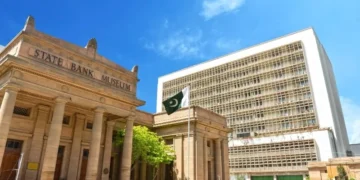
The State Bank of Pakistan (SBP) is expected to maintain a cautious monetary policy stance to manage inflation and support sustainable economic growth in the medium term.