















































































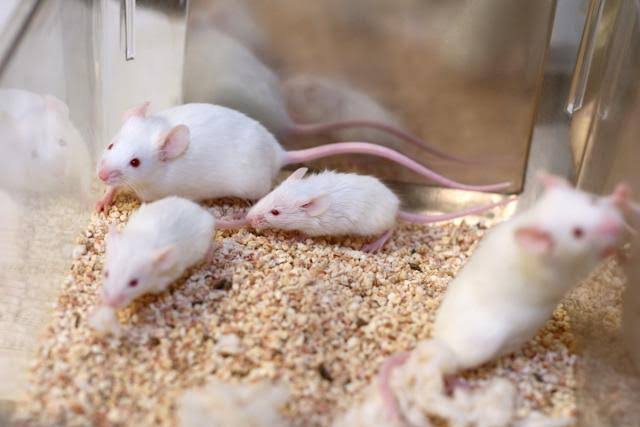
PARIS: Scientists in Japan have discovered that mammals cannot be cloned endlessly, revealing a biological limit after decades of research involving more than 1,200 cloned mice.

The breakthrough study, led by Teruhiko Wakayama at the University of Yamanashi, found that repeated cloning leads to a “mutational meltdown” — a gradual accumulation of harmful genetic mutations that ultimately makes survival impossible.
Published in Nature Communications, the research showed that while early generations of cloned mice appeared healthy and identical, problems began to emerge over time. The team successfully produced clones across 57 generations, but none of the mice in the 58th generation survived after birth. Researchers began the experiment in 2005 using a single female mouse. Over 20 years, they conducted more than 30,000 cloning attempts, generating multiple generations annually by cloning mice once they reached three months of age.
Initially, success rates improved, exceeding 15% at one stage, raising hopes that cloning could continue indefinitely. However, a “critical turning point” occurred around the 25th generation, after which survival rates declined sharply due to increasing genetic defects.
By the 57th generation, survival had dropped to just 0.6%. Although these mice appeared physically normal, genetic analysis revealed they carried three times more mutations than naturally reproduced mice. Some clones also showed abnormalities such as enlarged placentas and missing X chromosomes.
Despite these setbacks, the study highlighted the importance of sexual reproduction. Even late-generation clones were able to produce healthy offspring with fewer mutations when they reproduced naturally, reinforcing the idea that genetic mixing is essential for long-term survival.
The findings support the evolutionary theory known as Muller’s ratchet, which predicts that harmful mutations inevitably build up in asexual reproduction, leading to eventual collapse.“This research provides the first clear evidence that such a meltdown occurs in mammals,” the study noted.
The discovery could have implications for future cloning efforts, including attempts to preserve endangered species or rebuild populations after catastrophic events. It also challenges popular science fiction concepts, such as the idea of limitless cloning armies depicted in films like Star Wars: Episode II – Attack of the Clones.
Wakayama acknowledged that scientists currently have no clear solution to overcome these limitations but suggested that advancements in cloning techniques may help reduce genetic damage in the future. The team is now exploring new, less invasive methods to collect animal cells as part of ongoing efforts to support conservation and prevent species extinction.