





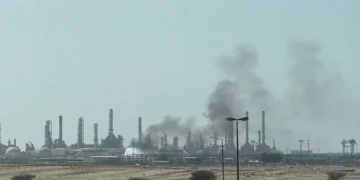



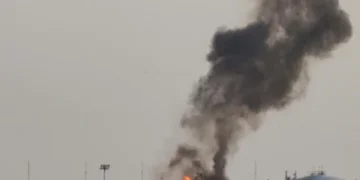





























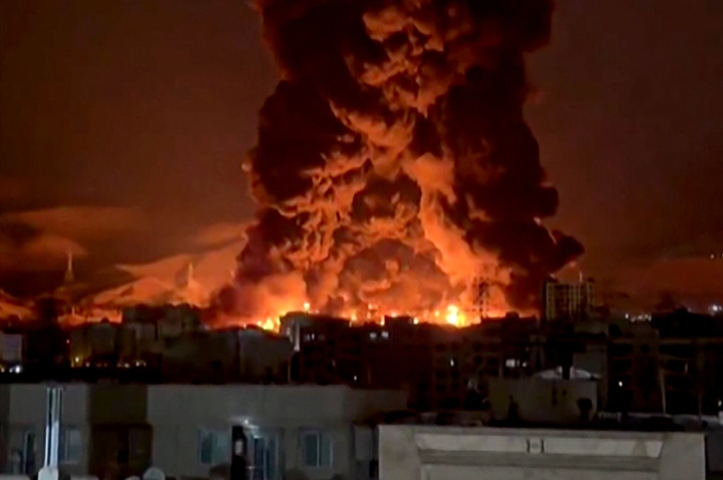
TEHRAN: Residents of Iran’s capital woke up on Sunday to an eerie, darkened sky as black, oily rain fell over the city, a day after Israeli airstrikes targeted oil refineries and fuel depots, plunging Tehran into a toxic haze.

The nine-day conflict launched by a US-Israeli coalition against Iran has widened across the Middle East, with retaliatory attacks and escalating hostilities affecting Lebanon, Iraq, and several Gulf states.
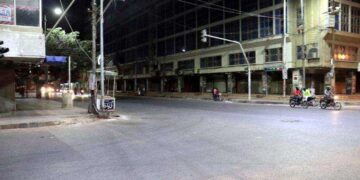
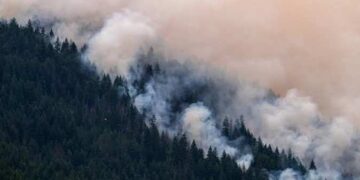
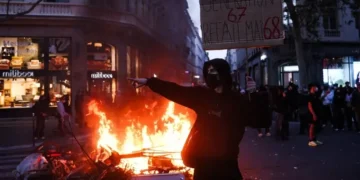
In Tehran, dense black smoke from burning oil facilities blocked out sunlight for hours after the strikes, leaving parts of the city in near darkness. “I thought my alarm clock was broken,” one motorist told AFP, explaining that even by mid-morning drivers were forced to turn on their headlights to move through the streets.
CNN correspondent Frederik Pleitgen described the unusual phenomenon as “raining oil”, saying the rainwater was “black, also saturated, it appears with oil”. He further noted that “breathing the air feels quite toxic”.
Iranian authorities warned residents about the serious health risks posed by the contamination. The Iranian Red Crescent Society cautioned that the release of “significant quantities of toxic hydrocarbons, sulfur and nitrogen oxides” could lead to chemical burns and respiratory damage.
Tehran’s provincial governor advised citizens to wear face masks while officials attempted to stabilise the fuel supply after disruptions triggered long queues at petrol stations. The disruption followed a large-scale military offensive targeting Iran’s military and industrial infrastructure.
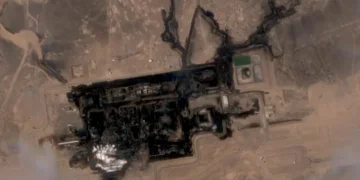
The Israeli military confirmed launching a “wave of strikes across Iran”, hitting multiple military facilities. According to a statement, the attacks destroyed the “space force headquarters” of Iran’s Islamic Revolutionary Guards Corps (IRGC) in Tehran, which Israel claimed was responsible for operating the “Khayyam” surveillance satellite.
Five oil facilities in and around Tehran were also hit in strikes conducted by US and Israeli forces, according to an official from the National Iranian Oil Products Distribution Company. Iranian media reported that at least four tanker drivers were killed in the attacks.
In central Iran’s Isfahan province, at least 11 people died in strikes targeting manufacturing workshops and a horse-riding club, according to Iranian reports.
Lebanon terrorised
The conflict has also intensified in Lebanon, where fighting between Israel and the resistance group Hezbollah has escalated sharply. Lebanon’s health ministry said Israeli strikes over the past week killed 394 people, including 83 children.
For the first time in the current conflict, an Israeli airstrike hit a hotel in central Beirut, killing at least four people. The Israeli military said it had “conducted a precise strike targeting key commanders” of the IRGC’s Quds Force inside the building.
The strike in Beirut’s Raouche tourist district — an area largely untouched in previous wars heightened fear among residents. “There is no safe place,” said Abu Hussein, a taxi driver whose vehicle was damaged in the explosion.
Israel also issued evacuation warnings for residents of Nabatieh governorate in southern Lebanon, stating that homes used by Hezbollah for military purposes could be targeted.
The fighting has also resulted in Israeli military casualties, with the army confirming that two soldiers were killed during combat operations in southern Lebanon.
Gulf states caught in crossfire
Meanwhile, tensions spread to the Gulf region as ballistic missiles and drones reportedly launched from Iran targeted Qatar, Kuwait, Saudi Arabia and the United Arab Emirates — countries hosting US military bases.
The UAE defence ministry said its air defence systems intercepted 16 out of 17 ballistic missiles and 113 of 117 drones detected on Sunday. Authorities reported four deaths and 112 injuries from the attacks.
Kuwait said a drone strike targeted fuel tanks at its international airport, killing two border officers. In Saudi Arabia, officials reported that a “military projectile” killed two foreign nationals and injured 12 others in Al Kharj governorate.
Bahrain’s interior ministry also accused Iran of attacking a water desalination plant with a drone, describing it as a strike on civilian infrastructure.
The IRGC said it had targeted the United States’ Juffair base in Bahrain, claiming it was used earlier to strike an Iranian desalination facility. Bahrain’s national communication office later said the attack caused no disruption to water supplies.
‘Forced to respond’
Iranian President Masoud Pezeshkian warned that Tehran “will be forced to respond” if neighbouring countries allow their territory to be used for attacks against Iran. A day earlier, he apologised to Gulf states for missile strikes on their territory, saying they were aimed at American military bases.
However, the IRGC adopted a defiant stance, claiming it could sustain an “intense war” for six months and announcing a new wave of missile strikes targeting Tel Aviv and an airbase in Jordan.
In Israel, officials vowed to continue pursuing the leadership of Iran following the reported killing of Supreme Leader Ayatollah Ali Khamenei. US President Donald Trump said, “At some point, I don’t think there will be anybody left maybe to say ‘We surrender’,” hinting at the possibility of eliminating Iran’s political and military leadership.
According to an Axios report citing multiple sources, US and Israeli officials have also discussed sending special forces into Iran to secure its stockpile of highly enriched uranium.
Another option reportedly under consideration is taking control of Kharg Island, the main terminal responsible for most of Iran’s crude oil exports.
Despite Israel’s strikes on energy facilities, US Energy Secretary Chris Wright said Washington “is targeting zero energy infrastructure”, adding there were “no plans to target Iran’s oil industry”.
Diplomacy efforts
Arab leaders strongly condemned the attacks carried out on their territories. Arab League Secretary-General Ahmed Aboul Gheit described Iran’s strikes on member states as “reckless” and a “massive strategic mistake”.
The UAE’s foreign ministry said it did not seek escalation but reserved the right to defend its sovereignty. Egypt’s foreign minister Badr Abdelatty expressed “full solidarity” with Gulf countries and called for the creation of a joint Arab force to address regional threats.
As tensions continue to rise, international leaders have urged restraint. World Health Organization chief Tedros Adhanom Ghebreyesus condemned the “death, destruction, displacement” caused by war, asking, “When will we learn?”
Meanwhile, France deployed warships to the Mediterranean in a show of support, while a Lebanese official confirmed that more than 100 Iranians, including diplomats, were evacuated from Beirut aboard a Russian aircraft.