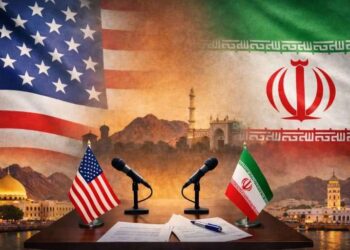












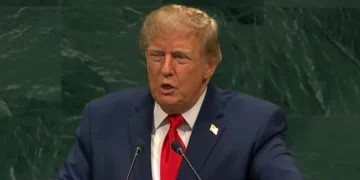




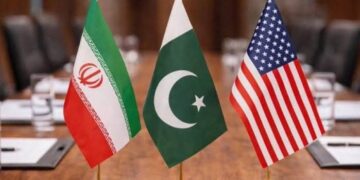

























TEHRAN/WASHINGTON: The United States and Iran have electronically signed an agreement aimed at ending the Middle East conflict, President Donald Trump announced on Monday, though unresolved issues in Lebanon and future negotiations on Tehran’s nuclear programme could still test the deal.

“The deal’s all signed,” Trump said after arriving in France for the G7 summit.
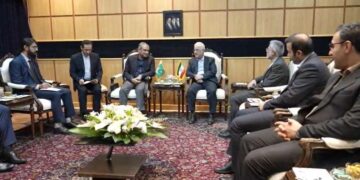
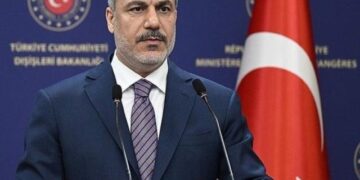
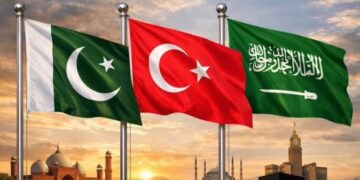
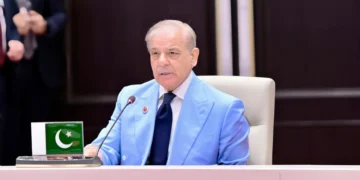
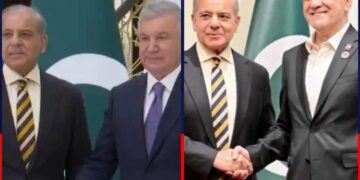
The breakthrough follows intensive diplomatic efforts by Pakistan, Saudi Arabia, Türkiye and Qatar, among others, to secure an agreement between Tehran and Washington, amid concerns that ongoing tensions involving Israel in Lebanon could undermine the process.
A formal Memorandum of Understanding (MoU) is expected to be signed in Geneva on Friday by US Vice President J.D. Vance. “I may be involved, I may not, but JD was coming in for that specifically,” Trump told reporters.
US officials said Trump’s son-in-law Jared Kushner and Middle East envoy Steve Witkoff are also likely to attend the signing ceremony.
Vance said Iran’s foreign minister and parliament speaker would represent Tehran in Switzerland, adding that several aspects of the agreement still require further discussion.
The accord is expected to reopen the Strait of Hormuz and extend a ceasefire for 60 days, giving both sides time to negotiate more contentious matters, including the future of Iran’s nuclear activities.
The agreement marks the biggest diplomatic effort so far to end a conflict that has killed more than 7,000 people, mostly in Iran and Lebanon, while disrupting global energy markets. However, many details of the arrangement have yet to be disclosed.
Although Trump said shipping had already resumed through the Strait of Hormuz, the US military informed maritime operators that restrictions on Iranian ports remain in place for now.
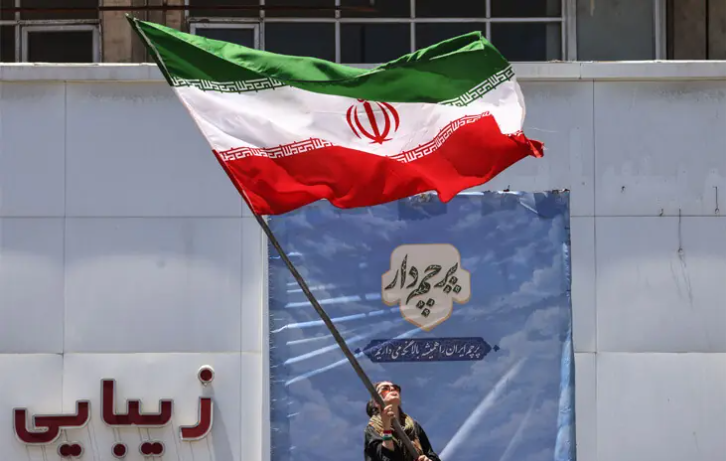
Iranian Parliament Speaker Mohammad Bagher Ghalibaf, who participated in the negotiations, welcomed the agreement and said “Iran has taken a great stride toward final victory”.
While the full text of the agreement has not been made public, Vance said he expects it to be released later this week.
“You know that there are a lot of very important details to figure out that we’re actually going to sit at the table [for technical negotiations] and discuss together and figure out a path forward,” he said.
Reports suggest the agreement includes a 60-day halt in hostilities, during which negotiators will work toward a permanent settlement, including resolving disagreements over Iran’s enriched uranium reserves.
According to Al Jazeera, Iran’s Supreme National Security Council said the deal includes an immediate suspension of military operations across all fronts.
Iranian Foreign Minister Abbas Araghchi said further talks would continue after Friday’s ceremony in Switzerland, warning that negotiations are taking place amid lingering mistrust between the two sides.
Sticking points
For Western countries, the future of the Strait of Hormuz remains a major concern, while Tehran continues to focus on Israel’s military presence in Lebanon, which has displaced around 1.2 million people.
US officials said vessels would be allowed to pass through the strategic waterway without tolls under the agreement, but stressed that Iran would only receive economic benefits after meeting its obligations.
Officials said a possible $300 billion reconstruction package for Iran is under consideration, although access to the funds would be conditional on compliance with the deal.
The officials also criticised Oman’s role in previous mediation efforts.
“We were very unhappy with the job the Omanis did,” a second official said. “We felt they were very duplicitous, almost like employees of the Iranians.”
Iran has maintained that a complete end to hostilities in Lebanon is essential. However, Israeli Prime Minister Benjamin Netanyahu said Israeli forces would remain in southern Lebanon and continue to respond to Hezbollah attacks.
“Iran wanted us to withdraw from it, but I stood firm,” Netanyahu said.
“The most important thing is that we saved the State of Israel from the threat of nuclear annihilation,” he added.
A US official told Reuters that an Israeli withdrawal from Lebanon was not included among the deal’s conditions.
Security sources said fighting had eased following the announcement but had not ended completely. Israeli politicians from across the political spectrum criticised the agreement, arguing that it fails to provide sufficient security guarantees.
‘Pyrrhic victory’
Analysts described the outcome as a possible pyrrhic victory for Washington, arguing that no side emerged as a clear winner. While Iran suffered significant losses, experts said it succeeded in preventing the United States and Israel from achieving their key objectives.
“Strategically, geopolitically, the only real winner at this point is Iran,” said Ross Harrison, a senior fellow at the Middle East Institute.
“But that’s a pyrrhic victory,” he added, saying “Iran has won by denying its adversaries… their war aims”, but for “a heavy price”.
“There’s a lot of things that it (Tehran) is getting… that it didn’t have before the war. So by that metric, you could make an argument that Iran won,” Amir Handjani of the Quincy Institute told AFP.
Bernard Hourcade, an Iran specialist at France’s CNRS research institute, said the agreement was “perhaps a media victory, but not a political victory” for Washington and argued that the conflict had damaged US credibility internationally.
Handjani also said postponing discussions on Iran’s nuclear programme represented a setback for Israel, which he described as “the biggest loser”, citing weakened momentum in relations with Gulf states and reduced influence over its US ally.