




















































Violent clashes erupted between protesters and police in Geneva on Sunday, a day before the G7 summit begins in nearby Evian, France.

The demonstration started peacefully, with thousands of people marching through the Swiss city carrying banners reading “No to the G7 and all imperialist alliances!” and “Abort the G7”. Protesters expressed support for Palestinian rights, climate action, feminism and anti-capitalist causes.
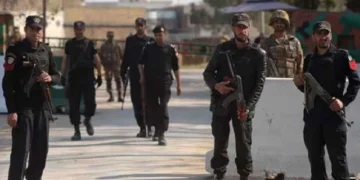
Tensions escalated when groups of masked demonstrators dressed in black breached security barriers and began vandalising property along the protest route. Protesters hurled bottles, stones, concrete fragments and firecrackers at police, who responded with tear gas and water cannons.
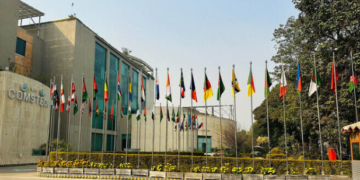
Several buildings were targeted during the unrest, including offices of the International Telecommunication Union and premises belonging to PricewaterhouseCoopers. Demonstrators were prevented from approaching the UN’s European headquarters, which was heavily guarded by security forces.
Journalists inside the UN complex reported hearing explosions, police sirens and helicopters throughout the day. Further confrontations continued into the evening after protesters regrouped at a park near Lake Geneva.
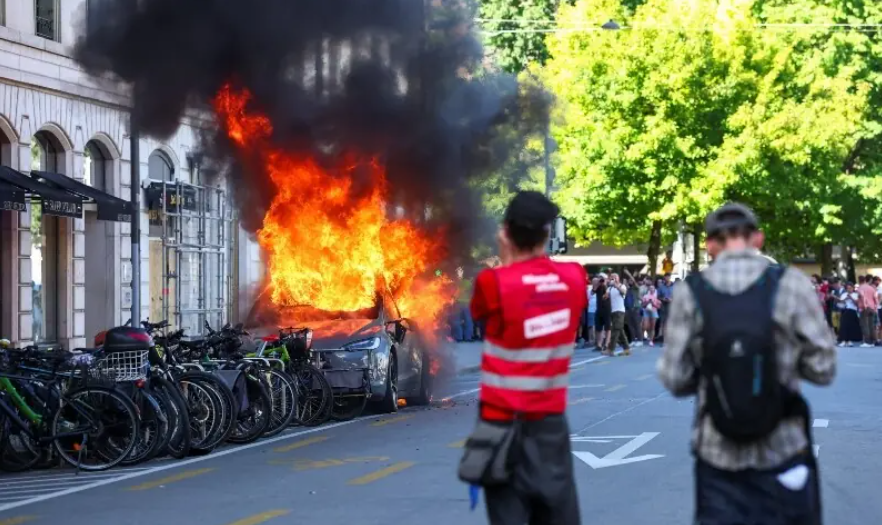
A number of vehicles were also damaged during the unrest. AFP reporters witnessed a Tesla vehicle being set ablaze and spray-painted with the slogan “Eat the Rich”. Demonstrators chanted anti-police slogans, including “Down with the police state,” as tensions intensified.
Police estimated that around 20,000 people participated in the protest, including approximately 600 members of the “Black Bloc”, a loosely organised movement often associated with militant protest tactics.
The violence revived memories of the 2003 G7 summit in Evian, which was marked by large-scale anti-globalisation protests and significant property damage. In response, authorities deployed a strong security presence across Geneva and implemented extensive safety measures ahead of this year’s summit.
The demonstration was organised by the No-G7 coalition, a network of more than 60 associations, labour unions and left-wing organisations opposing what they describe as fascism and imperialism. Planned counter-summit events in the French town of Annemasse were reportedly cancelled due to restrictions imposed by French authorities.
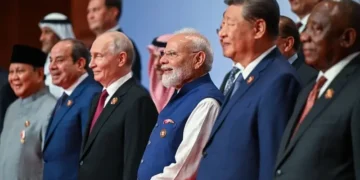
Hosted by French President Emmanuel Macron, the G7 summit begins on Monday and will bring together leaders from Britain, Canada, France, Germany, Italy, Japan and the United States, along with invited representatives from countries including Brazil and India.
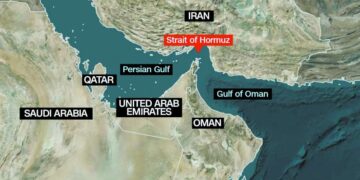
The summit comes at a time of heightened global tensions, particularly following the escalation of conflict involving the United States, Israel and Iran earlier this year. Leaders are expected to discuss regional security, diplomatic efforts in the Middle East and the restoration of safe navigation through the Strait of Hormuz.
Geneva remains on high alert as world leaders arrive for the summit and authorities prepare for further demonstrations in the coming days.