
























































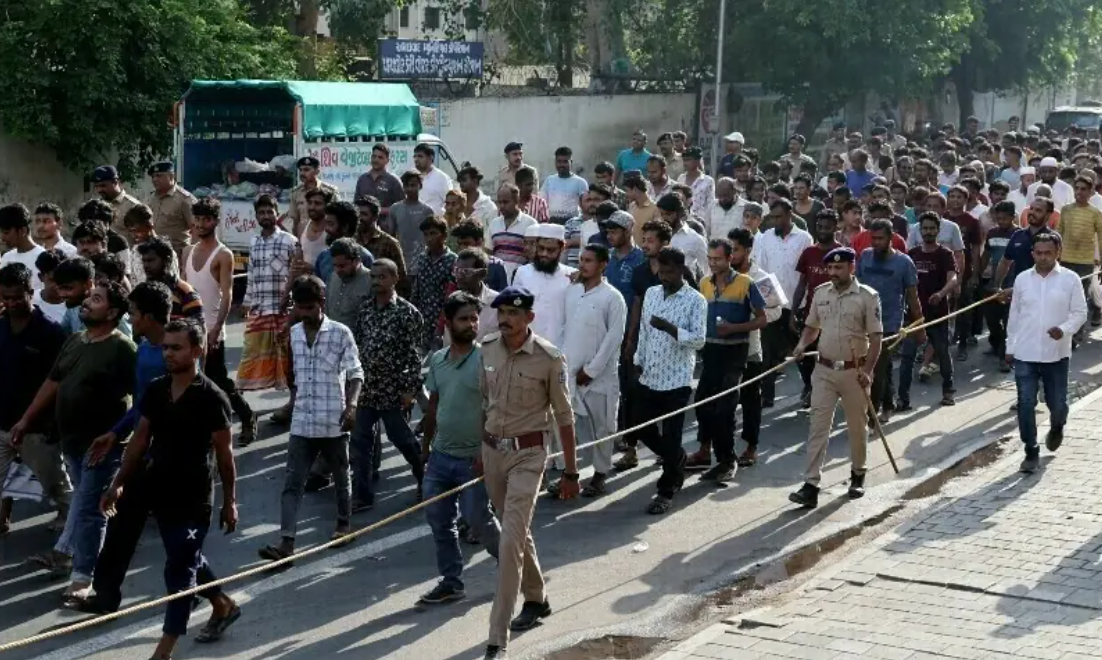
India’s ruling Hindu nationalist party has directed authorities in West Bengal to establish detention centres for undocumented Bangladeshis and Rohingya refugees, triggering concerns among minorities and rights groups over possible arbitrary expulsions.

The move comes days after Prime Minister Narendra Modi’s Bharatiya Janata Party secured power in the eastern state for the first time since India’s independence in 1947.
The directive instructs local officials to create “holding centres” for “apprehended foreigners” awaiting deportation as part of a wider campaign against illegal immigration.
Indian authorities defended the policy under their “detect, delete, deport” approach, saying the measures target migrants residing unlawfully in the country.
“Illegal migration has security and socio-economic ramifications which are often well beyond law enforcement,” the order issued last week stated.
The decision has intensified concerns among West Bengal’s nearly 35 million Muslims, many of whom have close cultural and linguistic connections with neighbouring Bangladesh.
Critics argue the policy reflects the BJP’s longstanding hardline rhetoric on immigration, noting that senior party leaders have previously described Bangladeshi migrants as “termites” and “infiltrators”.
Similar measures have already been implemented in the neighbouring state of Assam, where authorities conducted large-scale identification campaigns and detentions.
Human rights activists claim that hundreds of people from Assam have been deported to Bangladesh without proper legal procedures, often based on ethnic profiling.
According to activists and lawyers contesting the measures in court, many individuals were allegedly forced across the border at gunpoint.
Critics say the policies disproportionately target Muslims by linking religious identity with illegal migration.
The proposed detention centres in West Bengal have drawn additional scrutiny due to the state’s long and porous border with Bangladesh and its history of cross-border migration.
The inclusion of Rohingya refugees in the directive has also sparked criticism.
India has previously faced accusations from humanitarian organisations of forcibly returning Rohingya refugees to Myanmar despite ongoing conflict there, potentially violating international refugee protection norms.
Adding to concerns among minorities, the BJP-led government in Assam on Monday introduced legislation aimed at restricting polygamy and revising personal religious laws — measures critics say could further marginalise Muslim communities.