































By Kokab Rathore

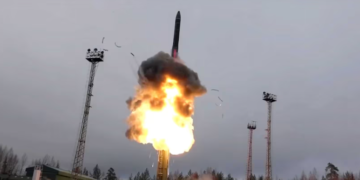
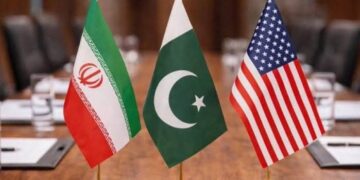
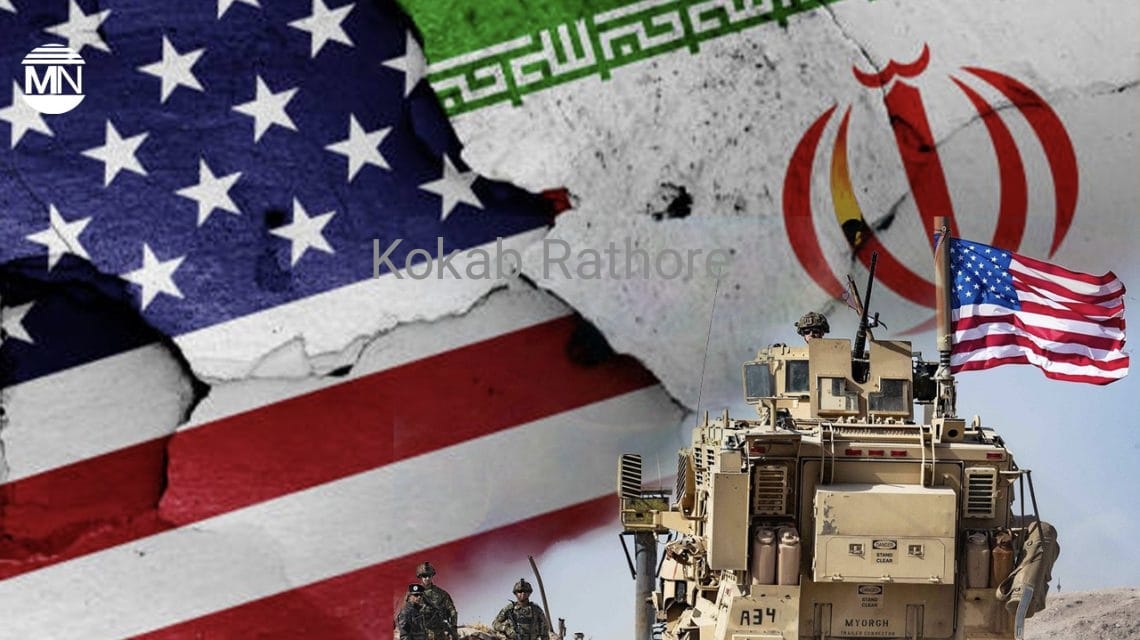
With the outbreak of direct hostilities between Israel and the United States against Iran — marked by missile strikes targeting installations in Tehran and other urban centres — a new and potentially transformative chapter in Middle Eastern geopolitics has begun. It may take time before the strategic consequences of this campaign become evident, particularly regarding whether its apparent objective of regime change in Tehran can be realised and how resilient the Iranian state proves to be in what it describes as an existential confrontation.
Controversy intensified following remarks by US Ambassador to Israel Mike Huckabee, who suggested in an interview with Tucker Carlson that Israel possessed a biblical entitlement to extensive territories across the Middle East. The statement provoked widespread criticism across the Muslim world, especially among Arab Gulf states concerned about regional stability. Although Secretary of State Marco Rubio reportedly urged restraint in public messaging to avoid complicating Washington’s regional diplomacy, the remarks coincided with a substantial US military deployment to the region, reinforcing perceptions of broader strategic ambitions.
Even if rhetorical, such assertions underscore a wider vision attributed to Israeli policymakers: a regional order composed of compliant governments lacking the military capacity to challenge Israel’s policies toward Palestine. Critics argue that the current campaign is less about Iran’s nuclear programme and more about weakening its conventional and missile capabilities, dismantling its regional alliances, and reshaping the regional balance of power.
At this early stage, the outcome of the conflict hinges on two principal variables: the degree of damage Iran can inflict on Israeli, American, and allied assets, and its ability to sustain prolonged resistance against overwhelming US military superiority. Should Iran demonstrate enduring resilience and retain the capacity to retaliate effectively, the strategic calculations underlying the campaign may shift. Domestic political divisions within the United States — particularly among factions sceptical of deep military engagement abroad — could intensify if American personnel or assets suffer significant losses.
Developments must also be viewed in the context of previous diplomatic efforts. During his first term, President Donald Trump withdrew from an agreement designed to limit Iran’s uranium enrichment. Subsequent military actions occurred even as indirect negotiations were reportedly underway to confine Tehran’s programme to verifiable civilian levels. Public statements emphasising the destruction of Iran’s missile infrastructure and naval capabilities have reinforced perceptions that broader strategic goals extend beyond nuclear non-proliferation.
The evolving crisis highlights shifting “red lines” in US policy, frequently interpreted by observers as aligned closely with Israeli security priorities under Prime Minister Benjamin Netanyahu. Over time, concerns have expanded from nuclear enrichment to include missile development and Tehran’s ties with regional allies.
During last year’s brief but intense confrontation, Iran managed to absorb high-level losses and still launch retaliatory strikes against targets including Tel Aviv and infrastructure near Haifa. However, the current context differs significantly due to the scale of the American military build-up, reportedly involving a substantial proportion of its deployable assets. Whether Washington possesses the political resolve for an extended campaign remains uncertain, particularly if the conflict becomes protracted.
Regional stakeholders are closely monitoring developments. Saudi Arabia has thus far declined to join the Abraham Accords framework without clear progress toward Palestinian statehood. Meanwhile, Israel has signalled interest in deeper cooperation with selected Gulf states, African partners, and India. Recent diplomatic engagements involving Indian Prime Minister Narendra Modi have been interpreted by some analysts as indicative of emerging alignments.
For Pakistan, the shifting security environment necessitates vigilance. Policymakers may seek to reinforce strategic safeguards around critical defence assets while recalibrating diplomatic and economic partnerships, potentially including closer engagement with China and Russia.
Ultimately, the trajectory of this conflict will determine whether it produces a decisive reordering of the Middle East or ushers in a prolonged and destabilising phase of confrontation. The coming weeks are likely to clarify whether this war reshapes the regional balance of power or entrenches a deeper, more complex stalemate.
The writer is a Researcher, and working as an Anchor Person in State Media of Pakistan. He is a Lecturer, Vlogger and Freelancing Journalist. He can be reached at kokab.raathore@gmail.com
Disclaimer: “The views and opinions expressed in this article are solely those of the author and do not necessarily reflect the official policy of any organization”.