






















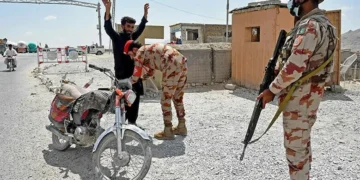




































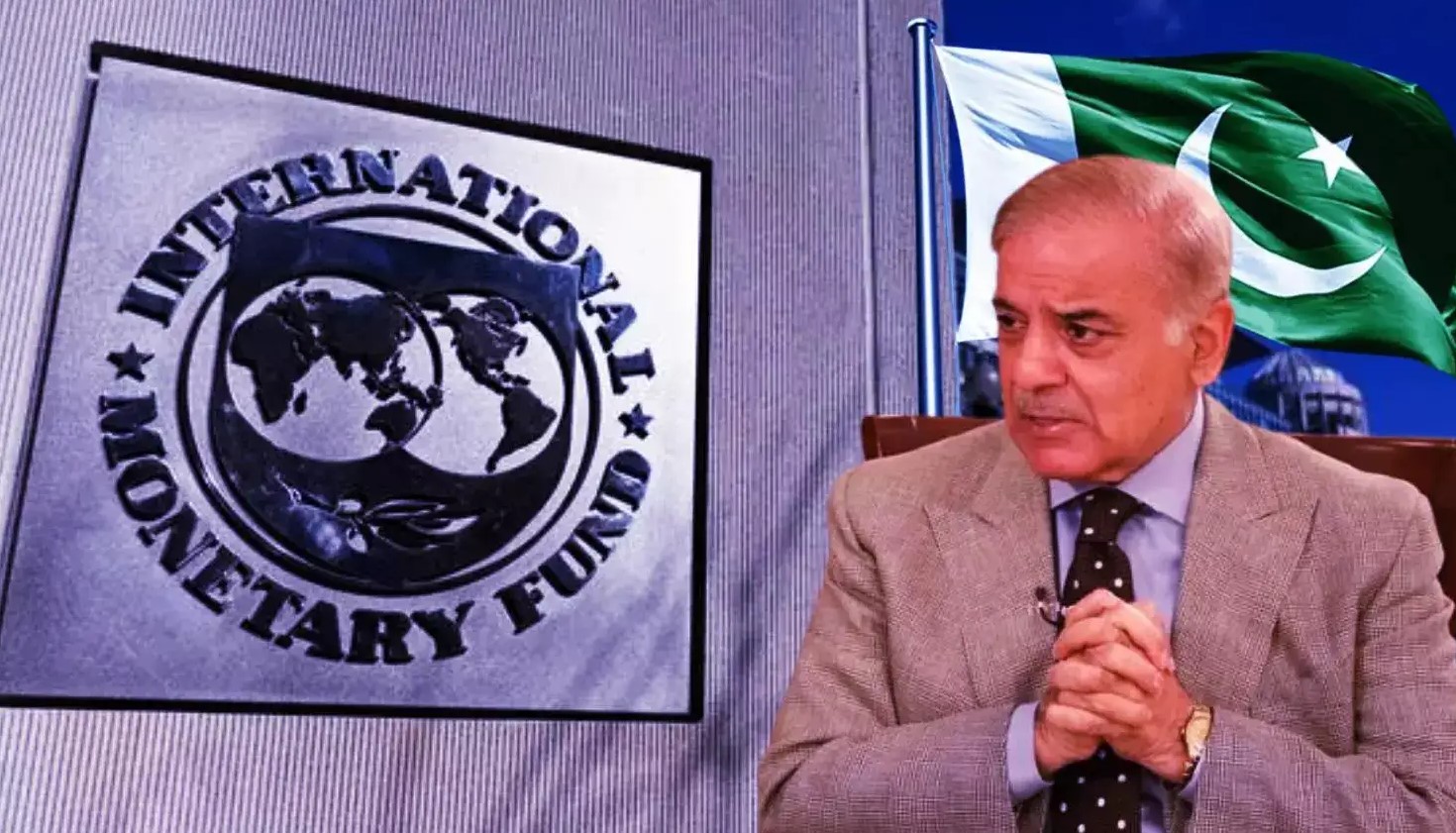
ISLAMABAD (MNN); Ongoing discussions between an International Monetary Fund staff mission and Pakistani authorities were shifted to a virtual format on Monday following heightened regional tensions triggered by the recent United States and Israeli strikes on Iran.

The IMF delegation, led by Iva Petrova, relocated to Istanbul after an advisory was issued by the Fund’s headquarters, disrupting several in-person sectoral meetings scheduled in Islamabad. Despite the sudden change, officials confirmed that the overall review schedule would remain intact, with future sessions continuing via video link between Islamabad and Istanbul.
In a statement, the International Monetary Fund said that its mission had begun discussions with Pakistani authorities in Karachi and Islamabad on the third review of the country’s Extended Fund Facility arrangement and the second review of the Resilience and Sustainability Facility. The Fund confirmed that talks would proceed virtually in light of the prevailing security environment.
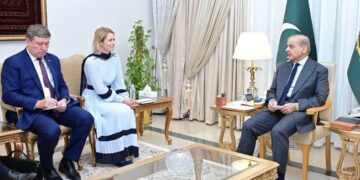
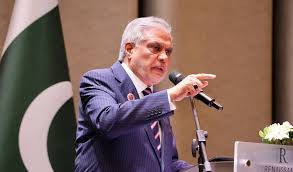
Earlier in the day, Finance Minister Muhammad Aurangzeb presided over a formal kickoff meeting in Islamabad. During initial engagements, both sides briefly discussed the evolving regional security situation but acknowledged uncertainty regarding the duration and economic implications of the crisis.
Officials said they would closely monitor developments and, if necessary, discuss contingency measures as the review process advances.
The IMF mission had begun preliminary consultations with the State Bank of Pakistan and representatives of the business community in Karachi on February 25. The formal review discussions started Monday and will continue through technical-level meetings with relevant ministries and departments until the weekend. Policy-level talks are scheduled for early next week, culminating in a wrap-up meeting with the finance minister on March 11.
The negotiations focus on the third review of the $7 billion Extended Fund Facility and the second review of the $1.1 billion Resilience and Sustainability Facility. Last week, the finance minister expressed confidence that Pakistan was well-positioned for a successful outcome.
The current review carries added importance, as it assesses performance for the half-year ending December 31, 2025, and outlines forward-looking measures, including preparation of the next federal budget based on current fiscal performance. It will also help define the broad framework of the upcoming financial plan.
Provincial finances are a key area of scrutiny, particularly issues relating to agriculture income tax, governance shortcomings, and financial management challenges that have led to substantial losses in recent years. Procurement bodies and accountability institutions are expected to face closer examination regarding their independence, operational capacity, and transparency.
Officials indicated that overall programme performance up to December 2025 has largely met targets, although a significant revenue shortfall remains a concern. Authorities believe that a recent super tax ruling by the Federal Constitutional Court in the government’s favour could help narrow the gap. Despite the shortfall, Pakistan’s overall tax-to-GDP ratio remains within agreed parameters.
The review will also cover macroeconomic indicators for the ongoing third quarter. Particular attention is expected to focus on the power sector, where recent policy volatility — including changes in industrial tariffs and residential fixed charges — has drawn scrutiny, even though circular debt levels remain within target ranges.
On a positive note, Pakistan has met nearly all quantitative performance criteria under the programme. However, it has lagged behind in certain indicative targets and structural benchmarks, which may influence future implementation.
Given the biannual nature of the $7 billion EFF and $1.1 billion RSF reviews, both sides must agree not only on past performance but also on forward-looking reform commitments.
Upon successful completion of the review, Pakistan would become eligible to receive approximately $1 billion under the EFF and an additional $200 million under the RSF by the end of April.
From a technical standpoint, officials expect Pakistan to meet almost all seven quantitative performance indicators. Net international reserves are projected to remain slightly below the $7 billion benchmark for September 2025 and under $6 billion for December 2025, compared to a $6.5 billion target. Meanwhile, the central bank’s net domestic assets are estimated between Rs12.5 trillion and Rs13.5 trillion, comfortably below the ceiling target of Rs14.9 trillion to Rs15.1 trillion for September and December 2025.