











































































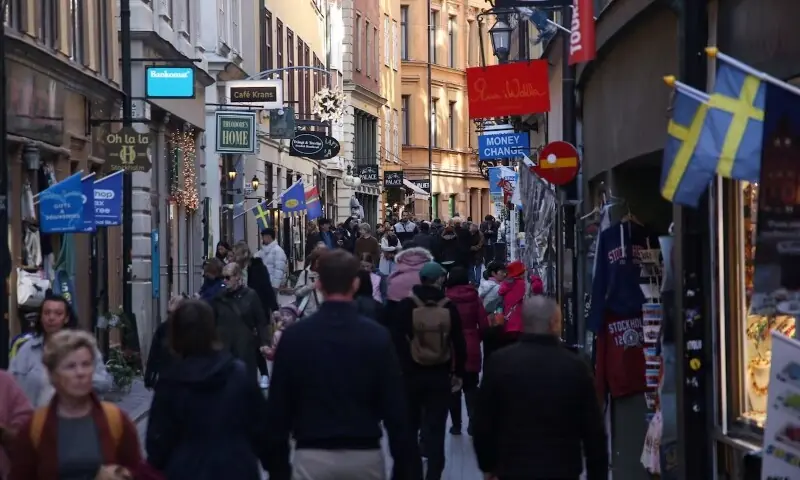
AFP: Sweden’s government has faced growing criticism over its plans to require migrants to adhere to “honest living”, with rights groups and legal experts saying the proposed measure is discriminatory. The government, which came to power in 2022 on vows to get tough on immigration and crime, is trying to rapidly push through a series of reforms ahead of legislative elections in September. If approved by parliament, the “honest living” measure would come into force on July 13.

Under the proposal, the Migration Agency would consider, when granting or renewing non-EU citizens’ residence permits, whether applicants have at any time posed a threat to public order or security, had extremist sympathies or links to groups advocating violence, or committed minor offences punishable by fines.
Other factors may include going into debt “without any intention or effort to repay”, organised begging, committing welfare fraud, or working off the books. Those found not adhering to the “honest living” standard could face deportation.“The consequences will be very serious” for migrants affected by the reform, said John Stauffer, a legal adviser for the human rights organisation Civil Rights Defenders.
Even a person’s statements—although they in themselves should not be considered as proof of a lack of “honest living”—may indicate links to “violent extremism”, Ludvig Aspling, a spokesman for the anti-immigration Sweden Democrats, which props up the minority right-wing government, said when the plans were announced.“This creates a system where people, depending on their legal status and whether they are citizens or have residence permits, have different rights in our society, especially when it comes to freedom of expression,” Stauffer said.“If you are a citizen, you have broad and strongly protected freedom of expression. If you are not a citizen, then you will have freedom of expression, but it will not be as strong,” he added.
Migration Minister Johan Forssell said: “It is not a human right to stay in Sweden. It is important to remember that.”“If you come to Sweden and you’re not a citizen, it’s almost like being a guest in someone’s home. Then you should show that you want to become part of the country, that you make an effort, that you pull your weight, that you work,” he said. The government has not yet published a definitive list of actions or behaviours that would constitute a violation of the “honest living” requirement.
The Swedish Refugee Law Centre said the new considerations would make the process for residence permits unpredictable.“This can also create a sense of insecurity when you don’t really know how your actions in different situations might be assessed,” said Elias Nygren, a lawyer with the organisation.
Some organisations worry that certain types of activism may also be considered a breach of “honest living”.“We organise trainings in civil disobedience, that is, in non-violence and the principles that guide our actions. We are finding that this question comes up more and more often,” said Frida Bengtsson, head of Greenpeace Sweden.“Many people are dropping out because they hesitate to take action due to the current uncertainty. They don’t really dare take that risk,” she added.
In a satirical op-ed published in Dagens Nyheter, writer Gellert Tamas suggested some members of the government could themselves be considered for deportation under the proposed criteria, referencing past controversies involving Migration Minister Johan Forssell and his family.