









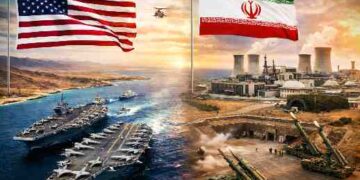































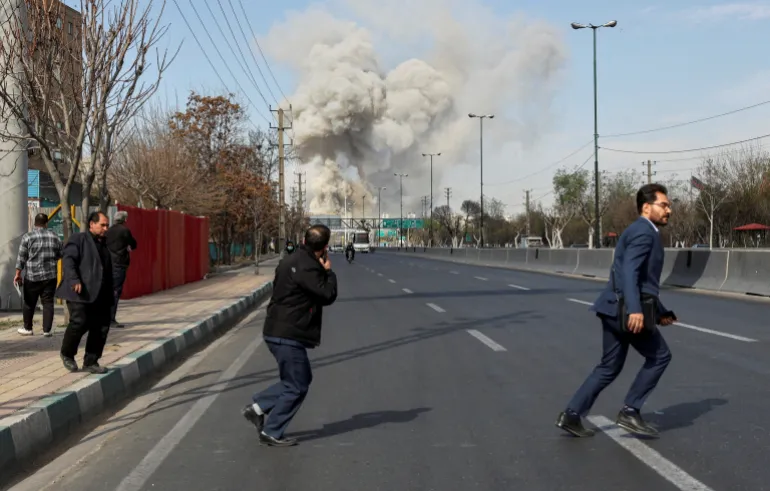
NEWS DESK (MNN); The United States and Israel continued heavy bombardment of Iran, with reports indicating that at least 1,230 people have been killed since Saturday as the conflict rapidly expands across the region.

Amid escalating tensions, the Israeli military issued forced evacuation orders for the entire southern suburbs of Beirut, an area home to hundreds of thousands of residents and widely considered a stronghold of Hezbollah.
US President Donald Trump said the son of assassinated Iranian Supreme Leader Ali Khamenei, Mojtaba Khamenei, would be an “unacceptable” successor. He also insisted that the United States must play a role in deciding Iran’s future leadership.
Meanwhile, Iranian Foreign Minister Abbas Araghchi warned of possible “terrorist movements” along the country’s border with Iraq. He called for strengthened security after reports suggested that Washington was in talks with Kurdish forces to arm them and encourage an uprising against Tehran.
Iranian President Masoud Pezeshkian expressed appreciation to the Kurdish population, praising them for standing by Iran during the ongoing conflict. In a message posted on X, he also extended condolences to Kurdish families who lost loved ones in the US-Israel war.
However, he stressed that Iranian authorities and the military, as guardians of national security, would take decisive action against any separatist activities.
Earlier, President Trump told Reuters that he supported Kurdish forces launching an offensive against Iran, while reports indicate that Iranian Kurdish militias and US officials have been discussing potential military operations.
Senior Iranian official Ali Larijani warned that Iran was ready and waiting for any American ground invasion.
Amjad Hussein Panahi, head of the political bureau of the Komala Party of Kurdistan, claimed that the Iranian government was nearing collapse. In an interview with Al Jazeera, he said the movement was working with other groups under the banner of a “Women’s Revolution for a Free Life” to bring about political change in Iran.
Panahi said Kurdish political groups were not pursuing separatism but instead sought a decentralised Iran guaranteeing equal rights for Kurds, Baloch, Arabs, Persians and other communities. He added that the movement also demanded an end to executions and the right to education in native languages.
He acknowledged that the group had not received direct support from the United States but said such backing could strengthen efforts to challenge the Iranian government.
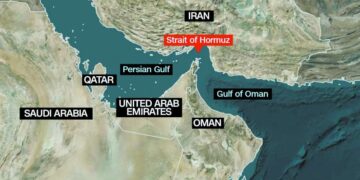
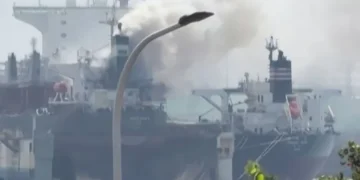
The conflict has also severely disrupted global energy markets. Cargo vessels have reportedly begun avoiding the strategic Strait of Hormuz after Iran’s Islamic Revolutionary Guard Corps announced its closure, threatening a major route for global oil shipments.
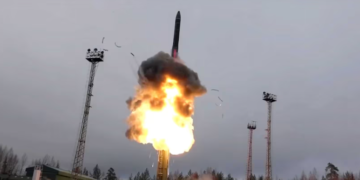
The Israeli military said it had begun striking Hezbollah infrastructure in the Beirut suburb of Dahiyeh. It also reported detecting missiles launched from Iran toward Israeli territory, adding that air defence systems were working to intercept the threats.
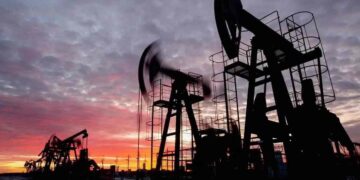
Meanwhile, a drone attack struck an oilfield operated by a US company in Iraq’s northern Kurdish region of Dohuk, sparking a fire, according to security sources.
Hezbollah claimed responsibility for several retaliatory attacks against Israel. The group said it launched a barrage of missiles at the Naftali base west of Lake Tiberias in northern Israel, describing it as retaliation for Israeli strikes on Lebanese cities including Beirut’s southern suburbs.
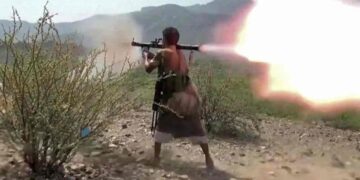
In separate statements, Hezbollah said it also targeted Israeli military vehicles near the southern Lebanese town of Markaba and attacked Israeli soldiers in Kfar Yuval in northern Israel using a rocket-propelled grenade.
The group said the attacks were part of its ongoing response to Israeli military operations in Lebanon.