


















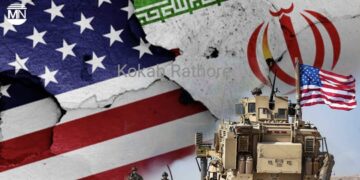


























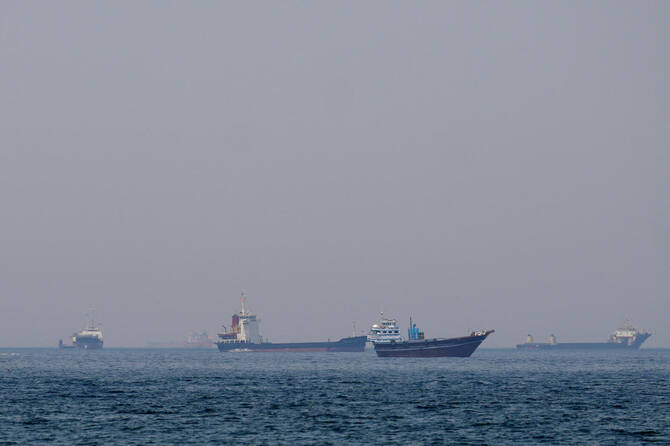
DUBAI: Gulf states fear that ongoing U.S.–Iran negotiations could solidify Tehran’s strategic leverage over the Strait of Hormuz, rather than resolving broader regional tensions. Officials and analysts say upcoming talks—expected to take place in Islamabad—are increasingly focused on uranium enrichment limits and managing Iran’s influence over Hormuz, instead of addressing missiles and regional proxy networks.

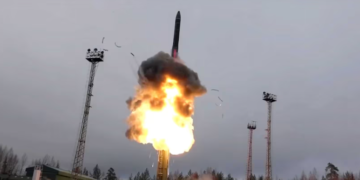
The Strait, through which roughly one-fifth of global oil supplies pass, has emerged as a central bargaining point. Gulf officials warn that prioritising its stability over wider security concerns risks entrenching Iran’s influence while sidelining countries most exposed to regional threats. A Gulf source described Hormuz as a new “red line” in negotiations, reflecting a shift in priorities. “The goal posts have moved,” the source said. Tensions escalated after remarks by Dmitry Medvedev, who described the Strait as Iran’s “tested weapon,” highlighting its potential as a strategic tool without crossing the nuclear threshold.
Iranian officials reportedly view Hormuz as a long-prepared deterrent. Security sources describe it as a “golden asset” rooted in geography, capable of shaping global energy flows and regional power dynamics. Another source linked to the Islamic Revolutionary Guard Corps said the long-standing taboo around using the Strait as leverage has now been broken. Gulf states are particularly concerned that negotiations are being framed largely around Hormuz due to its global economic importance, while overlooking missile threats and proxy conflicts that directly affect the region.
Ebtesam Al-Ketbi warned that current diplomacy risks creating a “sustainable conflict” rather than a lasting resolution. She stressed that Gulf states remain vulnerable to missile attacks and proxy warfare, issues not being adequately addressed in talks.
The conflict, which began on February 28, has already strained Gulf economies through attacks on energy infrastructure and rising insurance and export costs. Alternative trade routes remain costly and exposed to similar risks. Diplomats say Gulf countries favour a phased approach to sanctions relief on Iran, arguing that core threats—particularly missile capabilities and proxy forces—must be addressed first.
Frustration is growing in the region over what is seen as unilateral decision-making by Washington. Abdulaziz Sager emphasised that regional security requires inclusive coordination rather than isolated actions. While Gulf states continue to rely on U.S. military support, including advanced defence systems, analysts caution against dependence on a single external protector. Mohammed Baharoon noted that the war has exposed limits to such reliance.
As negotiations continue, Gulf officials argue their exclusion is no longer just a regional concern but a global issue, given the critical importance of the Strait of Hormuz to international energy markets.