



























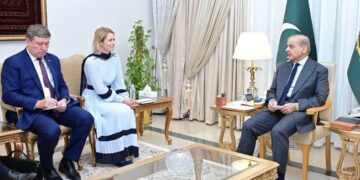





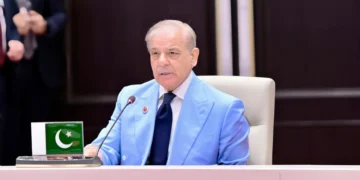




ISLAMABAD (MNN); Prime Minister Shehbaz Sharif on Monday said Pakistan possesses vast but largely untapped agricultural potential and can transform its agri-sector within months by adopting modern technologies, improving productivity and deepening cooperation with China.

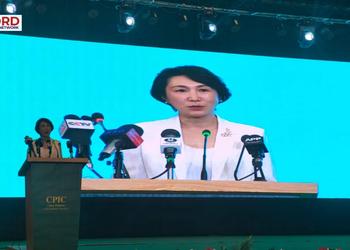
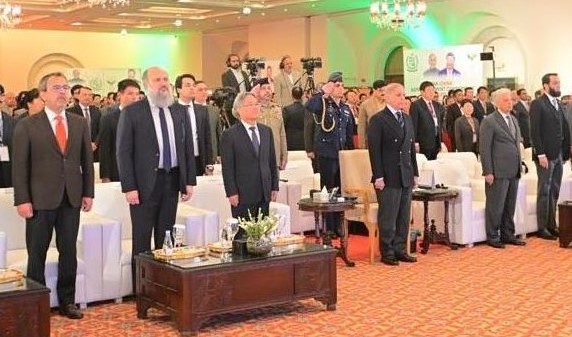
Addressing the Pakistan–China Agriculture Investment Conference, the prime minister said Pakistan is fundamentally an agrarian economy, with around 65 per cent of the population living and working in rural areas. He described agriculture as the backbone of the national economy and stressed the need to raise per-acre yields through modern farming practices, better water management and efficient use of limited land resources.
The prime minister said sustainable agricultural growth required coordinated efforts by the federal and provincial governments, farmers, scientists and researchers. He underlined the importance of strategic crop planning, export-oriented production, and the development of value chains, cold storage facilities, warehousing and value addition to enhance global competitiveness of Pakistani produce.
He termed China a trusted friend that had always stood by Pakistan, saying Beijing had consistently shared expertise and advanced technologies. He said the federal government’s initiative to send 1,000 merit-based Pakistani graduates to leading Chinese agricultural universities and research institutions was a milestone. The trained graduates had returned and would now assist farmers in improving quality, productivity and value addition.
Welcoming Chinese Ambassador Jiang Zaidong, the prime minister praised China’s achievements in agriculture, information technology, artificial intelligence, manufacturing efficiency and export competitiveness. He said Pakistan must aim to achieve a trade surplus in agriculture through higher yields, competitive costs and superior quality, with support from Chinese experts.
Referring to improving economic indicators, the prime minister said inflation had eased to 4.5 per cent, the policy rate had declined to 10.5 per cent and exports were on the rise, adding that Pakistan must now move decisively towards sustained growth.
He also expressed hope that President Xi Jinping would visit Pakistan soon and said CPEC 2.0 would mark a new phase, focusing on agriculture, IT, AI, mines and minerals, and youth development.
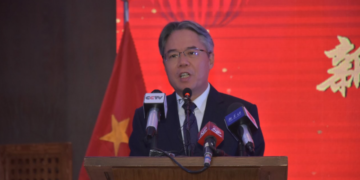
Speaking on the occasion, Chinese Ambassador Jiang Zaidong said China aimed to raise bilateral agricultural trade with Pakistan to one billion dollars while enabling Pakistan to achieve a trade surplus. He expressed satisfaction over Pakistan’s economic performance, noting growth of over 3 per cent last year and 3.7 per cent in the first quarter of the current year.
He said key economic indicators were improving, with inflation easing to around 4 per cent. He added that China was strengthening coordination under bilateral action plans and was ready to expand cooperation, particularly in technology-driven agricultural development.
Minister for National Food Security and Research Rana Tanveer Hussain said Pakistan was fully committed to deepening its strategic economic partnership with China by ensuring a conducive and investor-friendly environment, especially in agriculture and food security.
He said the ministry would provide full support to Chinese investors, including regulatory facilitation and coordination with relevant government institutions. He added that the government aimed to make Pakistan not just an investment destination, but a place where Chinese enterprises could grow, innovate and succeed alongside Pakistani partners.