





















































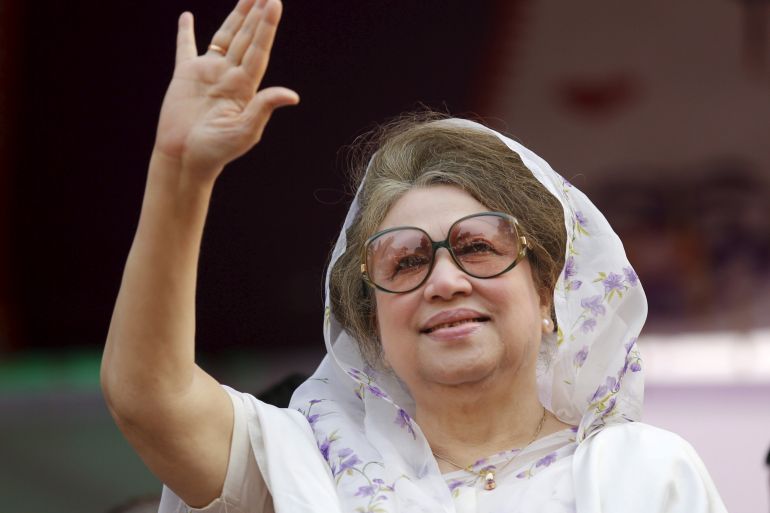
DHAKA, (Reuters): Khaleda Zia, Bangladesh’s first female prime minister and a towering figure in the country’s politics for more than three decades, died on Tuesday after a prolonged illness. She was 80, her party said. The Bangladesh Nationalist Party (BNP), which she led for decades, said Khaleda suffered from multiple health complications, including advanced liver cirrhosis, diabetes, arthritis, and heart and chest problems. She had travelled to London for medical treatment in early 2025 and remained there for four months before returning home.

Although she had been out of power since 2006 and spent years in jail or under house arrest, Khaleda continued to command strong public support. Her death comes at a critical political moment, with the BNP widely seen as the frontrunner in parliamentary elections scheduled for February. Her son, BNP acting chairman Tarique Rahman, returned to Bangladesh last week after nearly 17 years in self-exile and is regarded as a leading contender for the prime minister’s post.
Bangladesh has been governed by an interim administration since August 2024, following a student-led uprising that ousted Prime Minister Sheikh Hasina. The interim government is headed by Nobel Peace Prize laureate Muhammad Yunus. In November, Hasina was sentenced to death in absentia over her violent crackdown on the protests. Known simply as Khaleda, she lived a largely private life, devoted to raising her two sons, until her husband, President Ziaur Rahman, was assassinated in a failed military coup in 1981.
Three years later, she took over leadership of the BNP, which Ziaur Rahman had founded, pledging to fulfil his vision of lifting Bangladesh out of poverty. In 1990, Khaleda joined forces with Sheikh Hasina, the daughter of Bangladesh’s founding leader Sheikh Mujibur Rahman, to lead a mass movement that toppled military ruler Hossain Mohammad Ershad. Their alliance soon collapsed, giving rise to one of South Asia’s fiercest political rivalries.Dubbed the “battling Begums,” Khaleda and Hasina alternated in power for years, dominating Bangladeshi politics with their contrasting styles—Khaleda reserved and traditional, Hasina outspoken and forceful.
Khaleda won the 1991 general election in what was hailed as Bangladesh’s first free and fair vote, becoming the country’s first female prime minister and only the second woman to lead a democratic government in a Muslim-majority nation, after Pakistan’s Benazir Bhutto. During her first term, she restored the parliamentary system, reduced presidential powers, encouraged foreign investment, and made primary education free and compulsory.
After losing power in 1996, she returned with a landslide victory in 2001. Her second term, however, was overshadowed by rising militancy and allegations of corruption. In 2004, a grenade attack on a rally addressed by Hasina killed more than 20 people. Khaleda’s government and its allies were widely blamed, though the BNP rejected the accusations. Political instability led to an army-backed interim government taking power in 2006. Both Khaleda and Hasina were jailed on corruption charges before being released ahead of elections in 2008. Khaleda never returned to office, as the BNP boycotted the 2014 and 2024 polls. She was convicted in 2018 in a corruption case involving an orphanage trust and jailed, later moved to house arrest in 2020 due to ill health. She was freed in August 2024 after Hasina’s removal, and in early 2025 Bangladesh’s Supreme Court acquitted her and Tarique Rahman in the corruption case.
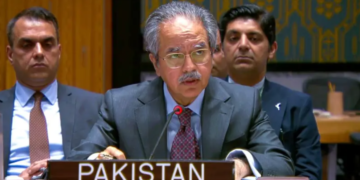
Leaders in Pakistan expressed condolences, praising Khaleda Zia’s political legacy. President Asif Ali Zardari, Prime Minister Shehbaz Sharif, and Deputy Prime Minister Ishaq Dar issued statements mourning her death. Prime Minister Sharif described her as a lifelong friend of Pakistan, saying her service to Bangladesh would be remembered for generations. “Our thoughts and prayers are with her family and the people of Bangladesh in this moment of sorrow,” he said. President Zardari said her leadership would be remembered with respect, while Ishaq Dar prayed for her elevation in Jannah and patience for her family.