











































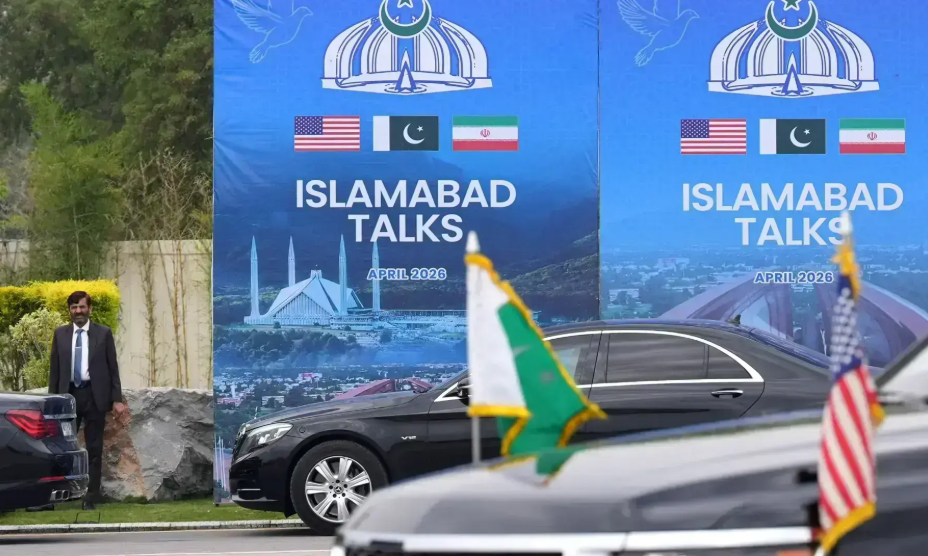
ISLAMABAD: Islamabad and Rawalpindi have been placed under extraordinary security arrangements ahead of the expected second round of peace talks between the United States and Iran this week, as tensions escalated following a reported confrontation involving an Iranian vessel in the Sea of Oman.

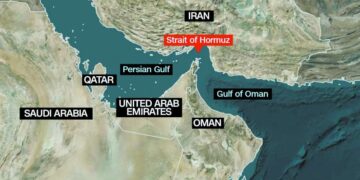
President Donald Trump, who earlier confirmed that negotiations would take place in Islamabad on Monday or Tuesday, announced late Sunday that the US Navy had intercepted an Iranian ship allegedly attempting to bypass the blockade of the Strait of Hormuz.
He said a US guided missile destroyer “stopped them right in their tracks by blowing a hole in the engine room” after the vessel ignored warnings to stop, adding that the ship was now in the custody of US Marines.
However, Iranian media strongly disputed that version of events. Semi-official Mehr news agency reported that American forces opened fire on an Iranian commercial vessel in the Sea of Oman in an attempt to force it back toward Iranian waters, but claimed that with the quick intervention of IRGC naval units, “the Americans were forced to retreat and flee the area.”
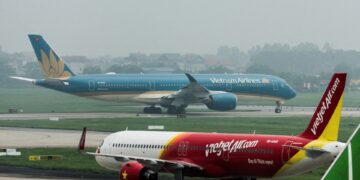
The incident came as advance teams from the United States reportedly arrived in Islamabad. According to Reuters, two US C-17 cargo aircraft landed at Noor Khan Airbase on Sunday carrying security vehicles and equipment ahead of the delegation’s arrival.
President Trump later posted on Truth Social, “My Representatives are going to Islamabad, Pakistan — They will be there tomorrow evening, for Negotiations,” though uncertainty remained over who would lead the US side.
During the first round of talks, Vice President JD Vance headed the American delegation. Trump initially suggested Vance would not attend due to security concerns, saying, “It’s only because of security. JD’s great.”
However, the White House later indicated that Vance, special envoy Steve Witkoff, and Jared Kushner would be part of the delegation, while CNN also reported that the vice president would lead the team.
On the Iranian side, confusion also surrounded Tehran’s participation. State media IRNA reported that Iran would not join the talks, citing “US excessive demands, unreasonable and unrealistic expectations, frequent shifts in positions, continuous contradictions, and the so-called naval blockade, which violates ceasefire understanding.”
Iran’s envoy to Pakistan, Reza Amiri Moghadam, also posted on X, “As long as the naval blockade remains, faultlines remain.”
“You cannot keep violating the international law, double down on your blockade, threaten Iran with further war crimes, insist on unreasonable demands, pace out with rhetorics and pretend to be pursuing ‘Diplomacy’,” he wrote.
President Trump also renewed his warning to Tehran, stating the US was “offering a very fair and reasonable deal,” but added that if Iran refused, “the United States is going to knock out every single power plant, and every single bridge, in Iran.”
He concluded the warning with: “NO MORE MR. NICE GUY!”
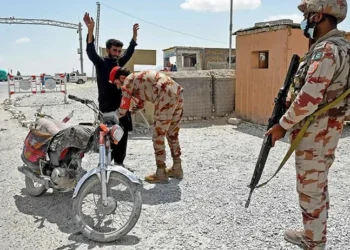
Meanwhile, authorities imposed a near-lockdown across Islamabad and Rawalpindi. Government offices in the Red Zone were ordered to operate on a work-from-home basis, while courts signaled that hearings would be suspended for Monday.
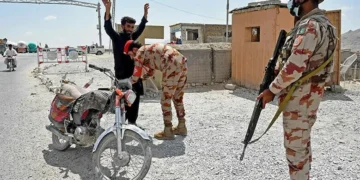
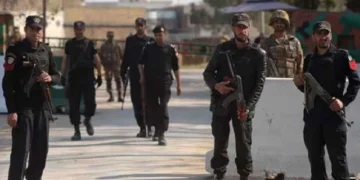
More than 10,000 security personnel, including commandos and snipers, were deployed across both cities. Entry points to high-security areas were sealed, public transport was suspended, and major routes were heavily monitored.
Hotels were vacated for visiting delegations, markets and wedding halls along key routes were restricted, and even hiking trails in the Margalla Hills were temporarily closed as part of the security plan.