


















































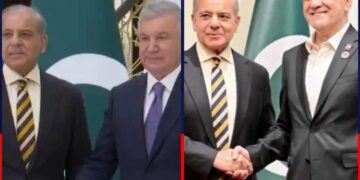



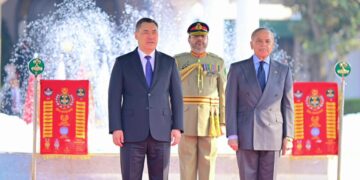








ISLAMABAD/PESHAWAR (MNN); Prime Minister Shehbaz Sharif held a telephonic conversation with Prabowo Subianto to discuss the evolving security situation in the region.

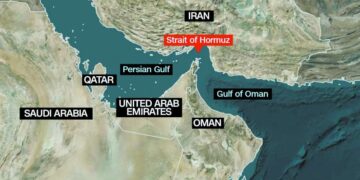
In a message posted on X, the prime minister said the two leaders exchanged views on the alarming developments in the Middle East and emphasised the need for restraint and renewed diplomatic efforts to prevent further escalation.
He added that they also discussed recent developments in Afghanistan and agreed to remain in close contact in the coming days to support peace and stability in the region.
Meanwhile, security sources said the Pakistan Army targeted 41 posts belonging to the Afghan Taliban and militant group Fitna Al Khawarij with light and heavy weapons during the night between March 4 and 5.
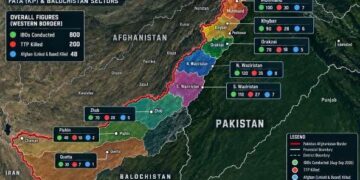
According to the sources, the operations were carried out in border areas near Chaman, Zhob, Noshki and Qila Abdullah sectors.
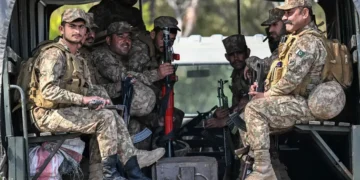
The strikes reportedly inflicted heavy casualties and financial losses on militant groups. Security officials said military actions under Operation Ghazab lil-Haq would continue until the set objectives were fully achieved.
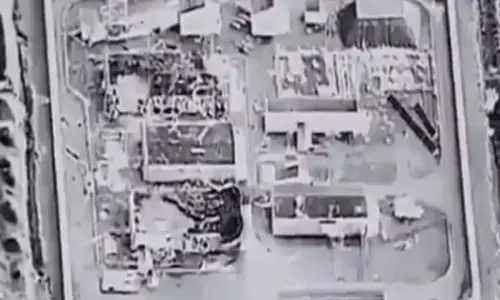
Sources further claimed that Pakistani forces destroyed the brigade headquarters of the Afghan Taliban’s 205 Corps in Kandahar and also targeted an ammunition depot during the operation.
Officials stated that Afghan Taliban forces had suffered significant military losses as a result of the Pakistani strikes.
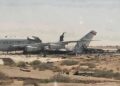
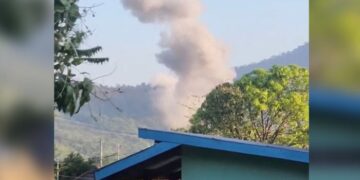
Separately, two civilians were reportedly killed and another injured when a missile fired from an unidentified direction struck the Governor Cottage inside Miranshah Cantonment in North Waziristan late at night.
Local sources said the explosion partially damaged the Governor Cottage building while the nearby Deputy Commissioner compound sustained severe damage due to the impact.
Authorities have yet to issue an official statement confirming the exact scale of damage and casualties.
Residents reported hearing a powerful blast across Miranshah and nearby areas, after which security forces rushed to the site, cordoned off the area and launched a search operation.
Initial reports indicate that the two deceased were civilians who happened to be near the site at the time of the explosion. Their identities have not yet been officially released.
In another development, suspected drones were spotted flying over the Ejaz Shaheed Police Lines in Dera Ismail Khan.
Police officials said two drones entered the sensitive security zone, prompting personnel on duty to open fire in an attempt to intercept them. Sirens were sounded during the incident, but both drones managed to escape.
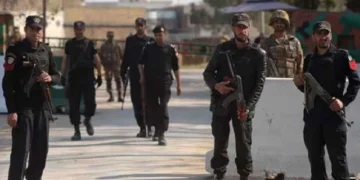
Security around the police lines and surrounding areas was subsequently tightened, and investigations have been launched to determine the origin and purpose of the drones.
A senior security official later said the Afghan Taliban leadership was fully aware of Pakistan’s concerns and demands but must take verifiable steps if it wished to pursue dialogue or a ceasefire.
Relations between Pakistan and the Afghan Taliban have deteriorated sharply since the latter returned to power in 2021. On February 22, Pakistan carried out strikes on militant hideouts in Afghanistan’s Nangarhar and Paktika provinces, which was followed by cross-border attacks by the Afghan Taliban.
In response, Pakistan launched Operation Ghazab lil-Haq on February 26.
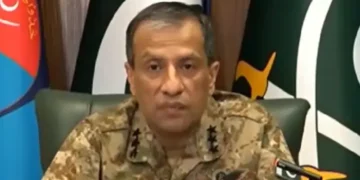
Briefing journalists at the headquarters of the Inter-Services Public Relations, the security official said Pakistan had repeatedly conveyed its concerns to the Afghan Taliban.
“If they want dialogue or a ceasefire, they must take verifiable steps,” the official said, adding that Pakistan’s primary priority was safeguarding national security.
He also said the Pak-Afghan border was effectively guarded only from the Pakistani side, while militant groups were being provided shelter and facilitation across the border.
The official stressed that Pakistan’s operations were carefully conducted to minimise collateral damage and that civilians had not been targeted.
“All operations are limited to terrorist camps and military targets,” he said.
The official further noted that Afghanistan had become a hub for several militant organisations that were being sheltered and supported there.
He said Pakistan had initially targeted camps of the banned Tehreek-e-Taliban Pakistan, but Afghan Taliban forces subsequently attacked Pakistani border posts established to prevent militant infiltration.
Operations aimed at dismantling militant networks inside Pakistan were also continuing, he added.
The official stressed that terrorism could not be fully eliminated unless the entire nation developed a unified stance against it, referring to the objectives of the National Action Plan.
He reiterated that Pakistan had no interventionist agenda in Afghanistan’s internal affairs but maintained a clear position that Afghan territory must not be used for attacks against Pakistan.
The security official added that military operations would continue until their objectives were achieved.
A day earlier, Asim Munir had said that lasting peace between Pakistan and Afghanistan could only be achieved if the Taliban regime ended its support for terrorist organisations.