







































KABUL (MNN); An explosion ripped through a Chinese-operated restaurant located inside a hotel in one of Kabul’s most heavily guarded areas on Monday, killing at least seven people, including a Chinese national, and injuring several others, officials said.

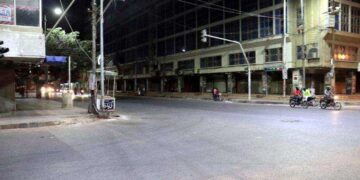
According to Kabul police spokesperson Khalid Zadran, the blast occurred at a Chinese noodle restaurant in the commercial Shahr-i-Naw district, an area known for housing office buildings, shopping centres and embassies, and considered among the safest parts of the Afghan capital.
The restaurant was jointly run by a Chinese Muslim national Abdul Majid, his wife, and an Afghan partner Abdul Jabbar Mahmood, and primarily catered to the Chinese Muslim community in Kabul.
Police said one Chinese citizen, identified as Ayub, along with six Afghan nationals, lost their lives in the explosion, which reportedly occurred near the kitchen area. Several others, including women and a child, sustained injuries.
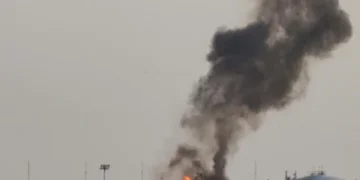
Videos circulating on social media showed debris scattered across the street and thick smoke billowing from a large hole in the restaurant’s façade.
Humanitarian organisation EMERGENCY confirmed receiving 20 victims at its Kabul hospital. Its Afghanistan Country Director Dejan Panic said seven victims were brought in dead, while the injured included four women and a child.
Authorities said the cause of the explosion was not immediately known and investigations were underway. No group has claimed responsibility so far.
In a statement, President Asif Ali Zardari strongly condemned the bombing and expressed deep sorrow over the loss of lives. He conveyed sympathies to the injured and their families and prayed for their swift recovery.
The president paid tribute to Chinese citizens working in Afghanistan, acknowledging their contributions to development despite serious security risks.
President Zardari also noted that the Afghan Taliban authorities had failed to fully honour commitments under the Doha Peace Agreement, particularly regarding preventing Afghan soil from being used for terrorist activities.
Reiterating Pakistan’s longstanding position, he stressed that no terrorist groups should be allowed safe havens in Afghanistan and that regional peace and stability must be safeguarded.
The statement further noted that neighbouring countries, including Tajikistan, had also been affected by terrorism originating from Afghan territory. The president emphasised that the failure to establish an inclusive and broad-based government in Afghanistan ran contrary to the Doha Agreement and called for its full implementation in letter and spirit, along with concrete steps to end cross-border terrorism.
Despite Taliban claims of restoring security since taking power in 2021, deadly attacks have continued across Afghanistan, many of them claimed by the local chapter of the Islamic State group.
UPDATED