

































































WASHINGTON: The United States military expended a significant portion of its advanced missile inventory during its recent conflict with Iran, according to a new analysis by the Center for Strategic and International Studies (CSIS). The report highlights growing concerns about Washington’s preparedness for a potential large-scale conflict, particularly with China.

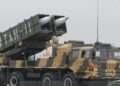
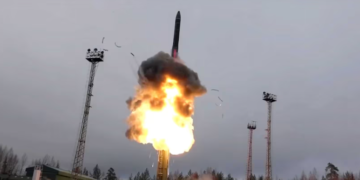
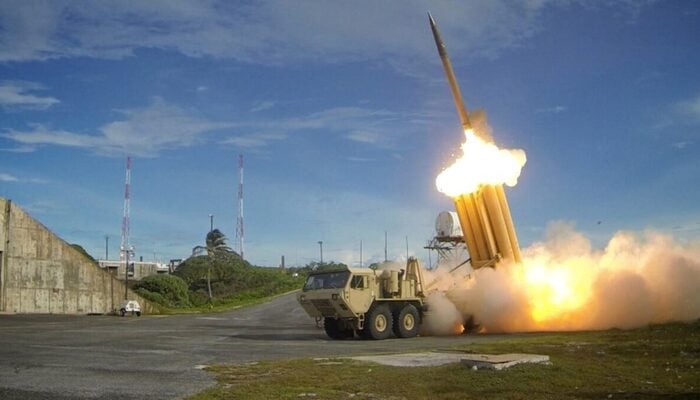
The study, cited by The Hill, reveals that nearly 50% of the US stockpile of Patriot interceptor missiles was used during the seven-week campaign. In addition, more than half of Terminal High Altitude Area Defense (THAAD) interceptors and over 45% of Precision Strike Missiles (PrSMs) were deployed.
Other key munitions also saw substantial usage. Over 20% of Joint Air-to-Surface Standoff Missiles (JASSMs), more than 30% of SM-3 interceptors, and at least 10% of SM-6 missiles were expended as part of the operation, known as “Operation Epic Fury”. CSIS analysts warned that replenishing these stockpiles could take between one and four years, particularly for critical systems such as Tomahawk cruise missiles and JASSMs. These weapons are considered essential for any future conflict in the Western Pacific region.
The report further noted that even before the Iran conflict, US stockpiles were viewed as insufficient for a high-intensity war with a major power like China. The recent depletion has only intensified that shortfall.
Despite these concerns, the United States Central Command (CENTCOM), which led the Iran campaign, stated that efforts to rebuild capabilities are already underway. Commander Admiral Brad Cooper emphasized that US forces are “rearming, retooling, and adapting tactics” during the current ceasefire.
US officials have also sought to reassure the public. Pentagon spokesperson Sean Parnell maintained that the US military remains fully capable and prepared for any mission. He stressed that only a small portion of overall naval power was needed to control strategic routes such as the Strait of Hormuz.
Meanwhile, the administration is planning long-term measures to strengthen defense production. Pentagon comptroller Jules “Jay” Hurst indicated that multi-year munitions contracts could be extended up to seven years to stabilize supply chains and encourage sustained investment. This initiative is part of a broader proposed $1.5 trillion defense budget.
While inventories are expected to recover gradually once operations conclude, experts caution that restoring and expanding stockpiles to meet future strategic demands could take several years.