
















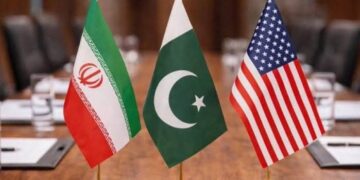


















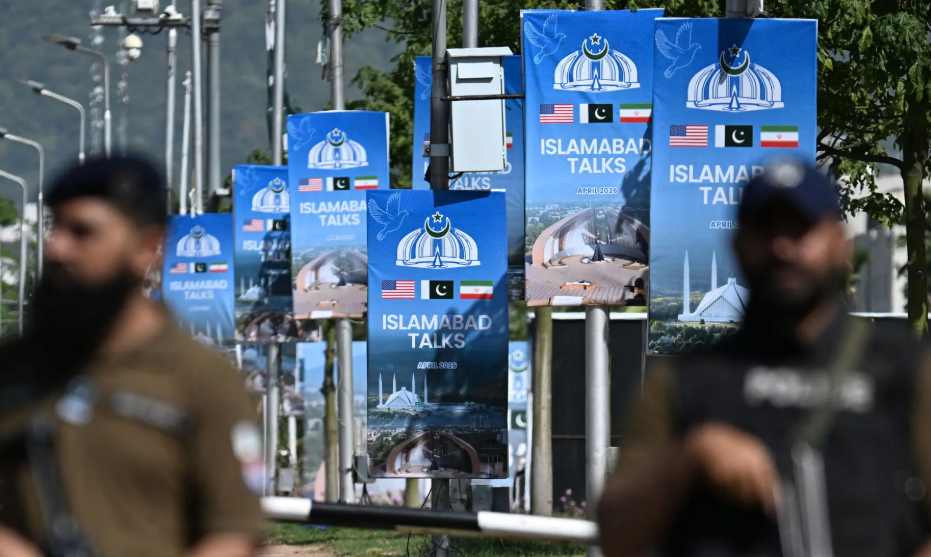
ISLAMABAD: Confusion persisted on Monday over the second round of US-Iran talks, as contradictory statements from Tehran raised doubts about whether negotiations would proceed, even as Islamabad maintained preparations to host both sides.

Iran’s Foreign Ministry spokesperson Esmaeil Baqaei said Tehran has not yet decided whether it will participate in the next round of discussions with the United States.
His remarks followed earlier comments by Iranian Parliament Speaker Mohammad Bagher Ghalibaf, who said that Iran is still engaged in talks with Washington but is prepared to take “necessary measures” amid concerns of renewed escalation.
The shifting positions reflect a similar pattern seen before the first round of Islamabad talks, when Iran had insisted on certain preconditions before agreeing to participate. Even then, Tehran maintained its stance until shortly before its delegation arrived in Pakistan, after tensions linked to regional strikes were temporarily eased.
Although US officials have indicated that a delegation is expected in Islamabad, President Donald Trump has not confirmed whether formal talks will take place.
The situation became more uncertain after Trump claimed the US Navy had targeted an Iranian vessel in the Strait of Hormuz, an incident both sides have described differently.
Iran has also reiterated its position regarding the waterway, with reports suggesting it has maintained pressure over maritime access issues until US actions are addressed.
Speaking at a weekly briefing in Tehran, Baqaei said, “As of now, while I am at your service, we have no plans for the next round of negotiation, and no decision has been made in this regard”.
He further accused Washington of lacking seriousness in pursuing diplomacy, referring to alleged violations of a temporary ceasefire.
“While claiming diplomacy and readiness for negotiations, the US is carrying out behaviours that do not in any way indicate seriousness in pursuing a diplomatic process,” he said.
Baqaei also cited the reported naval incident and restrictions on Iranian maritime activity as breaches of the ceasefire framework. On nuclear-related discussions, he stated, “Regarding the issue of transferring enriched uranium, neither during this period of negotiations nor before has transferring it to the United States been discussed,” adding, “It was never raised as an option for us”.
Meanwhile, Mohammad Bagher Ghalibaf reiterated Iran’s mistrust of Washington, saying, “We do not trust the enemy. At any moment, it may escalate the war”.
“We are negotiating, but we are prepared for the necessary measures,” he added.
He also claimed the current tensions began due to “American deception in the middle of negotiations” and said Iran had strengthened its preparedness following past conflicts.
Islamabad on high alert amid diplomatic uncertainty
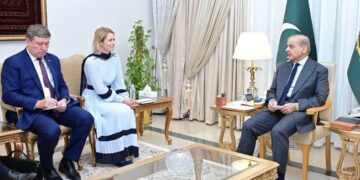
Despite the unclear diplomatic situation, Islamabad continues preparations for a possible second round of talks.
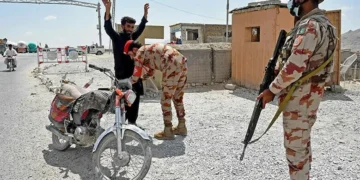
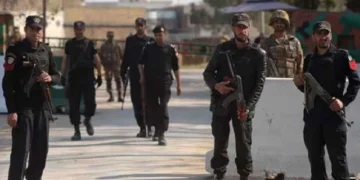
Security has been tightened across the federal capital and Rawalpindi, with advance US security teams reportedly arriving over the weekend.
Interior Minister Mohsin Naqvi also met US Charge d’Affaires Natalie Baker to review security arrangements.
More than 10,000 security personnel, including special forces and snipers, have been deployed in and around sensitive areas. The Red Zone has been sealed, major roads restricted, and public transport suspended in parts of the twin cities. Several hotels have also been cleared for visiting delegations.
President Trump posted, “My Representatives are going to Islamabad, Pakistan They will be there tomorrow evening, for Negotiations,” though leadership of the US delegation remains unclear.
Earlier reports suggested Vice President JD Vance may lead the team, but conflicting statements from Washington have added to the uncertainty.
Iran warns over Strait of Hormuz
Iran’s First Vice President Mohammad Reza Aref also issued a warning over maritime tensions, stating that security in the Strait of Hormuz cannot be guaranteed if Iranian oil exports remain restricted.
“No one can restrict Iran’s oil exports while expecting free security for others,” he said on X.
“The security of the Strait of Hormuz is not free,” he added.
He further warned that global oil market stability depends on ending economic and military pressure on Iran and its allies.