








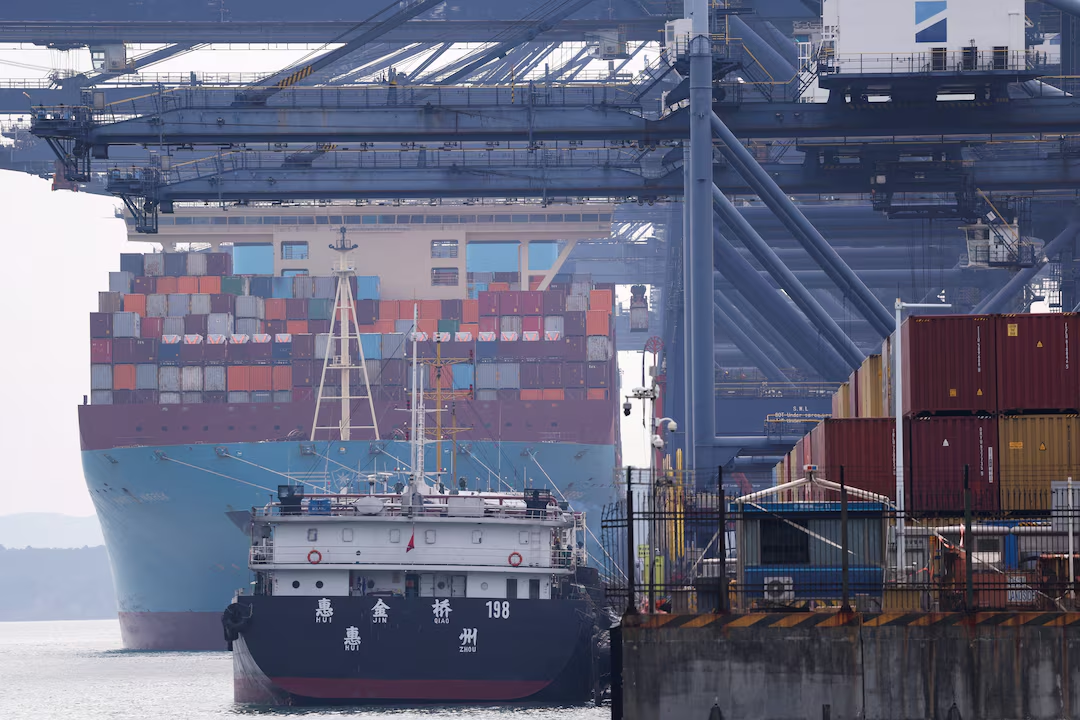





























WASHINGTON (MNN); U.S. President Donald Trump strongly criticized the Supreme Court of the United States after it struck down his use of emergency powers to impose broad tariffs, calling the decision “extremely disappointing” and “ridiculous.”

In a 6-3 ruling, the Supreme Court held that the International Emergency Economic Powers Act (IEEPA) does not grant the president the authority to impose tariffs, dealing a major setback to Trump’s trade strategy.
Responding to the verdict, Trump clarified that the ruling does not invalidate tariffs entirely but only prevents his specific reliance on IEEPA. He emphasized that previously imposed tariffs would remain “in full force” and vowed to pursue alternative legal avenues.
“This tariff gave us tremendous national security,” Trump said. “The court’s decision is extremely ridiculous.”
Trump argued that the ruling effectively prevents him from charging even a minimal fee on imports while still allowing broad trade restrictions. “According to the decision, I can destroy trade, I can destroy a country by cutting off business or imposing an embargo — but I can’t charge them a little fee,” he said.
The president alleged that the court had been influenced by political pressure and described the ruling as an insult to the nation. While he acknowledged that the decision recognized certain aspects of his administration’s performance, he argued that it unfairly curtailed executive authority.
Trump defended his tariff policy as essential for economic leverage and global stability, reiterating that tariffs had helped prevent five out of eight potential wars, including a possible conflict between India and Pakistan that he claimed was “on the verge of becoming a nuclear war.”
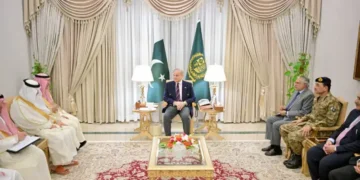
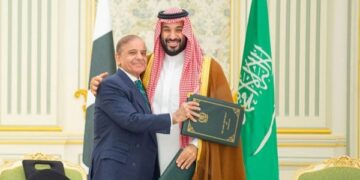
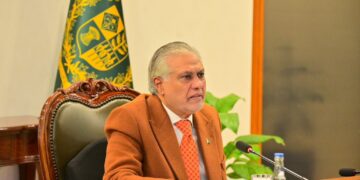
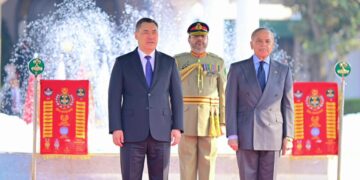
He also praised Pakistan’s Prime Minister Shehbaz Sharif, saying the premier credited him during a Board of Peace meeting with saving 35 million lives by helping ease regional tensions.
Announcing immediate action, Trump stated that he would sign an executive order to impose a 10 percent global tariff under Section 122 of the Trade Act of 1974. This provision, he said, would allow him to protect U.S. interests without relying on IEEPA. “In order to protect our country, we will charge more under other statutes,” he said, adding that alternative mechanisms remain available to sustain his broader trade agenda.
The Supreme Court’s majority opinion emphasized that while IEEPA allows the president to regulate imports during national emergencies, it does not explicitly authorize the imposition of tariffs, highlighting that such major economic measures require clear congressional approval.