

























































Washington: The United States on Wednesday launched an ambitious global strategy aimed at reshaping the critical minerals and rare earths market, warning that overconcentrated supply chains pose economic and security risks while unveiling major diplomatic, financial, and industrial initiatives to diversify production.

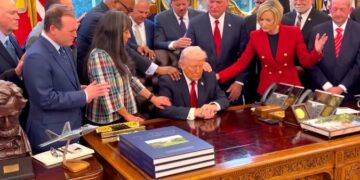
The announcement came at the 2026 Critical Minerals Ministerial, hosted by U.S. Secretary of State Marco Rubio in Washington. He was joined by Vice President JD Vance, Treasury Secretary Scott Bessent, Interior Secretary Doug Burgum, Energy Secretary Chris Wright, and U.S. Trade Representative Jamieson Greer.
Representatives from 54 countries and the European Commission, including 43 ministers, attended the gathering. Participating nations ranged from major producers such as Australia, Brazil, and the Democratic Republic of the Congo to key industrial partners including Japan, South Korea, Germany, and the United Kingdom, as well as resource-rich states like Kazakhstan, Guinea, Zambia, and Pakistan.
Why critical minerals matter
U.S. officials emphasized that critical minerals and rare earths are indispensable for technologies such as artificial intelligence, robotics, batteries, electric vehicles, and autonomous systems. However, they warned that today’s highly concentrated market leaves supply chains vulnerable to political coercion and disruption.Washington said its strategy seeks to build new sources of supply, strengthen transport and logistics networks, and create a more secure, diversified, and resilient global market.
New partnerships and FORGE initiative
During the ministerial, the United States signed eleven new bilateral critical minerals frameworks and memorandums of understanding with Argentina, the Cook Islands, Ecuador, Guinea, Morocco, Paraguay, Peru, the Philippines, the United Arab Emirates, the United Kingdom, and Uzbekistan.
Over the past five months, Washington has signed ten additional agreements and completed negotiations with seventeen more countries.Secretary Rubio also announced the launch of the Forum on Resource Geostrategic Engagement (FORGE), which will replace the Minerals Security Partnership. South Korea will chair FORGE through June.
The new platform aims to coordinate policy and investment efforts to strengthen diversified supply chains.The U.S. also highlighted collaboration with its nine Pax Silica partners, a public–private initiative designed to secure key segments of the global technology supply chain through investments in mining, refining, recycling, and processing.
Private sector engagement
A day before the ministerial, U.S. officials convened major mining and manufacturing firms to discuss supply chain risks and investment opportunities.
During that meeting, Glencore signed an MOU with the U.S.-backed Orion Critical Minerals Consortium for potential asset acquisitions in the Democratic Republic of the Congo, particularly in copper and cobalt.Following the ministerial, senior U.S. officials formed a task force with industry leaders to advance priority mining projects in partnership with U.S. allies.
$30 billion in U.S. support
The Trump administration said it has mobilized over $30 billion in loans, investments, and letters of interest for critical minerals projects in the past six months, leveraging far greater private sector financing.
Key U.S. government actions include:Export-Import Bank (EXIM): $10 billion loan for Project Vault, a strategic domestic minerals reserve. $1.3 billion for Pakistan’s Reko Diq copper and gold project.
Additional financing for rare earths, lithium, cobalt, nickel, and tin projects in the U.S., Australia, and the U.K.Department of Energy (DOE):Major loans for lithium, graphite, battery recycling, and potash projects across the United States, along with new funding programs to modernize mining and rare earth processing.
Department of Defense-linked investments:Funding commitments to mining and processing projects in Alaska, North Carolina, Indiana, South Korea, Jamaica, and Western Australia.U.S. International Development Finance Corporation (DFC):Investments in Ukraine, Brazil, Kazakhstan, and Africa to secure copper, rare earths, and tungsten supplies for the U.S. and its allies.
Trade policy moves
The U.S. Trade Representative announced a new Critical Minerals Action Plan with Mexico aimed at reducing supply chain vulnerabilities. Additionally, Washington said it would work with the European Commission and Japan to develop joint action plans on critical minerals resilience.
U.S. officials framed the initiative as part of a broader “America First” industrial strategy to reduce dependence on rivals—particularly China—in strategic minerals.“This is only the beginning,” a senior U.S. official said, noting that dozens of additional projects are currently under review.