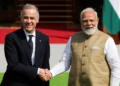







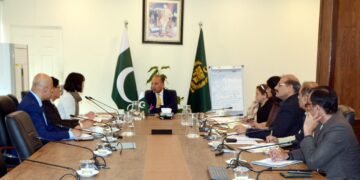























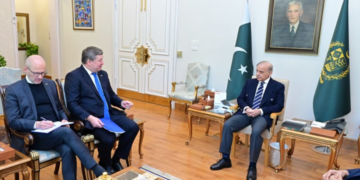












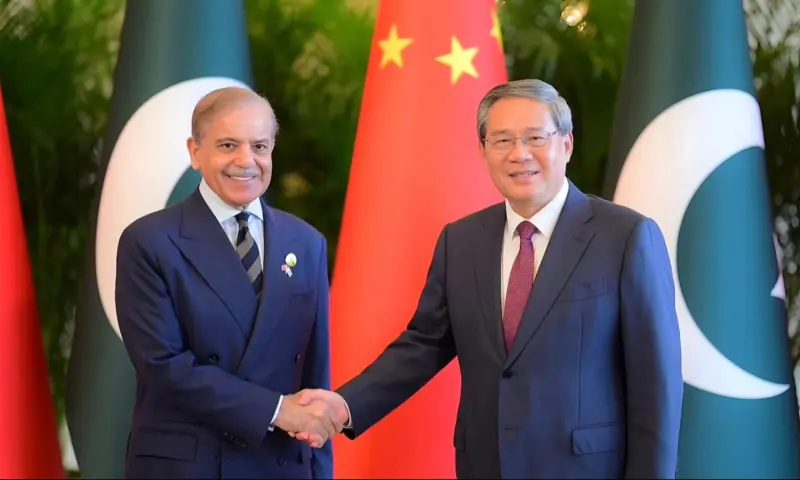
BEIJING/ISLAMABAD; Prime Minister Shehbaz Sharif and Chinese Premier Li Qiang reaffirmed their shared commitment to advance the second phase of the China-Pakistan Economic Corridor (CPEC) during a wide-ranging meeting in Beijing on Thursday, which the Pakistani leader described as “warm, constructive and most productive.”

The meeting was accompanied by the signing of memorandums of understanding (MoUs) worth $4.2 billion between Pakistani and Chinese companies, further deepening the economic partnership.
Shehbaz Sharif is currently on a six-day official visit to China, where he participated in the Shanghai Cooperation Organisation (SCO) summit in Tianjin from August 31 to September 1. His visit has focused heavily on strengthening Pakistan’s economic engagement with Beijing, particularly by operationalising CPEC’s second phase (CPEC 2.0), which envisions greater industrial, agricultural, and technological collaboration.
CPEC’s Role in Pakistan’s Development
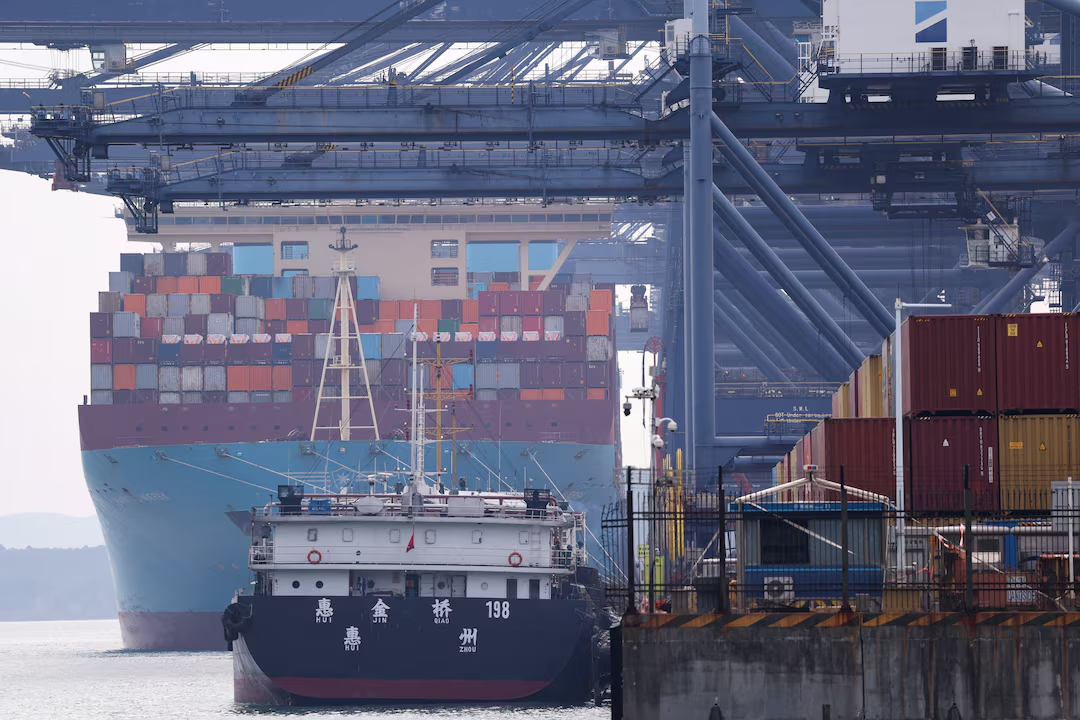
In his talks, the prime minister underlined the “transformational role” CPEC has already played in Pakistan’s socio-economic development over the past decade, citing improvements in infrastructure, energy supply, and regional connectivity. He stressed the urgent need to accelerate major infrastructure projects, including the long-delayed Main Line-1 (ML-1) railway upgrade, realignment of the Karakoram Highway, and the full operationalisation of the Gwadar Port, which he called critical to unlocking Pakistan’s trade potential.
Shehbaz noted that the new phase of CPEC would go beyond roads and power plants, focusing instead on industrial cooperation, information technology, agriculture, mining, and mineral development. He highlighted that Pakistan was well-positioned to become a regional trade and logistics hub under the Belt and Road Initiative (BRI).
‘Iron Brotherhood’ and Chinese Support
The meeting with Premier Li Qiang followed Shehbaz’s earlier discussions with President Xi Jinping, where both leaders reaffirmed their “iron-clad, all-weather strategic cooperative partnership.” Shehbaz expressed his deepest gratitude to the Chinese leadership and people for their “unwavering support” for Pakistan’s sovereignty, territorial integrity, and economic stability.
China has been a key partner in stabilising Pakistan’s economy, including rolling over $3.4 billion in loans in June to bolster Islamabad’s foreign exchange reserves. The prime minister also revealed that Pakistan was preparing to float Panda Bonds – debt instruments denominated in Chinese yuan – in the Chinese capital market to further strengthen financial ties.
B2B Conference and Investment Drive
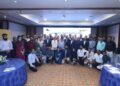
Earlier in the day, Shehbaz addressed the Pakistan-China Business-to-Business Investment Conference in Beijing, attended by more than 800 companies – including over 500 Chinese and 300 Pakistani firms. He described the conference as a landmark opportunity to connect entrepreneurs from both countries and to identify priority sectors for joint ventures.
The premier invited Chinese firms to take advantage of Pakistan’s special economic zones (SEZs) by relocating industries such as textiles, leather, and light manufacturing. He emphasised Pakistan’s “unique comparative advantage,” including a large pool of skilled and cost-effective labour, competitive input costs, and strategic access to regional and global markets.
“This is the crux of CPEC-2.0,” Shehbaz said. “If our economy strengthens, everything else will fall into place.”
Security of Chinese Investors ‘Paramount’
Addressing Chinese business leaders, Shehbaz pledged full security to Chinese nationals and enterprises working in Pakistan. “The security of our Chinese brothers and sisters is paramount for all of us,” he said, stressing that his government would not tolerate even “a second’s delay” in facilitating investment projects under CPEC’s second phase.
He admitted there had been delays in the past but reassured Beijing that Pakistan was determined to move forward swiftly “in line with Chinese standards of efficiency.” He called CPEC a “win-win partnership,” describing its second phase as one that would “reshape the economic landscape” of Pakistan while also benefitting China.
Expanding Areas of Cooperation
During delegation-level talks, both sides welcomed the signing of the Joint Action Plan 2024–2029, which outlines cooperation in multiple areas, including science and technology, information technology, media, agriculture, and industrial development.
Shehbaz reiterated Pakistan’s support for President Xi’s major global initiatives, such as the Global Development Initiative, Global Security Initiative, Global Governance Initiative, and Global Civilisation Initiative, saying they reflected a vision for multilateralism and a fairer international order.
The prime minister also met with Chinese Minister for Industry and Information Technology Li Lecheng, who described Pakistan as an “iron-clad brother” and vowed to elevate bilateral ties to “new heights of cooperation.” Both leaders noted that Pakistan and China will celebrate 75 years of diplomatic relations in 2026, marking another milestone in their partnership.
MoUs Worth $4.2 Billion Signed
As part of the visit, 21 MoUs worth $4.2 billion were signed between Pakistani and Chinese enterprises, covering sectors such as textiles, mining, agriculture, and information technology. These agreements are expected to pave the way for enhanced business-to-business cooperation and fresh investment inflows into Pakistan.
At the conclusion of the meetings, Shehbaz reaffirmed that Pakistan’s economic reform efforts were beginning to yield positive results, thanks in large part to Chinese support. He said Pakistan was now “ready to compete with other countries in the race of economic development” and called for greater collaboration to ensure mutual prosperity.
“Guided by President Xi Jinping’s vision and inspired by the enduring friendship between our two nations, Pakistan and China will continue to build a shared future together,” the prime minister said.