






































Why do people have children? In Pakistan, the answer is rarely just about choice or desire; it is deeply tied to survival, security, and social expectation. Children are often viewed as an investment: future caretakers who will financially and physically support parents in old age. In this framework, women bear a disproportionate burden due to constant pressure to have children, especially sons, who are viewed as the bearers of economic stability and legacy.

According to the World Economic Forum’s (WEF) Global Gender Gap Report 2025, Pakistan ranks last among 148 countries. The annual report assesses gender equality across four key areas: political empowerment, health and survival, educational attainment, and economic participation and opportunity. This stark inequality is further reflected in the fact that only one in three women in Pakistan has the autonomy to make decisions related to her reproductive health. Together, these realities raise an uncomfortable but necessary question: if women were truly fulfilled, financially independent, and empowered in other spheres of life, and if motherhood were a choice rather than a social duty, would they still want to have children?
As Pakistan steps into 2026 as the world’s fifth most populous country, with over 255 million people, an annual growth rate of 2.55%, and on track to exceed 386 million by 2050, these figures are not just statistics; they are a warning. They force us to confront how deeply entrenched gender roles, economic insecurity, and societal pressure continue to shape reproductive decisions, with consequences the country can no longer afford to ignore.
According to UNFPA, overpopulation has placed immense pressure on Pakistan’s economy and social systems, resulting in low per capita income, high poverty, widespread unemployment, a lower rank in HDI, a low enrolment rate, limited access to clean drinking water, a low literacy rate and Pakistan’s continued classification as a poor country with higher borrowing costs internationally.
One of the most obvious consequences of this unchecked population growth is the education crisis: nearly 20 million children in Pakistan remain out of school. The Household Integrated Economic Survey (HIES) reports that 28% of children in the country do not receive a formal education, with rural areas, especially Sindh and Balochistan, bearing the heaviest burden.
Rural girls face the highest exclusion rates, reflecting how poverty, limited infrastructure, and rigid gender norms intersect. Additionally, families in rural areas typically have more children than those in urban areas, and they frequently see larger family sizes as social security or financial support. However, more children often mean fewer educational opportunities due to limited resources and restricted access to schools, perpetuating a cycle where high fertility, low education, and poverty reinforce one another across generations.
In The Population Explosion (1990), Paul Ehrlich and Anne Ehrlich argue that population research consistently identifies five key non-coercive factors that lead to a significant decline in pregnancy rates: adequate nutrition, effective sanitation, access to basic health care, education for women, and equal rights for women. Their findings highlight a critical truth: when a woman’s status is no longer defined by her fertility, family size naturally declines. This perspective reinforces the idea that population growth is not merely a demographic issue but a direct reflection of social development, gender equality, and the opportunities available to women.
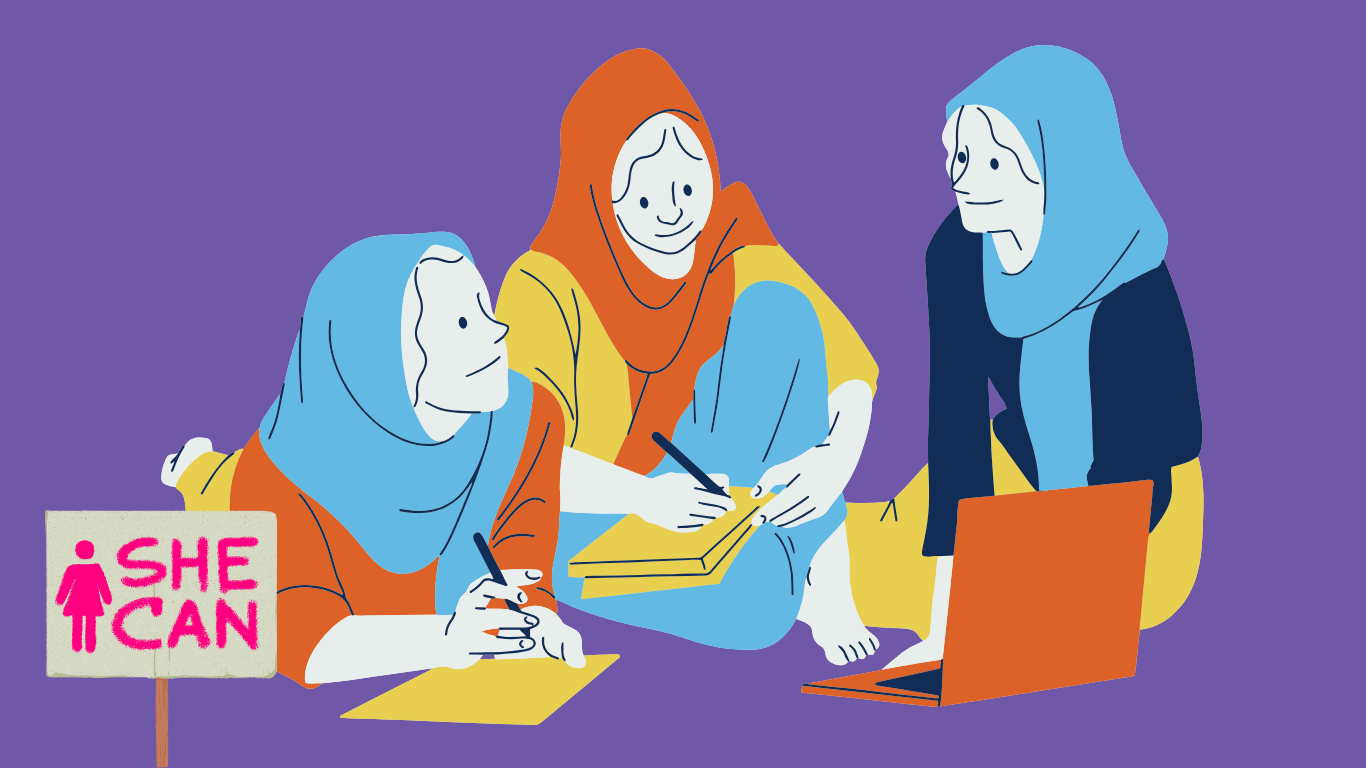
Effective population policies and governance frameworks are important to ensure sustainable population growth. While some countries have experimented with one- or two-child policies and seen a reduction in population growth, such measures are often coercive and raise ethical concerns. A more sustainable and humane approach lies in empowering women and married couples to make informed choices about family size. When women have access to education, economic opportunities, reproductive health services, and contraceptives, they can decide freely if, when, and how many children to have. Promoting gender equality, respecting women’s decisions, and removing social and cultural barriers are essential steps toward smaller, well-planned families. By investing in women’s autonomy and opportunities, Pakistan can slow population growth, strengthen human capital, improve social indicators, and foster long-term economic and social development. Empowering women is therefore not only a moral imperative but also one of the most effective solution to the country’s overpopulation challenge.
[The writer is a media graduate, serving as the Head of Communications at the Center for Democracy and Climate Studies, and as an International Expert at Diplomatic Affairs. She can be reached at sibgharauf64@gmail.com]