






























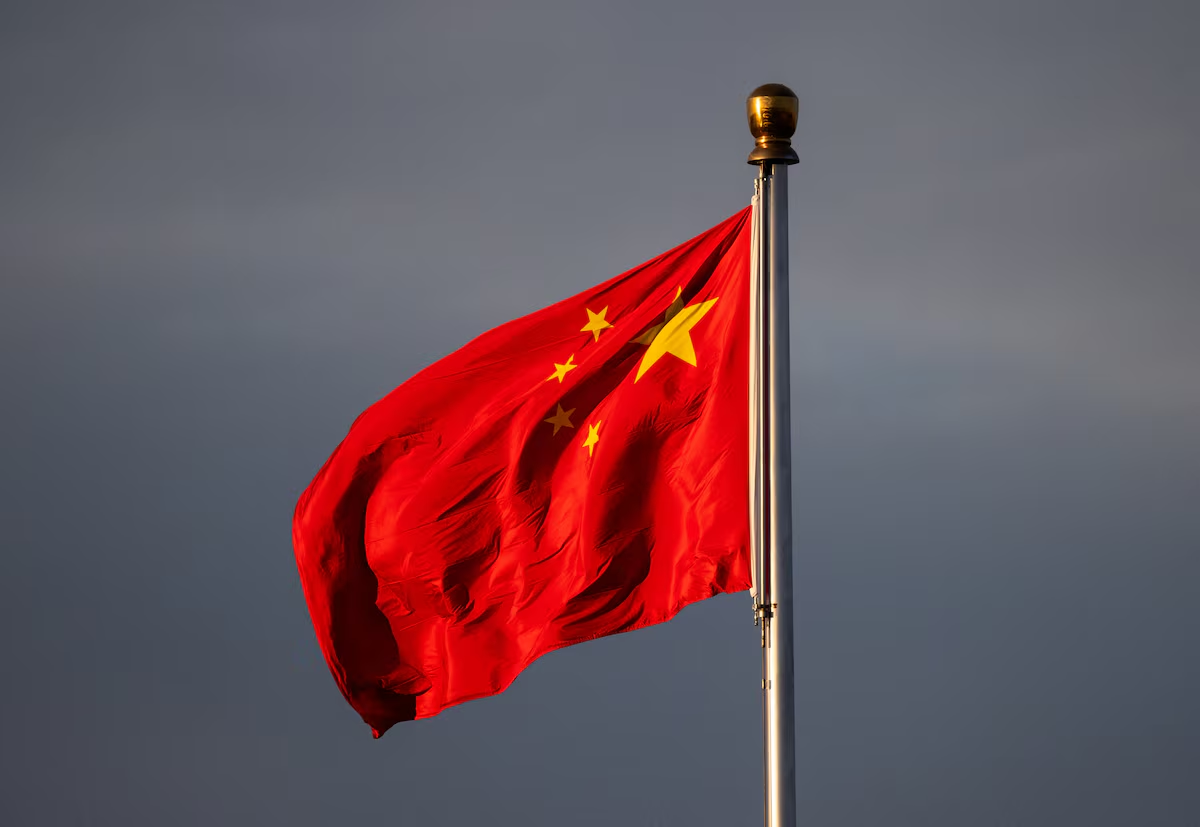
WASHINGTON: A senior United States official has disclosed what he described as new evidence suggesting that China conducted an underground nuclear test in June 2020, intensifying tensions between the two powers over arms control and non-proliferation.

Assistant Secretary of State Christopher Yeaw, speaking at the Hudson Institute in Washington, said a remote seismic station in Kazakhstan detected an explosion of magnitude 2.75 on June 22, 2020.
According to Yeaw, the event was traced to China’s Lop Nor nuclear test site in the country’s western region. Yeaw said he had reviewed additional seismic data and concluded that there was little possibility the event was anything other than an explosion. He argued that the data did not match the characteristics of mining activity or an earthquake and instead aligned with what would be expected from a nuclear explosive test.
However, the Comprehensive Nuclear-Test-Ban Treaty Organization (CTBTO), which operates a global monitoring system to detect nuclear test explosions, said the available data were insufficient to confirm the claim. The organization’s executive secretary, Robert Floyd, stated that the PS23 seismic station in Kazakhstan recorded two very small seismic events 12 seconds apart on the same date.
Floyd noted that the CTBTO’s monitoring system can detect events consistent with nuclear explosions with yields of 500 metric tons of TNT or greater. The two recorded events were well below that threshold, making it impossible to determine their cause with confidence based solely on the available data. China firmly rejected the allegations.
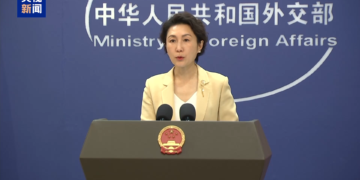
A spokesperson for the Chinese embassy in Washington described the claims as entirely unfounded and accused the United States of political manipulation aimed at justifying a resumption of U.S. nuclear testing. Beijing reiterated its commitment to the global consensus against nuclear tests and urged Washington to uphold its disarmament responsibilities. The dispute comes amid growing concerns over the future of global arms control frameworks.
The New START treaty, the last remaining U.S.-Russia strategic nuclear arms limitation agreement, expired earlier this month. U.S. President Donald Trump has been pressing China to join Washington and Moscow in negotiating a new trilateral arms control pact. Beijing has declined, arguing that its nuclear arsenal remains significantly smaller than those of the United States and Russia.
China signed but has not ratified the 1996 Comprehensive Nuclear-Test-Ban Treaty, which prohibits nuclear test explosions. Its last officially acknowledged underground nuclear test was conducted in 1996.
The United States has also signed but not ratified the treaty and carried out its last underground test in 1992. Both countries are obligated under international law to refrain from actions that would defeat the object and purpose of the treaty.
Yeaw further alleged that China may have attempted to conceal the test using a method known as “decoupling,” in which a nuclear device is detonated inside a large underground cavity to reduce the seismic signals generated.
Meanwhile, the Pentagon estimates that China currently possesses more than 600 operational nuclear warheads and is rapidly expanding its strategic arsenal, projecting that it could exceed 1,000 warheads by 2030.
The renewed allegations and the absence of a binding arms control framework have fueled concerns that the world could be entering a new era of accelerated nuclear competition.