











































United States Army Secretary Dan Driscoll met with Russian officials in Abu Dhabi on Monday night and Tuesday, part of a renewed push by President Donald Trump’s administration to secure an end to the war in Ukraine, Driscoll’s spokesperson confirmed.

US and Ukrainian negotiators are attempting to bridge key differences over a proposed peace agreement, with major points still unresolved and Kyiv cautious about being pressured into accepting terms largely favorable to the Kremlin.
“Late Monday and throughout Tuesday, Secretary Driscoll and team have been in discussions with the Russian delegation to achieve a lasting peace in Ukraine. The talks are going well and we remain optimistic. Secretary Driscoll is closely synchronised with the White House … as these talks progress,” said US Army Lieutenant Colonel Jeff Tolbert, spokesperson for Driscoll.
Details about the discussions remain unclear, including who represented the Russian side. A US official said Driscoll now a central figure in Washington’s diplomatic push was also expected to meet Ukrainian officials during his stay in Abu Dhabi.
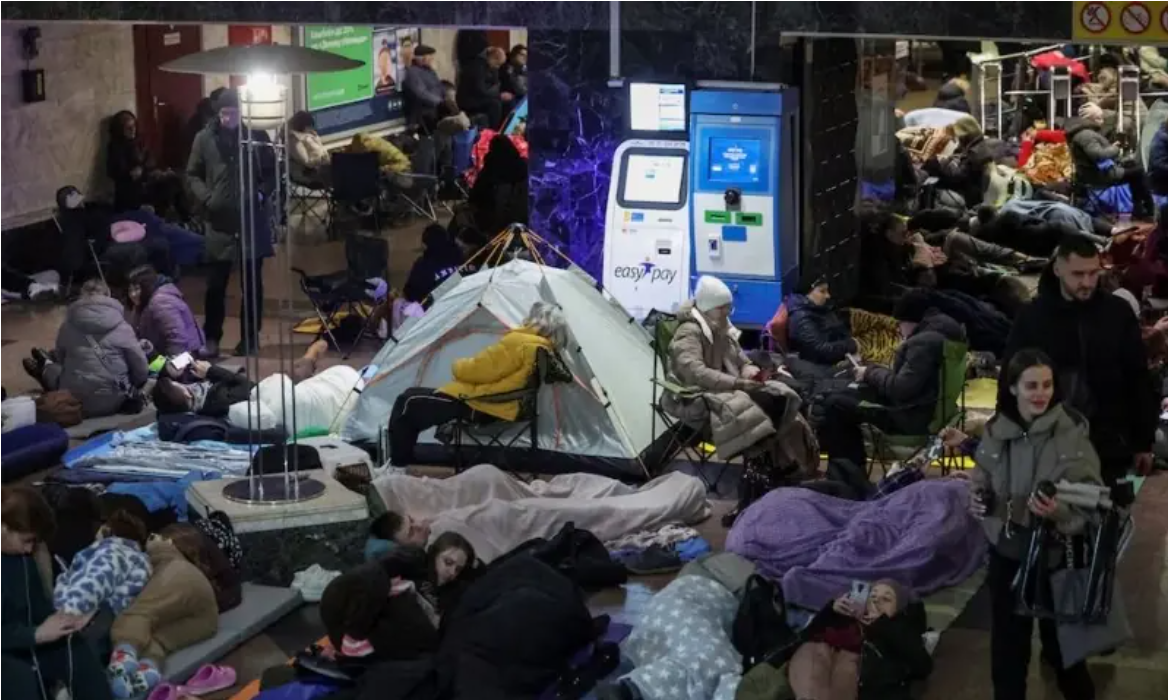
The talks come as Kyiv suffered yet another overnight barrage of missiles and drones, killing at least six people and knocking out key power and heating infrastructure. Residents sheltered underground, bundled in heavy coats, and some remained in tents.
Will discuss sensitive issues with Trump: Zelensky
US policy on the conflict has shifted sharply in recent months.
A hastily organised summit between Trump and Russian President Vladimir Putin in Alaska in August raised concerns in Kyiv and across Europe that Washington might concede to significant Russian demands, though the meeting ultimately led to increased US pressure on Moscow.
The latest US peace proposal a 28-point plan that surfaced last week surprised officials in Washington, Kyiv and European capitals, prompting renewed fears that Ukraine may be pushed toward accepting a deal heavily weighted toward Moscow’s interests.
Under the plan, Ukraine would have to give up additional territory, accept limits on its armed forces, and permanently forgo NATO membership terms Kyiv has long rejected as unacceptable.
The accelerated diplomatic push adds pressure on Ukraine and President Volodymyr Zelensky, who is politically weakened after a corruption scandal that forced out two ministers and as Russian forces gain momentum on the battlefield.
Zelensky may face strong domestic resistance to any agreement perceived as a betrayal of Ukrainian interests.
He said on Monday the latest peace proposal included “correct” elements following weekend talks in Geneva.
“The sensitive issues, the most delicate points, I will discuss with President Trump,” Zelensky said in his nightly video address.
Zelensky, who may travel to the US in the coming days, warned that drafting a final agreement would be difficult. Russia’s ongoing attacks have left many sceptical that peace is achievable any time soon.
“There was a very loud explosion, our windows were falling apart, we got dressed and ran out,” said Nadiia Horodko, a 39-year-old accountant, after her Kyiv apartment block was struck overnight.
“There was horror, everything was already burning here, and a woman was screaming from the eighth floor, ‘Save the child, the child is on fire!’”
Russian Foreign Minister Sergei Lavrov said any revised peace plan would need to reflect the “spirit and letter” of the understanding reached between Putin and Trump during their Alaska meeting.
Macron warns against European capitulation
A coalition of Ukraine-supporting countries including Britain and France was scheduled to hold a virtual meeting on Tuesday.
“It’s an initiative that goes in the right direction: peace. However, there are aspects of that plan that deserve to be discussed, negotiated, improved,” French President Emmanuel Macron told RTL radio regarding the US proposal. “We want peace, but we don’t want a peace that would be a capitulation.”
He added that only Ukrainians can decide what territorial compromises they are prepared to make.
“What was put on the table gives us an idea of what would be acceptable for the Russians. Does that mean that it is what must be accepted by the Ukrainians and the Europeans? The answer is no,” Macron said.
In a separate development, Romania scrambled fighter jets early Tuesday to track drones that crossed into its airspace near the Ukrainian border, with one continuing deeper into the NATO member state, its defence ministry reported.
Tensions along NATO’s eastern frontier have been rising in recent months amid repeated incursions by suspected Russian drones into the airspace of several member countries.