



























































WASHINGTON: U.S. President Donald Trump has endorsed a bipartisan bill that would authorize sanctions against countries purchasing Russian oil, including China, India, and Brazil, as Russia continues its war in Ukraine, a senior U.S. lawmaker said.

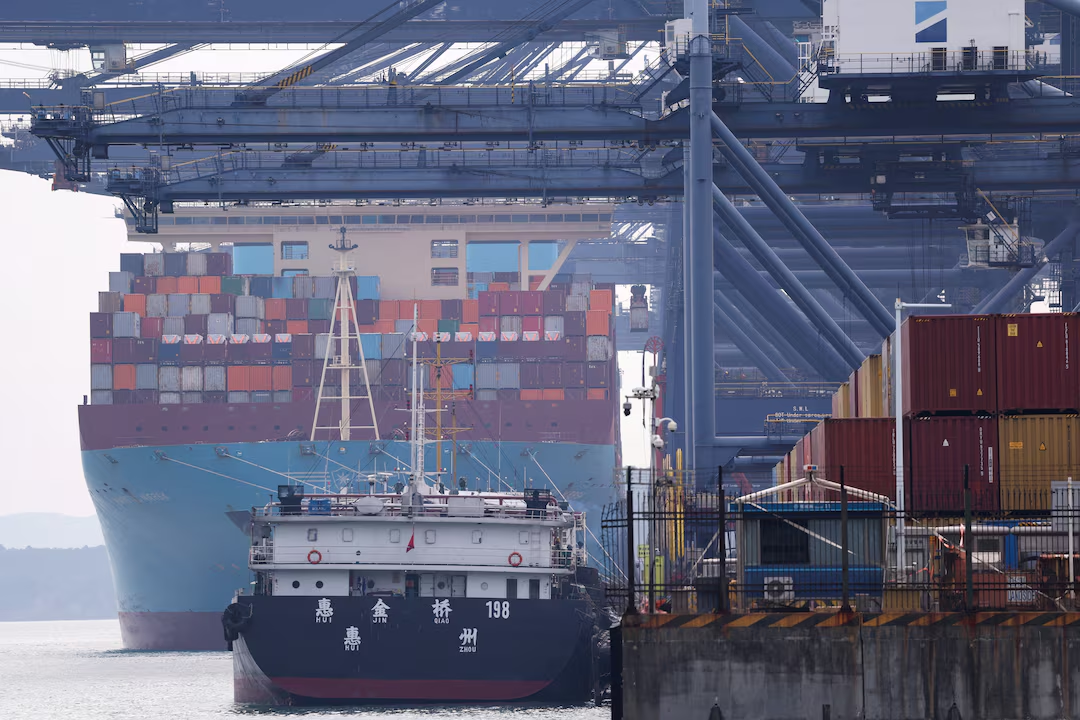
Republican Senator Lindsey Graham of South Carolina said Trump approved the proposal after what he described as a “very productive” meeting with members of Congress.The legislation, titled the “Sanctioning Russia Act” and co-sponsored by Graham and Democratic Senator Richard Blumenthal, would grant the president authority to impose tariffs of up to 500 percent on imports from countries engaged in trade with Russia’s energy sector.
According to Graham, the bill is designed to penalize nations buying discounted Russian oil that helps finance Moscow’s military operations. He said the measure would provide significant leverage over major purchasers such as China, India, and Brazil.
Despite existing U.S. and European sanctions, Russia continues to export large volumes of crude oil. In November, China accounted for nearly half of Russia’s crude exports, while India imported around 38 percent. Brazil, which sharply increased Russian oil imports following the 2022 invasion of Ukraine, has scaled back purchases in recent months.
The proposal comes as Washington seeks to increase pressure on Moscow while continuing to support U.S.-brokered negotiations between Russia and Ukraine.
Separately, the Trump administration has expressed support for European initiatives aimed at providing binding security guarantees for Ukraine. These include post-war ceasefire monitoring mechanisms and the possible deployment of a European-led multinational force, although Russia has not agreed to any NATO-related involvement.Graham said the sanctions proposal is “well-timed,” arguing that Ukraine has shown willingness to make concessions toward peace, while Russia continues attacks on civilian targets.
If enacted, the bill could significantly expand U.S. influence over global energy markets and reshape trade relations with major economies. Analysts warn the move may heighten tensions with affected countries and impact global oil prices, while reinforcing U.S. support for Ukraine and increasing economic pressure on Moscow.