






































































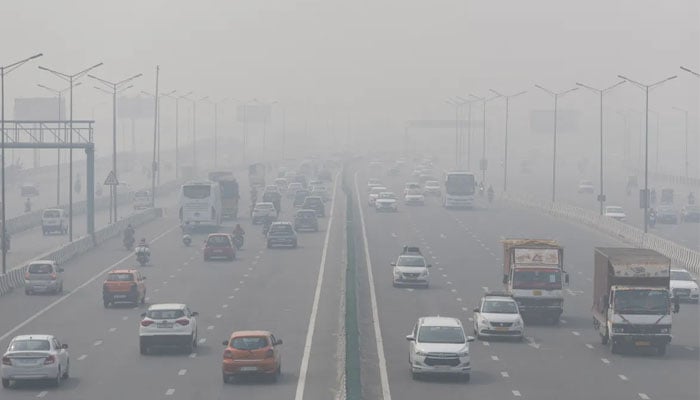
ISLAMABAD: Pakistan has been ranked the most polluted country in the world in 2025, with levels of harmful fine particulate matter (PM2.5) recorded at up to 13 times higher than the safety limits set by the World Health Organization, according to a new report. The findings were published by Swiss air quality monitoring firm IQAir in its annual global air quality assessment released on Tuesday.

The report highlighted that only 13 countries and territories managed to maintain average PM2.5 levels within the WHO’s recommended threshold of less than 5 micrograms per cubic metre in 2025—an increase from seven in 2024. However, a vast majority—130 out of 143 monitored countries—failed to meet the guideline.
Following Pakistan on the list of the most polluted countries were Bangladesh in second place and Tajikistan in third. Meanwhile, Chad, which topped the rankings in 2024, fell to fourth position. Experts cautioned that this drop may be due to gaps in data rather than actual improvement in air quality.
The report also pointed to a major setback in global air monitoring efforts after the United States shut down a key pollution tracking programme in March 2025 due to budget constraints. This programme had been a primary source of air quality data for several high-risk regions. As a result, countries such as Burundi, Turkmenistan, and Togo were excluded from the latest report.
At the city level, Loni in India emerged as the world’s most polluted city in 2025, recording an average PM2.5 concentration of 112.5 micrograms per cubic metre. It was followed by Hotan in China’s Xinjiang region, with levels reaching 109.6 micrograms.
Notably, all of the world’s 25 most polluted cities were located across India, Pakistan, and China, underscoring the severity of air pollution in South and East Asia. Globally, only 14 percent of cities met the WHO air quality standard in 2025, down from 17 percent in the previous year. Factors such as widespread wildfires in Canada contributed to rising pollution levels, affecting air quality across the United States and even parts of Europe.
On a positive note, countries including Australia, Iceland, Estonia, and Panama successfully met WHO standards in 2025.Some nations also recorded improvements. Laos, Cambodia, and Indonesia saw significant reductions in PM2.5 levels, largely due to wetter and windier conditions linked to La Niña weather patterns. Similarly, Mongolia reported a 31 percent drop in average pollution levels.
Overall, the report found that 75 countries experienced a decline in PM2.5 levels in 2025 compared to the previous year, while 54 countries saw pollution levels rise, highlighting a mixed global trend in air quality.