






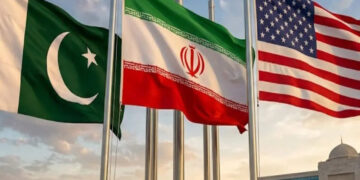




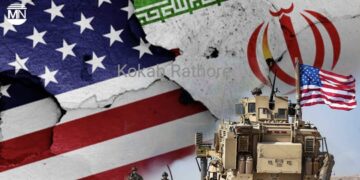
















Pakistan has urged the UN Security Council to revive diplomacy on Iran’s nuclear program and warned that re-imposing sanctions through the JCPOA snapback mechanism would deepen mistrust and disproportionately harm ordinary people.

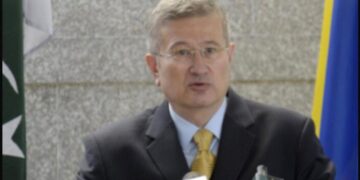
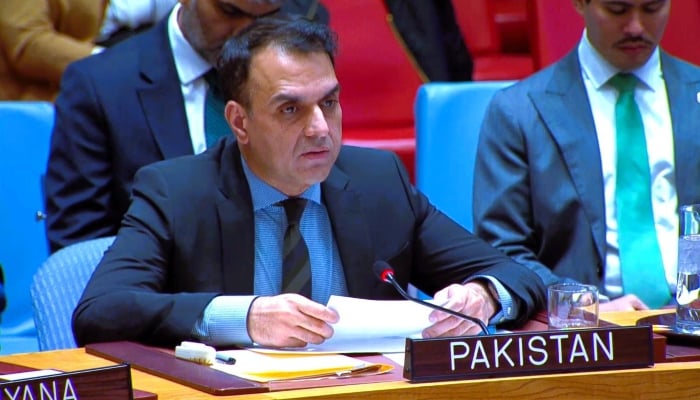
Speaking at a briefing on Iran’s nuclear issue on Tuesday, Pakistan’s Acting Permanent Representative Ambassador Usman Jadoon thanked UN Under-Secretary-General Rosemary DiCarlo for her update and emphasized that all issues regarding Iran’s nuclear program must be resolved through dialogue, allowing diplomacy time to succeed while preserving the JCPOA framework until a successor arrangement is reached.
Ambassador Jadoon recalled the Council’s last meeting on the matter in September and lamented that divisions within the Council and beyond have grown, complicating efforts to find a solution. He criticized unilateral actions and differing interpretations of the snapback mechanism, stressing that coercive measures will not foster trust but instead worsen tensions, impact trade, hinder economic development, and affect regional connectivity.
He reiterated Pakistan’s stance that diplomacy and dialogue should guide all efforts, noting that while the JCPOA was not fully implemented as intended, it remains a crucial framework based on international law and mutual respect. “Its essence and structure can still be useful if parties engage in a spirit of compromise,” he said.
Ambassador Jadoon also highlighted the importance of restoring confidence in diplomatic engagement and stressed the role of the International Atomic Energy Agency (IAEA) in objectively verifying nuclear compliance, free from political influence. He concluded that constructive efforts, including through the Security Council, are essential to bring all parties together for a mutually acceptable solution, emphasizing that continued diplomacy remains the only path to a peaceful resolution.