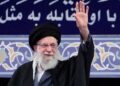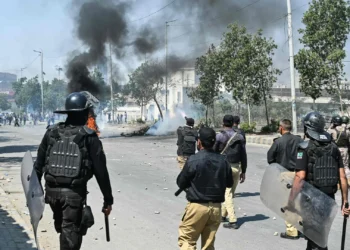






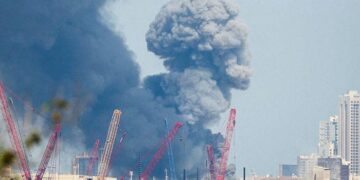
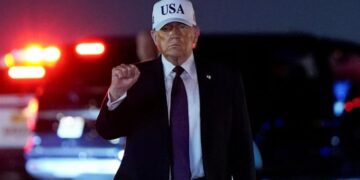
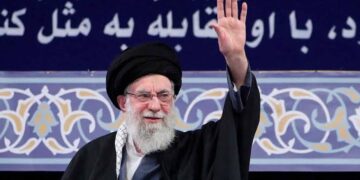

















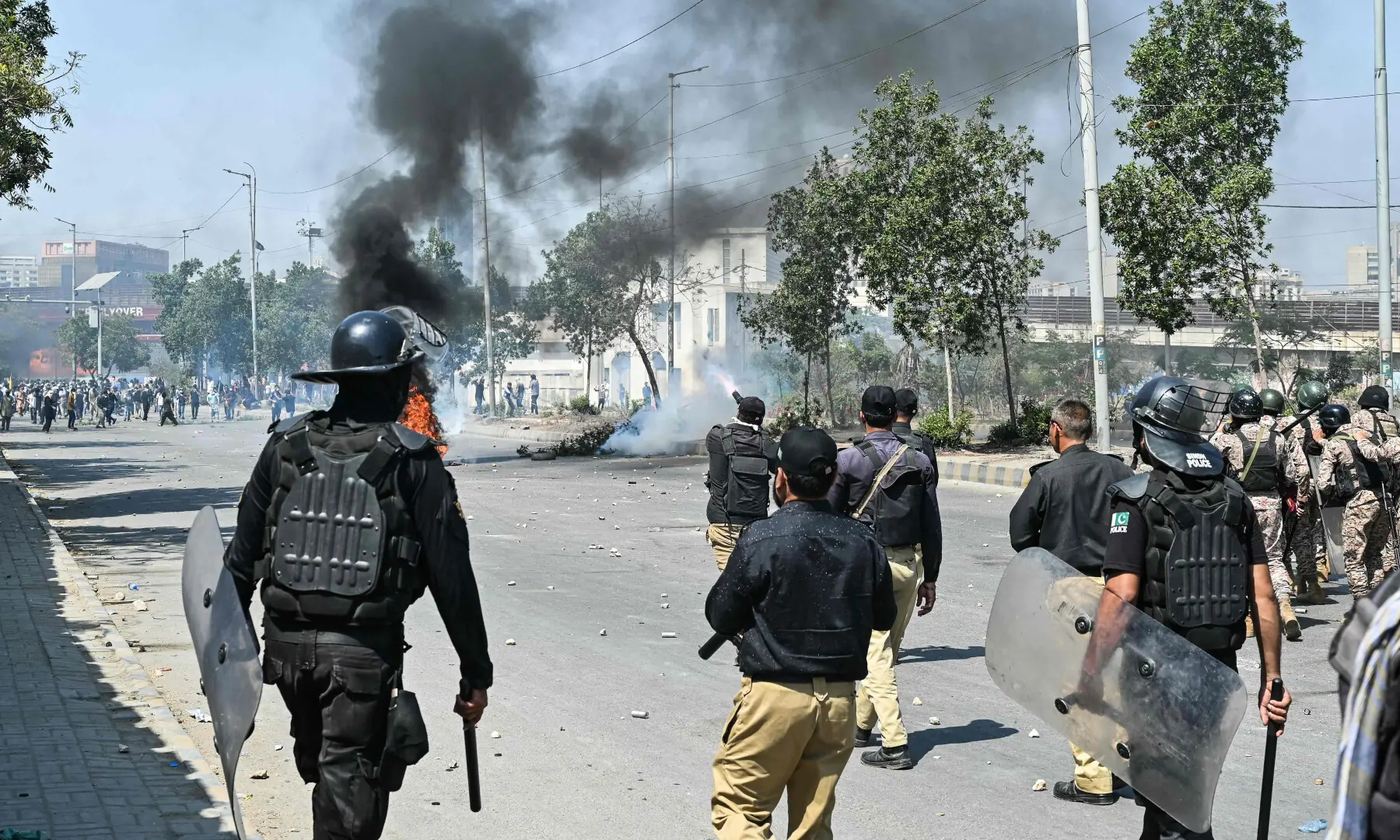
KARACHI/LAHORE/GILGIT/ISLAMABAD/DI KHAN (MNN); At least nine people were killed and dozens injured in Karachi on Sunday when protests against US-Israeli attacks on Iran turned violent near the US Consulate on Mai Kolachi Road, hospital officials confirmed. The unrest was part of a wave of demonstrations across Pakistan following the assassination of Iran’s Supreme Leader Ayatollah Ali Khamenei in coordinated US-Israeli airstrikes on Tehran a day earlier.

According to Dr Mohammad Sabir Memon, executive director of Civil Hospital Karachi’s trauma centre, nine people died and 34 sustained injuries in clashes near the consulate. He clarified that an earlier reported figure of 10 fatalities was revised after one deceased individual was mistakenly counted twice. Police Surgeon Dr Summaiya Syed also confirmed the death toll at nine, stating that most of the victims suffered gunshot wounds.
Seven injured individuals were shifted to Aga Khan University Hospital and the Fatimid Foundation, while the remaining were treated at Civil Hospital Karachi. At Jinnah Postgraduate Medical Centre, two policemen injured by blunt objects and two protesters with firearm injuries were brought for treatment. Emotional scenes were witnessed outside the hospital morgue as families awaited formalities.
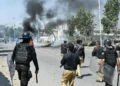
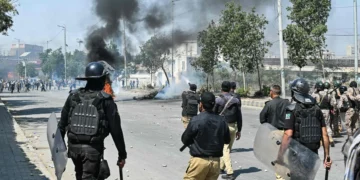
Law enforcement personnel used tear gas and baton charges to disperse protesters who attempted to breach security barriers at the US Consulate. Later in the day, further clashes erupted when authorities placed containers to block roads in the area, prompting stone-pelting by demonstrators.
In a statement, the Sindh government expressed deep sorrow over the loss of lives but placed the death toll at six. It announced the formation of a high-level Joint Investigation Team to impartially examine the incident and determine responsibility. While affirming citizens’ constitutional right to protest, the government emphasized that vandalism and violence would not be tolerated.
Sindh Chief Minister Murad Ali Shah termed the incident extremely tragic and ordered a transparent inquiry. He contacted religious leaders, including Allama Shahenshah Naqvi and Allama Shabbir Maisami, urging them to help maintain calm. Allama Naqvi later appealed to the public to protest peacefully, describing the clashes as painful.
Sindh Home Minister Ziaul Hassan Lanjar directed police to enhance security around sensitive installations and warned that strict legal action would be taken against those disturbing public order. The Sindh Rangers deployed heavy contingents across Karachi, while traffic police diverted vehicles from affected routes and issued helpline information.
The US Embassy in Islamabad said it was monitoring reports of demonstrations at its diplomatic facilities and advised American citizens in Pakistan to avoid large crowds and maintain heightened awareness.
Islamabad: Clashes Near Diplomatic Enclave
In the federal capital, protests intensified near the Diplomatic Enclave despite a ban on public gatherings under Section 144 of the Code of Criminal Procedure. Police used heavy shelling to prevent demonstrators from entering the Red Zone. Several injuries were reported, with Polyclinic Hospital and the Pakistan Institute of Medical Sciences receiving multiple casualties, including police and Rangers personnel.
Interior Minister Mohsin Naqvi appealed for calm, saying the day was sorrowful for the Muslim world but urging citizens not to take the law into their own hands. He reviewed security arrangements in the Red Zone and Diplomatic Enclave and ordered foolproof measures to protect diplomatic missions.
Islamabad police sealed routes leading to sensitive government buildings and warned that strict legal action would follow any violation of the ban on gatherings.
Lahore: Attempt to Storm US Consulate
In Lahore, hundreds of activists from Majlis Wahdat-i-Muslimeen assembled outside the US Consulate earlier than scheduled and attempted to force entry. Police quickly reinforced the area and pushed protesters back. Some demonstrators claimed one activist scaled the boundary wall and was detained but later released after negotiations.
The Punjab government imposed a seven-day ban on public gatherings of four or more persons without prior permission. The Home Department cited credible threat alerts warning of possible terrorist attacks targeting minorities or religious scholars to incite sectarian unrest. The ban also prohibited the carrying or display of weapons in public places.
Gilgit-Baltistan: Curfew in Skardu After Arson
In Gilgit-Baltistan, protests escalated sharply. Demonstrators set fire to offices of the United Nations Military Observer Group in India and Pakistan in Gilgit and Skardu, along with a school, a superintendent of police office, and the Agha Khan Rural Support Programme office.
Authorities imposed a curfew in Skardu and called in the Pakistan Army under Section 245 of the Pakistan Penal Code to assist civil administration. Police said no casualties were reported due to timely intervention and that foreign tourists had been moved to secure locations.
Major highways, including the Karakoram Highway, were blocked at several points in Hunza, Nagar and Gilgit. Commercial activities remained suspended across multiple districts.
Khyber Pakhtunkhwa: Peaceful Rallies
In Khyber Pakhtunkhwa, rallies in solidarity with Iran were held in Dera Ismail Khan, Tank and Paharpur. Hundreds participated in a march led by Allama Ramzan Tauqeer from Imamia Gate to Fawara Chowk in DI Khan. Speakers condemned the assassination and warned of rising regional tensions but emphasized peace and dialogue.
Local authorities reported that the rallies concluded peacefully under tight security arrangements.
Nationwide, authorities remain on high alert as protests continue in response to the killing of Ayatollah Khamenei, amid calls from officials for restraint and peaceful expression of public sentiment.