







































































ISLAMABAD (MNN); Global oil prices spiked sharply on Sunday after US and Israeli strikes on Iran escalated tensions in the Middle East, with traders warning that crude could soon approach the $100 per barrel mark.

According to market participants, Brent crude — the international benchmark — jumped nearly 10 percent in over-the-counter trading to around $80 per barrel. The surge followed heightened geopolitical uncertainty after coordinated military action against Iran pushed the region toward a broader conflict.
Brent had already been on an upward trajectory this year, reaching $73 per barrel on Friday — its highest level since July — amid growing concerns about potential disruptions in oil supply. Futures markets remain closed over the weekend, but analysts expect further volatility when trading resumes.
Ajay Parmar, director of energy and refining at ICIS, said that while military escalation itself supports higher oil prices, the critical factor remains the possible closure of the Strait of Hormuz.
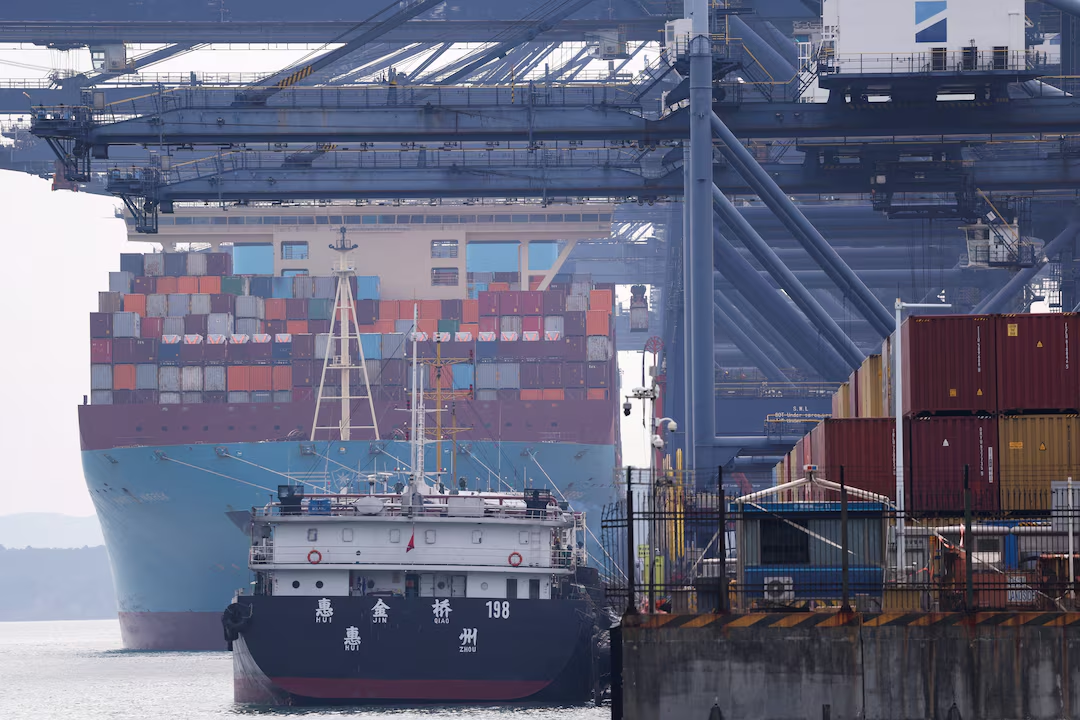
More than 20 percent of the world’s oil passes through the Strait of Hormuz, making it one of the most strategic energy chokepoints globally. Trade sources reported that many tanker owners, oil companies and trading firms have suspended shipments of crude oil, refined fuels and liquefied natural gas through the waterway after Tehran issued warnings against vessel movement in the area.
RBC analyst Helima Croft said leaders in the Middle East have cautioned Washington that a prolonged war involving Iran could push oil prices beyond $100 per barrel. Meanwhile, analysts at Rabobank projected prices holding above $90 per barrel in the near term.
The OPEC+ alliance of oil-producing countries announced on Sunday that it would increase output by 206,000 barrels per day starting in April. However, the adjustment represents less than 0.2 percent of global demand and is unlikely to fully offset potential supply disruptions.
Jorge Leon, an economist at Rystad Energy, said that even if some shipments are rerouted through Saudi Arabia’s East-West pipeline or Abu Dhabi’s alternative export routes, a complete closure of the Strait of Hormuz could remove between 8 to 10 million barrels per day from global supply.
Rystad Energy forecasts that oil prices could climb by as much as $20 when markets reopen, potentially reaching around $92 per barrel.
The crisis has also prompted Asian governments and refiners to review oil reserves and explore alternative supply chains. Analysts at Kpler indicated that India may increase imports of Russian crude to compensate for possible supply shortfalls from the Middle East.