


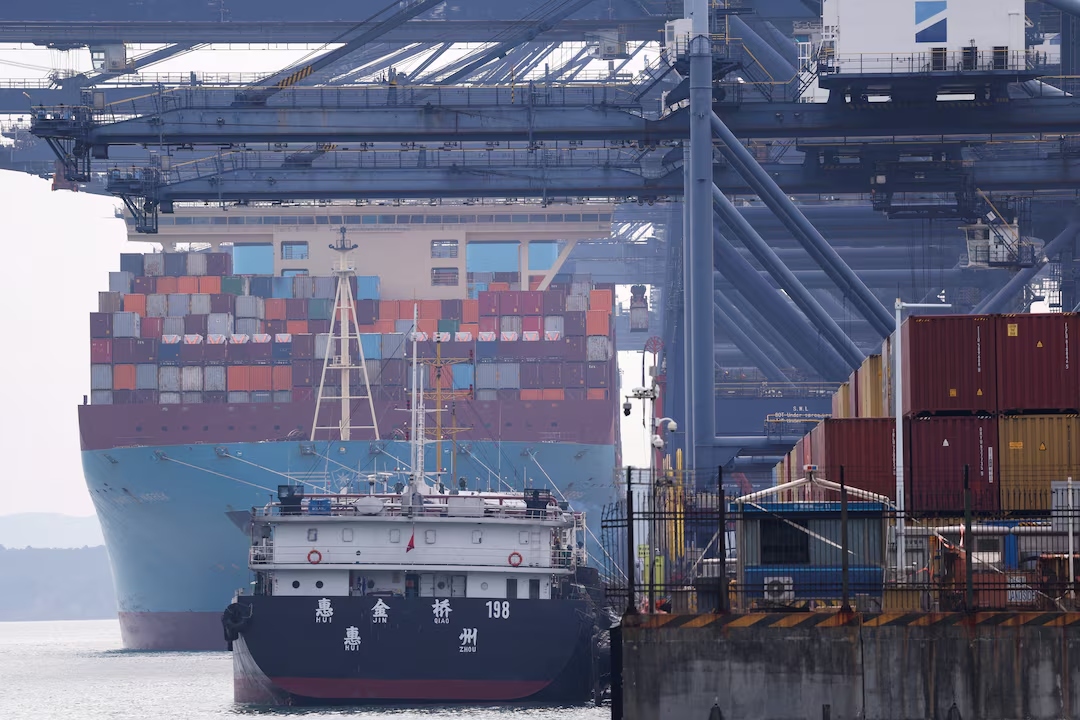



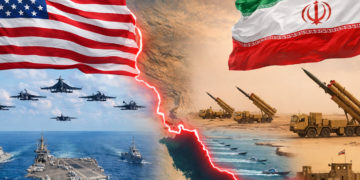










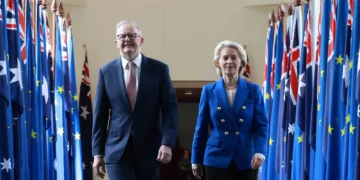

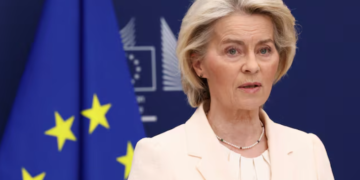
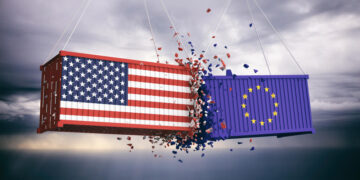







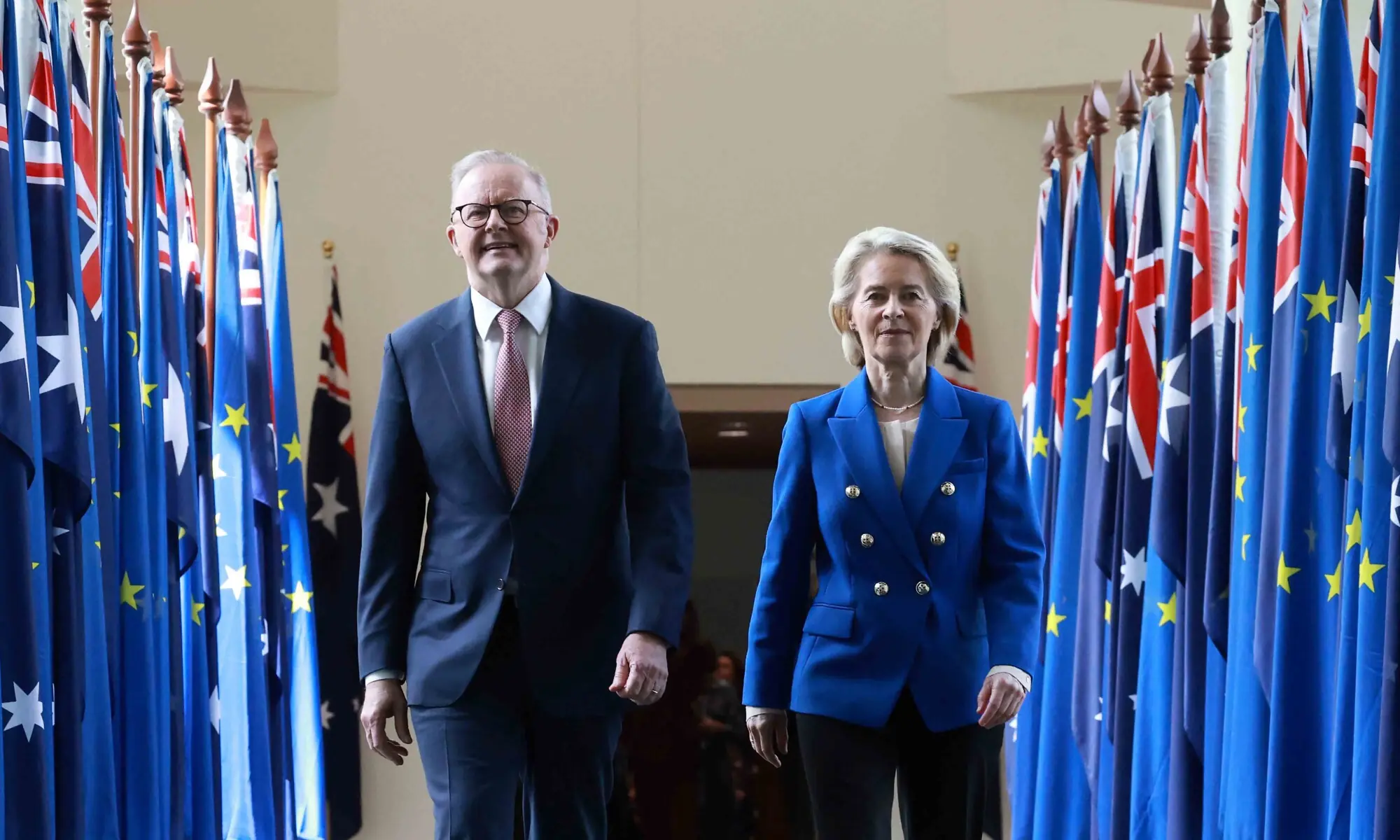
AFP: The European Union (EU) and Australia struck a long-awaited free-trade deal on Tuesday, while also agreeing to boost defence cooperation and access to crucial rare-earth minerals amid global uncertainty over trade. EU chief Ursula von der Leyen’s visit to Australia comes as the 27-nation bloc and the import-reliant nation navigate renewed energy vulnerability sparked by the US-Israel war on Iran.

The accord is the latest agreed by Brussels in a push to diversify trade as Europe faces challenges from the United States and China. Key sticking points on Australian use of European geographical names, as well as how much beef can be exported to the continent, were overcome to reach the deal after eight years of negotiations.
Another compromise will see Australian winemakers allowed to use the term “prosecco” domestically, but they must stop using it for exports after 10 years. Australia will also be allowed to keep using some geographical names, such as feta and gruyere, in cases where producers have used the name for at least five years.
European carmakers will benefit from Australia raising the threshold for a luxury car tax on electric vehicles — three-quarters will now be exempt. The two sides also agreed to step up defence cooperation and critical raw materials.
Addressing the Australian parliament, von der Leyen described a world that was “brutal, harsh and unforgiving.” She said the EU and Australia were bound by common values and must work together to mitigate over-reliance on countries such as China for rare-earth minerals.“We cannot be over dependent on any supplier for such crucial ingredients, and that is precisely why we need each other,” she said. “Our security is your security, and with our new security and defence partnership, we have each other’s back.”
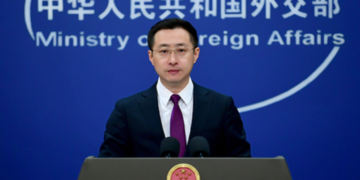
Beijing’s foreign ministry urged the EU to abandon its “zero-sum thinking.” “We hope the European side will… refrain from adopting protectionist measures, and view China’s development in a rational and objective light,” spokesman Lin Jian said. Von der Leyen told Australian lawmakers that the trade agreement was a “fair deal, and one that delivers for your businesses and one that delivers for our businesses.”
Under the deal, the EU expects exports to Australia to grow by a third over a decade.The quota of Australian beef allowed into the bloc will increase more than 10 times the current level over the next decade, although that falls short of what Australian farmers had been seeking.
Australia’s National Farmers’ Federation said it was “extremely disappointed” by the outcome.EU firms exported €37 billion (US$42.9 billion) of goods to Australia last year, and €31 billion of services in 2024.
Australia said the deal could add AU$7.8 billion (US$5.4 billion) to its GDP by 2030.Australia’s largest export market is China, and the United States is its largest source of investment.
However, Canberra has sought to diversify export markets for farmers since a 2020 dispute with Beijing saw agriculture shipments blocked, and the global imposition of US tariffs last year. Likewise, the EU is driving new partnerships in the face of US levies and Chinese export controls.
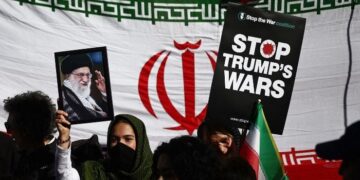
Von der Leyen’s visit was overshadowed by the war in the Middle East, which has sent oil prices soaring. She called for an immediate end to hostilities, citing a “critical” situation for global energy supply chains. Australia, heavily reliant on imported fuel, has also felt pressure from the global energy squeeze.