






































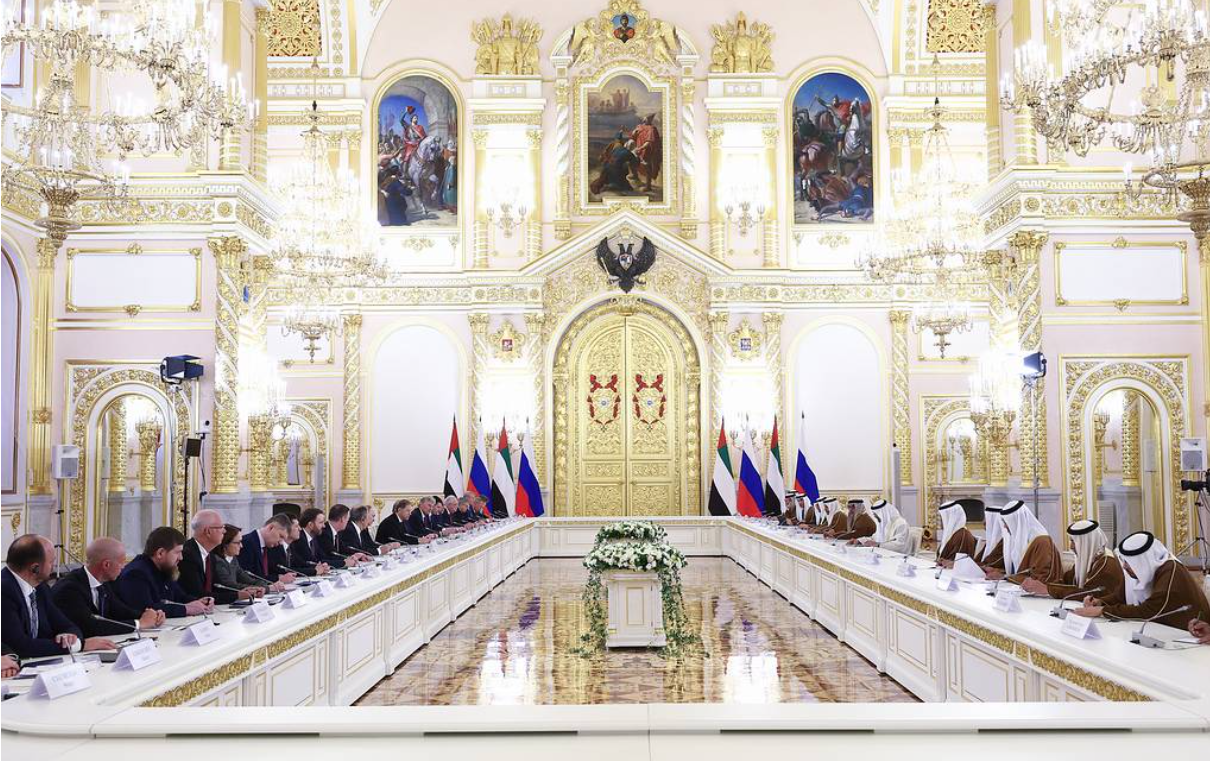
MOSCOW : Russia and the United Arab Emirates held high-level talks at the Kremlin following recent Ukraine-related negotiations in Abu Dhabi.

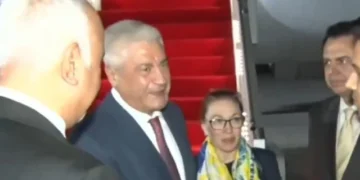
Vedomosti reports that Russian President Vladimir Putin met with UAE President Mohammed Al Nahyan at the Kremlin. The UAE leader visited Moscow four days after trilateral negotiations in Abu Dhabi on the Ukraine conflict and ahead of a new meeting there between Russian and Ukrainian representatives.
Experts told Vedomosti that the Kremlin talks may have focused on “coordinating mediation ahead of renewed Russia-Ukraine negotiations in Abu Dhabi, exchanging positions on Iran, Syria, and Gaza to prevent regional escalation, as well as reinforcing the UAE’s role as a key economic, energy, and diplomatic partner for Russia.”
Ahead of the talks, Al Nahyan met with Russian, Ukrainian, and American negotiators. The continuation of the security group’s negotiations is scheduled for February 1, without American participation, US Secretary of State Marco Rubio said.
Kamran Gasanov, a doctor of political science at the University of Salzburg, said the bilateral talks are “primarily focused on the upcoming second meeting of Russian, American, and Ukrainian representatives in Abu Dhabi under the mediation of the Emirati authorities.” He added that Al Nahyan may have been expected to “deliver a message from the presidents of the United States or Ukraine and to gauge the Russian side’s stance.”
Ivan Bocharov, program manager at the Russian International Affairs Council, added that “the heads of state will undoubtedly exchange information regarding the Russia-Ukraine conflict against the backdrop of the negotiations scheduled for February 1 in Abu Dhabi.”
The UAE is Russia’s second most important trade and economic partner in the Middle East after Turkey, with bilateral trade turnover nearing $10 billion by the end of last year. Both countries cooperate closely in energy, logistics, and industrial technologies.
Gasanov also highlighted that Iran was a key topic, noting that “Al Nahyan is likely to attempt to persuade the Russian president to act jointly as a mediator to de-escalate the situation… as it could potentially lead to the closure of the Strait of Hormuz, a vital waterway through which Arab states supply energy resources to the global market.”