





















































CEBU, Philippines: The Association of Southeast Asian Nations (ASEAN) does not recognize Myanmar’s recently held elections, the first since the military seized power in 2021, Philippine Foreign Secretary Theresa Lazaro said.

The rejection deals a significant blow to Myanmar’s military rulers, who have sought international legitimacy through the vote, which a military-backed party claims to have won.
Asked during a news conference whether ASEAN recognized the elections, Lazaro replied, “Yes, as of now,” adding that the bloc “has not endorsed the three phases of the elections that were held.” She did not elaborate on whether ASEAN’s position could change in the future.
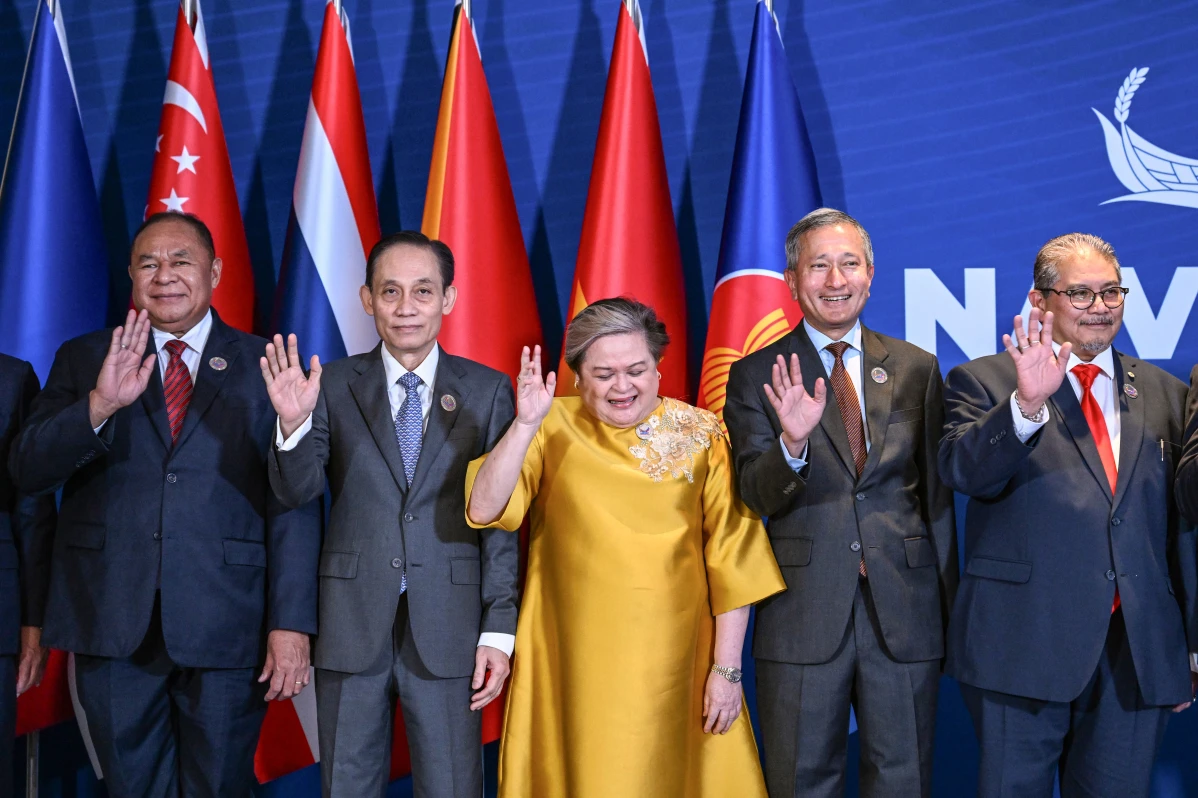
Lazaro made the remarks after hosting ASEAN’s first major ministerial meetings of the year in Cebu, where the crisis in Myanmar featured prominently on the agenda.
ASEAN, which has 11 members including Myanmar, has refused to recognize the military-installed government since the army ousted the elected administration of Aung San Suu Kyi in 2021. The coup plunged the country into a prolonged and deadly civil war.
Myanmar’s military-backed Union Solidarity and Development Party claimed victory earlier this week, an outcome widely expected after major opposition groups were barred from participating and dissent was tightly controlled. Under Myanmar’s constitution, the military also automatically holds 25% of parliamentary seats, ensuring continued dominance by the armed forces and allied parties.
Critics have denounced the polls as neither free nor fair, describing them as an attempt to legitimize military rule.
“Meaningful political progress in Myanmar requires a cessation of hostilities, inclusive dialogue and participation by all stakeholders,” Singapore Foreign Minister Vivian Balakrishnan said. He stressed that these conditions are essential for the emergence of a legitimate government with public support.
The Philippines currently holds ASEAN’s rotating chairmanship, a role that would have gone to Myanmar had it not been suspended following the 2021 coup.
Founded in 1967, ASEAN includes a diverse mix of political systems, ranging from democracies such as the Philippines to authoritarian states like Laos and Cambodia. While the bloc has adopted the theme “Navigating Our Future, Together” this year, internal divisions persist.
Beyond the Myanmar crisis, ministers also addressed regional security concerns, including border clashes between Thailand and Cambodia last year and ongoing tensions in the South China Sea. Lazaro said ASEAN members agreed to hold monthly meetings with China to finalize a long-delayed code of conduct aimed at managing maritime disputes.
China’s expansive claims in the South China Sea overlap with those of several ASEAN members, including the Philippines, Malaysia, Vietnam and Brunei.
Opening the meetings, Lazaro urged ASEAN to uphold international law and restraint amid rising regional and global tensions.
“Across our region, we continue to see tensions at sea, protracted internal conflicts and unresolved border and humanitarian concerns,” she said, warning that unilateral actions beyond Southeast Asia continue to undermine regional stability and the rules-based international order.